
By Product Type (Suture-Based Closure Devices, Collagen-Based Closure Devices, Clip-Based Closure Devices, Hybrid Closure Systems), By Access Site (Transfemoral, Transapical, Transaortic, Transaxillary/Subclavian), By Procedure Type (TAVR, TEVAR Adjacent Use, Structural Heart Interventions), By End User (Hospitals, Cardiac Catheterization Labs, Ambulatory Surgical Centers, Specialty Heart Institutes), By Technology Integration (Manual Closure Systems, Imaging-Guided Closure Systems, Next-Generation Smart Closure Platforms), By Region (Northeast, Midwest, South, West) – Market Size, Industry Analysis, Segmental Insights, Regional Overview, Company Share Analysis, and Market Forecast, 2021–2035
Market Outlook
The US Transcatheter Aortic Valve Closure Device Market is projected to reach approximately USD 3.92 billion by 2035, expanding at a CAGR of 14.6% during the forecast period 2026–2035, from an estimated USD 1.05 billion in 2025. The historical period (2021–2024) reflects accelerated adoption driven by the rapid scale-up of transcatheter aortic valve replacement (TAVR) procedures across both high-risk and intermediate-risk patient populations.
The market is fundamentally tethered to the procedural growth of TAVR, which has transitioned from a niche intervention to a frontline therapy for aortic stenosis in the U.S. With over 150,000+ TAVR procedures annually and expanding indications into low-risk and younger cohorts, the demand for reliable, rapid, and complication-minimizing vascular closure solutions has intensified.
Closure devices represent a critical procedural component influencing not only clinical outcomes but also cath lab throughput, length of stay, and hospital economics. As hospitals increasingly prioritize same-day discharge protocols, minimal vascular complications, and reduced ICU utilization, closure device performance has become a strategic procurement variable rather than a commoditized accessory.
Introduction
According to the US Transcatheter Aortic Valve Closure Device Market analysis, this segment sits at the intersection of structural heart innovation, vascular access management, and hospital efficiency optimization. The U.S. healthcare system, characterized by high procedural volumes and outcome-driven reimbursement frameworks, has rapidly integrated TAVR into standard care pathways.
Closure devices used post-TAVR—primarily in large-bore femoral access (14F–24F sheaths)—must deliver hemostasis reliability, low complication rates, and procedural speed. Complications such as bleeding, pseudoaneurysm, and vascular injury can significantly increase hospital costs, often exceeding USD 8,000–15,000 per event, making closure devices a high-value clinical investment.
The U.S. market benefits from:
Strong FDA regulatory clarity for vascular closure systems
High concentration of structural heart centers of excellence
Advanced interventional cardiology training ecosystems
Increasing integration of imaging-guided and percutaneous techniques
Key Market Drivers: What’s Fueling the US Transcatheter Aortic Valve Closure Device Market?
Expansion of TAVR into Low-Risk and Younger Populations
The FDA approval of TAVR for low-risk patients has significantly expanded procedural volumes. This shift has introduced a younger, more active patient demographic, raising expectations for faster recovery and minimal complications. Closure devices are therefore evaluated not only for safety but also for their ability to support early ambulation and discharge within 24 hours.
Hospital Economics and Cath Lab Throughput Optimization
US hospitals are under sustained pressure to improve procedure room efficiency and bed utilization. Closure devices that reduce manual compression time (30–60 minutes) to near-instant hemostasis enable:
Increased daily procedural capacity
Reduced staff burden
Lower post-procedure monitoring costs
This has made advanced closure systems integral to value-based care delivery models.
Rising Focus on Vascular Complication Reduction
Vascular complications remain among the most common adverse events in TAVR procedures. Clinical studies indicate complication rates ranging from 5% to 15%, depending on patient profile and access technique. Closure devices with predictable deployment and strong hemostatic performance are increasingly prioritized in procurement decisions.
Shift Toward Fully Percutaneous Procedures
The transition from surgical cutdown to fully percutaneous access has been a major inflection point. Closure devices enable this shift, supporting minimally invasive workflows and reducing dependency on surgical teams.
Innovation in Focus: How Manufacturers Are Advancing Closure Technologies
Innovation in the US market is focused on scalability, precision, and complication avoidance. Manufacturers are investing in:
Large-bore closure compatibility (up to 25F and beyond)
Dual-device deployment techniques (pre-close strategies)
Bioabsorbable materials to reduce long-term complications
Integrated imaging compatibility (fluoroscopy, ultrasound guidance)
Smart deployment feedback mechanisms to enhance procedural confidence
Next-generation systems are being designed to standardize outcomes across operator skill levels, which is critical given the variability in experience across US hospitals.
Segmentation Insights
By Product Type
- Suture-based closure devices dominate the US market, particularly in high-volume TAVR centers. Devices such as Perclose ProGlide are widely used due to their familiarity among interventional cardiologists and adaptability to pre-close techniques. However, they require technical expertise and can exhibit variability in outcomes depending on operator skill.
- Collagen-based closure devices are gaining traction as the fastest-growing segment, offering simplified deployment and faster hemostasis. These systems are particularly appealing in community hospitals where procedural standardization is critical.
- Clip-based devices and hybrid systems are emerging, targeting high-risk anatomies and calcified vessels, where traditional suture-based systems may be less effective.
By Access Site
- Transfemoral access remains overwhelmingly dominant, accounting for over 90% of TAVR procedures in the US. Closure device innovation is heavily concentrated here, particularly for large-bore femoral artery closure.
- Alternative access routes such as transapical and transaortic are declining but still relevant in complex anatomical cases. Closure requirements in these segments differ significantly, often involving surgical or hybrid techniques.
- Transaxillary and subclavian approaches are gaining modest traction, especially in patients with peripheral artery disease, creating niche opportunities for specialized closure systems.
By Procedure Type
- TAVR represents the primary application, driving the majority of market demand. The procedural standardization of TAVR has elevated closure devices from optional tools to mandatory procedural components.
- Adjacent use in TEVAR (thoracic endovascular aortic repair) and other structural heart interventions is expanding, particularly where large-bore access is required.
- The convergence of structural heart procedures is expected to create cross-procedural demand synergies for closure device manufacturers.
By End User
- Hospitals dominate the market, particularly large academic medical centers and integrated delivery networks (IDNs) that perform high volumes of TAVR procedures. These institutions prioritize clinical outcomes, device reliability, and vendor support.
- Cardiac catheterization labs are increasingly adopting advanced closure systems to enable same-day discharge protocols.
- Ambulatory surgical centers (ASCs) represent an emerging segment, though adoption remains limited due to patient selection constraints and reimbursement dynamics.
- Specialty heart institutes are early adopters of next-generation closure technologies, often participating in clinical trials and pilot programs.
By Technology Integration
- Manual closure systems remain the standard, but imaging-guided and smart-assisted closure technologies are gaining traction. Integration with intravascular ultrasound (IVUS) and fluoroscopy enhances deployment accuracy.
- Future systems are expected to incorporate AI-assisted deployment guidance, though adoption will depend on regulatory approvals and clinical validation.
Regional Insights: Where the Market is Growing Fastest
West
The West region leads the US Transcatheter Aortic Valve Closure Device Market, driven by high TAVR penetration, strong innovation ecosystems, and early adoption of advanced medtech solutions. California alone accounts for a significant share, supported by leading centers such as Cedars-Sinai and Stanford Health Care.
States including Washington, Colorado, and Arizona are also key contributors, benefiting from high Medicare penetration and advanced cardiovascular programs. The region’s strong presence of medtech startups and venture funding accelerates early adoption of next-generation closure systems.
Northeast
The Northeast represents a high-value, clinically advanced market, characterized by leading academic institutions such as Mass General, Mount Sinai, and Cleveland Clinic (regional overlap influence).
States like New York, Massachusetts, and Pennsylvania exhibit high procedural volumes and early adoption of complex closure techniques, including dual-device strategies.
The region’s emphasis on clinical research and outcomes tracking makes it a testing ground for next-generation closure technologies and FDA trials.
South
The South is the fastest-growing region, driven by expanding hospital networks, rising cardiovascular disease burden, and increasing access to TAVR programs.
Texas and Florida lead in procedural volumes, supported by large elderly populations and rapid expansion of structural heart programs. States such as Georgia and North Carolina are emerging as key markets due to health system consolidation and investment in cath lab infrastructure.
The region is particularly receptive to cost-effective and easy-to-use closure devices, given the diversity in hospital capabilities.
Midwest
The Midwest demonstrates steady growth, anchored by integrated health systems and strong cardiology networks. States like Illinois, Ohio, and Michigan are key contributors.
The region shows a balanced adoption pattern, with academic centers leading innovation and community hospitals focusing on standardized, cost-efficient solutions.
Minnesota and Indiana are notable for their clinical trial participation and adoption of advanced closure techniques.
Key Market Players
The US market is moderately consolidated, with a mix of global medtech leaders and specialized vascular device innovators.
- Abbott Laboratories – Strong presence in structural heart; leveraging closure integration strategies
- Boston Scientific Corporation – Expanding structural heart portfolio with procedural ecosystem approach
- Edwards Lifesciences Corporation – Dominates TAVR; indirect influence on closure device demand
- Teleflex Incorporated – Key player with MANTA device for large-bore closure
- Medtronic plc – Structural heart leader; drives procedural ecosystem integration
- BD (Becton, Dickinson and Company) – Vascular access expertise with expanding closure solutions
- Terumo Corporation (Terumo Medical USA) – Strong interventional cardiology footprint
- Merit Medical Systems – Growing presence in access and closure technologies
- Cardinal Health – Distribution strength across US hospitals
- Cook Medical – Established vascular device portfolio
- Vasorum Ltd. – Emerging player with Celt closure systems
- Vivasure Medical – Innovative bioabsorbable PerQseal system gaining US traction
- Essential Medical (Teleflex) – Focused large-bore closure innovation
- Endologix – Peripheral vascular expertise
- iVascular – Expanding US presence
- InSeal Medical – Bioabsorbable closure innovation
- Tricol Biomedical – Specialty vascular solutions
- Adient Medical – Niche closure technologies
- MicroPort Scientific – Gradual US market penetration
- W. L. Gore & Associates – Indirect influence via vascular graft technologies
- Johnson & Johnson (Ethicon) – Surgical closure crossover expertise
- AngioDynamics – Peripheral vascular access solutions
- Cordis (Cardinal Health spinoff) – Legacy vascular device expertise
- Biotronik – Interventional cardiology ecosystem participant
- Shockwave Medical (J&J) – Adjacent vascular innovation influencing access site preparation
These players compete on clinical outcomes, ease of use, physician familiarity, and hospital contracting strategies.
Recent Developments
Recent trends in the US market highlight increasing adoption of collagen-based and bioresorbable closure systems, particularly in high-volume TAVR centers seeking procedural consistency.
Clinical data continues to emphasize the importance of vascular complication reduction, with hospitals increasingly incorporating closure device performance into value analysis committee (VAC) decisions.
Strategic collaborations between device manufacturers and hospital systems are accelerating real-world validation and adoption of next-generation technologies.
Conclusion
The US Transcatheter Aortic Valve Closure Device Market is evolving into a strategically critical segment within the structural heart ecosystem. As TAVR volumes continue to expand and procedural expectations shift toward efficiency, safety, and rapid recovery, closure devices are becoming central to both clinical outcomes and hospital economics.
Manufacturers that can deliver consistent hemostasis, simplified workflows, and scalable solutions across diverse hospital settings will be best positioned to capture long-term market share. The convergence of clinical innovation, reimbursement alignment, and procedural standardization will continue to define the competitive landscape through 2035.
1. US Transcatheter Aortic Valve Closure Device Market: Market Introduction & Context
1.1 Market Definition
1.2 Scope of the Study
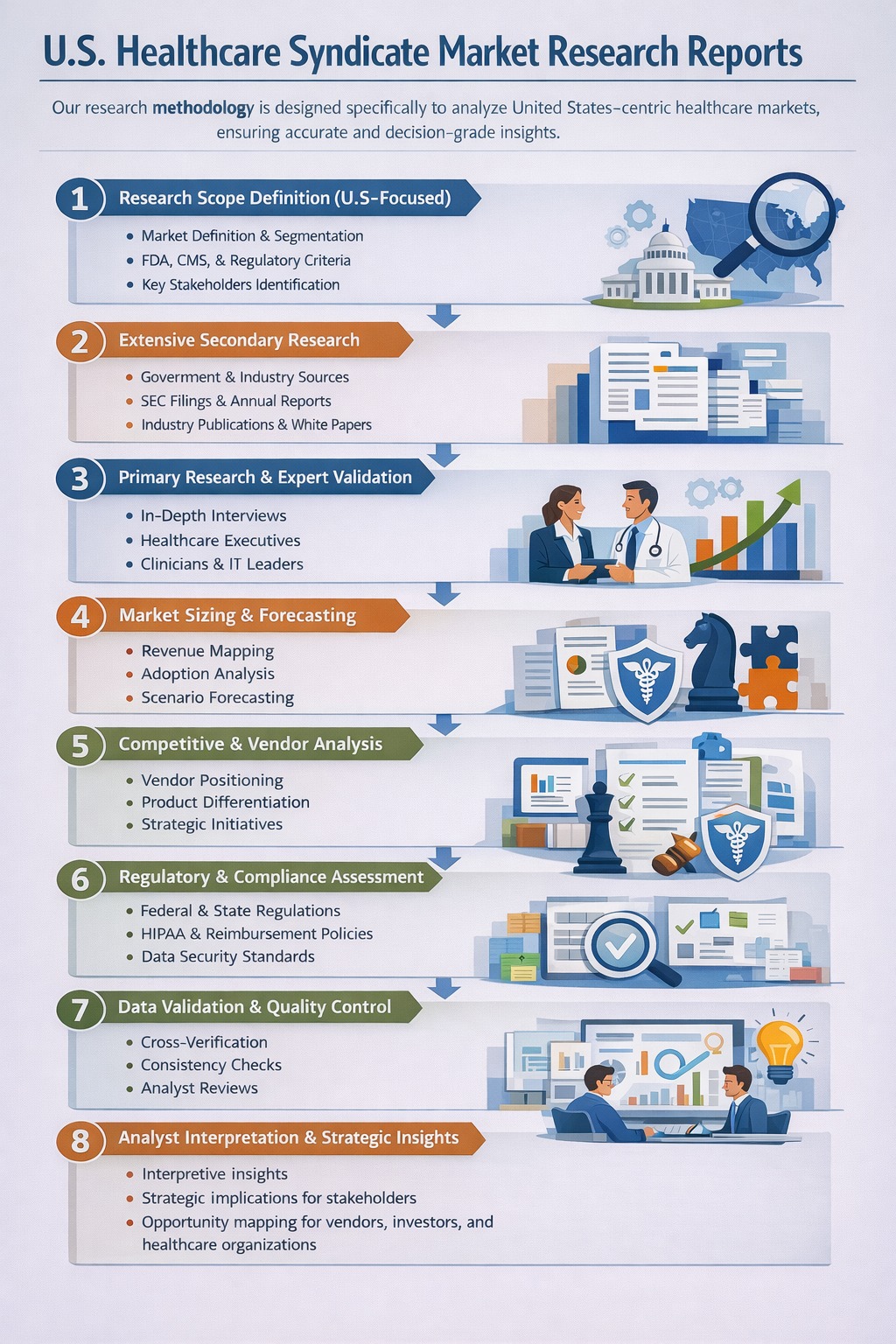
1.3 Research Methodology
1.3.1 Primary Data Collection (Interventional Cardiologists, Cath Lab Heads, Procurement Teams)
1.3.2 Secondary Data Sourcing (FDA, CMS, Clinical Registries, Industry Databases)
1.3.3 External Industry Collaborations
1.3.4 In-House Research Models & Databases
1.3.5 Analytical Frameworks & Forecasting Methodology
1.3.6 Data Validation & Triangulation
1.4 Key Assumptions
1.5 Market Ecosystem Overview (Structural Heart Value Chain)
1.6 Stakeholder Analysis (Device Manufacturers, Hospitals, IDNs, GPOs, Distributors)
What this section provides:
This section establishes the study foundation, defining market boundaries, methodology robustness, data credibility, and stakeholder ecosystem relevant to transcatheter closure technologies in the U.S.
2. US Transcatheter Aortic Valve Closure Device Market: Executive Summary
2.1 Key Insights & Market Snapshot
2.2 Analyst Viewpoint (Strategic Perspective on TAVR Ecosystem)
2.3 Market Attractiveness Index
2.4 High-Growth Segments Overview
What this section provides:
A concise, decision-maker-focused summary highlighting market size, growth trajectory, investment hotspots, and competitive positioning within the closure device landscape.
3. US Transcatheter Aortic Valve Closure Device Market: Market Dynamics & Outlook
3.1 Market Drivers
3.1.1 TAVR Volume Expansion Across Risk Profiles
3.1.2 Demand for Same-Day Discharge & Rapid Hemostasis
3.1.3 Hospital Cost Optimization & Workflow Efficiency
3.2 Market Restraints
3.2.1 Device Failure Risks & Learning Curve
3.2.2 Reimbursement Constraints & Cost Sensitivity
3.3 Market Opportunities
3.3.1 Bioabsorbable Closure Technologies
3.3.2 Expansion into Ambulatory Settings
3.3.3 Integration with Imaging & Smart Guidance
3.4 Patent & Innovation Landscape (2020–2025)
What this section provides:
Detailed evaluation of growth drivers, barriers, and innovation trends shaping adoption, enabling stakeholders to assess risk-return dynamics.
4. US Transcatheter Aortic Valve Closure Device Market: Market Environment & Industry Analysis
4.1 PESTEL Analysis
4.1.1 Political
4.1.2 Economic
4.1.3 Social
4.1.4 Technological
4.1.5 Environmental
4.1.6 Legal
4.2 Porter’s Five Forces Analysis
4.2.1 Threat of New Entrants
4.2.2 Bargaining Power of Buyers (Hospitals, IDNs)
4.2.3 Bargaining Power of Suppliers
4.2.4 Threat of Substitutes
4.2.5 Competitive Rivalry
4.3 Pricing Trend Analysis (2024–2030)
4.4 Value Chain & Supply Chain Analysis
4.5 Clinical Workflow & Cath Lab Economics
4.6 Regulatory Framework (FDA Approvals, CMS Reimbursement)
4.7 Impact of Digital & Imaging Integration
4.8 Impact of Geopolitical & Supply Chain Disruptions
What this section provides:
A strategic industry view covering regulatory, economic, and competitive forces influencing procurement, pricing, and adoption.
5. US Transcatheter Aortic Valve Closure Device Market – By Product Type
5.1 Overview
5.2 Segment Share Analysis, 2025 & 2035 (%)
5.3 Suture-Based Closure Devices
5.4 Collagen-Based Closure Devices
5.5 Clip-Based Closure Devices
5.6 Hybrid Closure Systems
What this section provides:
Breakdown of product innovation pathways and adoption trends, helping identify dominant and emerging closure technologies.
6. US Transcatheter Aortic Valve Closure Device Market – By Access Site
6.1 Overview
6.2 Segment Share Analysis, 2025 & 2035 (%)
6.3 Transfemoral Access
6.4 Transapical Access
6.5 Transaortic Access
6.6 Transaxillary/Subclavian Access
What this section provides:
Insights into procedural approaches influencing closure device demand and innovation focus areas.
7. US Transcatheter Aortic Valve Closure Device Market – By Procedure Type
7.1 Overview
7.2 Segment Share Analysis, 2025 & 2035 (%)
7.3 Transcatheter Aortic Valve Replacement (TAVR)
7.4 TEVAR Adjacent Procedures
7.5 Structural Heart Interventions
What this section provides:
Clarifies procedural demand drivers and cross-utilization opportunities across structural heart interventions.
8. US Transcatheter Aortic Valve Closure Device Market – By End User
8.1 Overview
8.2 Segment Share Analysis, 2025 & 2035 (%)
8.3 Hospitals (Academic & Community)
8.4 Cardiac Catheterization Labs
8.5 Ambulatory Surgical Centers (ASCs)
8.6 Specialty Heart Institutes
What this section provides:
Highlights procurement behavior, adoption maturity, and demand variations across healthcare settings.
9. US Transcatheter Aortic Valve Closure Device Market – By Technology Integration
9.1 Overview
9.2 Segment Share Analysis, 2025 & 2035 (%)
9.3 Manual Closure Systems
9.4 Imaging-Guided Closure Systems
9.5 Smart/Next-Generation Closure Platforms
What this section provides:
Explores technological evolution and future innovation pathways impacting device precision and outcomes.
10. US Transcatheter Aortic Valve Closure Device Market – By Geography
10.1 Introduction
10.2 Segment Share Analysis, 2025 & 2035 (%)
10.3 West Region
10.3.1 Regional Overview & Trends
10.3.2 Key Manufacturers Presence
10.3.3 Market Size & Forecast by Segment
State-Level Analysis
10.3.4 California
10.3.5 Washington
10.3.6 Colorado
10.3.7 Arizona
10.3.8 Oregon
10.3.9 Others
10.3.9.1 Utah
10.3.9.2 Nevada
10.3.9.3 New Mexico
10.3.9.4 Idaho
10.3.9.5 Montana
10.3.9.6 Wyoming
10.3.9.7 Alaska
10.3.9.8 Hawaii
10.4 Northeast Region
10.4.1 Regional Overview & Trends
State-Level Analysis
10.4.2 New York
10.4.3 Massachusetts
10.4.4 New Jersey
10.4.5 Pennsylvania
10.4.6 Connecticut
10.4.7 Others
10.4.7.1 Maine
10.4.7.2 Vermont
10.4.7.3 New Hampshire
10.4.7.4 Rhode Island
10.4.7.5 Delaware
10.5 South Region
10.5.1 Regional Overview & Trends
State-Level Analysis
10.5.2 Texas
10.5.3 Florida
10.5.4 Georgia
10.5.5 North Carolina
10.5.6 Tennessee
10.5.7 South Carolina
10.5.8 Alabama
10.5.9 Others
10.5.9.1 Mississippi
10.5.9.2 Louisiana
10.5.9.3 Arkansas
10.5.9.4 Kentucky
10.5.9.5 Oklahoma
10.5.9.6 Virginia
10.5.9.7 Maryland
10.5.9.8 West Virginia
10.6 Midwest Region
10.6.1 Regional Overview & Trends
State-Level Analysis
10.6.2 Illinois
10.6.3 Ohio
10.6.4 Michigan
10.6.5 Minnesota
10.6.6 Indiana
10.6.7 Wisconsin
10.6.8 Missouri
10.6.9 Others
10.6.9.1 Iowa
10.6.9.2 Kansas
10.6.9.3 Nebraska
10.6.9.4 North Dakota
10.6.9.5 South Dakota
What this section provides:
Granular regional and state-level insights, enabling identification of high-growth markets, procedural density, and investment prioritization across the U.S.
11. US Transcatheter Aortic Valve Closure Device Market: Competitive Landscape & Company Profiles
11.1 Market Share Analysis (2025)
11.2 Competitive Positioning Matrix
11.3 Strategic Developments
11.4 Company Profiles
11.4.1 Abbott Laboratories
11.4.2 Boston Scientific Corporation
11.4.3 Edwards Lifesciences Corporation
11.4.4 Medtronic plc
11.4.5 Teleflex Incorporated
11.4.6 Becton, Dickinson and Company (BD)
11.4.7 Terumo Medical Corporation
11.4.8 Merit Medical Systems
11.4.9 Cardinal Health
11.4.10 Cook Medical
11.4.11 Vivasure Medical
11.4.12 Vasorum Ltd.
11.4.13 Essential Medical (Teleflex)
11.4.14 Endologix
11.4.15 iVascular
11.4.16 InSeal Medical
11.4.17 Tricol Biomedical
11.4.18 Adient Medical
11.4.19 MicroPort Scientific
11.4.20 W. L. Gore & Associates
11.4.21 Johnson & Johnson (Ethicon)
11.4.22 AngioDynamics
11.4.23 Cordis
11.4.24 Biotronik
11.4.25 Shockwave Medical
What this section provides:
Comprehensive competitive intelligence, benchmarking key players, innovation strategies, and market positioning.
12. US Transcatheter Aortic Valve Closure Device Market: Future Market Outlook (2026–2035)
12.1 Scenario Analysis (Optimistic, Base, Conservative)
12.2 Technology Evolution Roadmap
12.3 Emerging Business Models
12.4 Investment Opportunities
What this section provides:
Forward-looking insights into market evolution, helping stakeholders prepare for technological and competitive shifts.
13. US Transcatheter Aortic Valve Closure Device Market: Strategic Recommendations
13.1 For Manufacturers
13.2 For Hospitals & IDNs
13.3 For Investors & New Entrants
What this section provides:
Actionable strategies to optimize market entry, expansion, and competitive positioning.
14. Disclaimer
What this section provides:
Clarifies legal scope, data limitations, and usage terms of the report.
List of Tables
TABLE 1: List of Data Sources
TABLE 2: Market Drivers; Impact Analysis
TABLE 3: Market Restraints; Impact Analysis
TABLE 4: US Transcatheter Aortic Valve Closure Device Market: Product Type Snapshot (2025)
TABLE 5: Segment Dashboard; Definition and Scope, by Product Type
TABLE 6: US Transcatheter Aortic Valve Closure Device Market, by Product Type, 2021–2035 (USD Million)
TABLE 7: US Transcatheter Aortic Valve Closure Device Market: Access Site Snapshot (2025)
TABLE 8: Segment Dashboard; Definition and Scope, by Access Site
TABLE 9: US Transcatheter Aortic Valve Closure Device Market, by Access Site, 2021–2035 (USD Million)
TABLE 10: US Transcatheter Aortic Valve Closure Device Market: Procedure Type Snapshot (2025)
TABLE 11: Segment Dashboard; Definition and Scope, by Procedure Type
TABLE 12: US Transcatheter Aortic Valve Closure Device Market, by Procedure Type, 2021–2035 (USD Million)
TABLE 13: US Transcatheter Aortic Valve Closure Device Market: Technology Integration Snapshot (2025)
TABLE 14: Segment Dashboard; Definition and Scope, by Technology Integration
TABLE 15: US Transcatheter Aortic Valve Closure Device Market, by Technology Integration, 2021–2035 (USD Million)
TABLE 16: US Transcatheter Aortic Valve Closure Device Market: End-User Snapshot (2025)
TABLE 17: Segment Dashboard; Definition and Scope, by End-User
TABLE 18: US Transcatheter Aortic Valve Closure Device Market, by End-User, 2021–2035 (USD Million)
TABLE 19: US Transcatheter Aortic Valve Closure Device Market: Regional Snapshot (2025)
TABLE 20: Segment Dashboard; Definition and Scope, by Region
TABLE 21: US Transcatheter Aortic Valve Closure Device Market, by Region, 2021–2035 (USD Million)
TABLE 22: California Transcatheter Aortic Valve Closure Device Market, by Product Type, 2021–2035 (USD Million)
TABLE 23: California Transcatheter Aortic Valve Closure Device Market, by Access Site, 2021–2035 (USD Million)
TABLE 24: California Transcatheter Aortic Valve Closure Device Market, by Procedure Type, 2021–2035 (USD Million)
TABLE 25: California Transcatheter Aortic Valve Closure Device Market, by Technology Integration, 2021–2035 (USD Million)
TABLE 26: California Transcatheter Aortic Valve Closure Device Market, by End-User, 2021–2035 (USD Million)
TABLE 27: Washington Transcatheter Aortic Valve Closure Device Market, by Product Type, 2021–2035 (USD Million)
TABLE 28: Washington Transcatheter Aortic Valve Closure Device Market, by Access Site, 2021–2035 (USD Million)
TABLE 29: Washington Transcatheter Aortic Valve Closure Device Market, by Procedure Type, 2021–2035 (USD Million)
TABLE 30: Washington Transcatheter Aortic Valve Closure Device Market, by Technology Integration, 2021–2035 (USD Million)
TABLE 31: Washington Transcatheter Aortic Valve Closure Device Market, by End-User, 2021–2035 (USD Million)
TABLE 32: Colorado Transcatheter Aortic Valve Closure Device Market, by Product Type, 2021–2035 (USD Million)
TABLE 33: Colorado Transcatheter Aortic Valve Closure Device Market, by Access Site, 2021–2035 (USD Million)
TABLE 34: Colorado Transcatheter Aortic Valve Closure Device Market, by Procedure Type, 2021–2035 (USD Million)
TABLE 35: Colorado Transcatheter Aortic Valve Closure Device Market, by Technology Integration, 2021–2035 (USD Million)
TABLE 36: Colorado Transcatheter Aortic Valve Closure Device Market, by End-User, 2021–2035 (USD Million)
TABLE 37: Arizona Transcatheter Aortic Valve Closure Device Market, by Product Type, 2021–2035 (USD Million)
TABLE 38: Arizona Transcatheter Aortic Valve Closure Device Market, by Access Site, 2021–2035 (USD Million)
TABLE 39: Arizona Transcatheter Aortic Valve Closure Device Market, by Procedure Type, 2021–2035 (USD Million)
TABLE 40: Arizona Transcatheter Aortic Valve Closure Device Market, by Technology Integration, 2021–2035 (USD Million)
TABLE 41: Arizona Transcatheter Aortic Valve Closure Device Market, by End-User, 2021–2035 (USD Million)
TABLE 42: Oregon Transcatheter Aortic Valve Closure Device Market, by Product Type, 2021–2035 (USD Million)
TABLE 43: Oregon Transcatheter Aortic Valve Closure Device Market, by Access Site, 2021–2035 (USD Million)
TABLE 44: Oregon Transcatheter Aortic Valve Closure Device Market, by Procedure Type, 2021–2035 (USD Million)
TABLE 45: Oregon Transcatheter Aortic Valve Closure Device Market, by Technology Integration, 2021–2035 (USD Million)
TABLE 46: Oregon Transcatheter Aortic Valve Closure Device Market, by End-User, 2021–2035 (USD Million)
TABLE 47: West – Others Transcatheter Aortic Valve Closure Device Market, by Product Type, 2021–2035 (USD Million)
TABLE 48: West – Others Transcatheter Aortic Valve Closure Device Market, by Access Site, 2021–2035 (USD Million)
TABLE 49: West – Others Transcatheter Aortic Valve Closure Device Market, by Procedure Type, 2021–2035 (USD Million)
TABLE 50: West – Others Transcatheter Aortic Valve Closure Device Market, by Technology Integration, 2021–2035 (USD Million)
TABLE 51: West – Others Transcatheter Aortic Valve Closure Device Market, by End-User, 2021–2035 (USD Million)
(Nevada, Utah, New Mexico, Idaho, Montana, Wyoming, Alaska, Hawaii)
TABLE 52: New York Transcatheter Aortic Valve Closure Device Market, by Product Type, 2021–2035 (USD Million)
TABLE 53: New York Transcatheter Aortic Valve Closure Device Market, by Access Site, 2021–2035 (USD Million)
TABLE 54: New York Transcatheter Aortic Valve Closure Device Market, by Procedure Type, 2021–2035 (USD Million)
TABLE 55: New York Transcatheter Aortic Valve Closure Device Market, by Technology Integration, 2021–2035 (USD Million)
TABLE 56: New York Transcatheter Aortic Valve Closure Device Market, by End-User, 2021–2035 (USD Million)
TABLE 57: Massachusetts Transcatheter Aortic Valve Closure Device Market, by Product Type, 2021–2035 (USD Million)
TABLE 58: Massachusetts Transcatheter Aortic Valve Closure Device Market, by Access Site, 2021–2035 (USD Million)
TABLE 59: Massachusetts Transcatheter Aortic Valve Closure Device Market, by Procedure Type, 2021–2035 (USD Million)
TABLE 60: Massachusetts Transcatheter Aortic Valve Closure Device Market, by Technology Integration, 2021–2035 (USD Million)
TABLE 61: Massachusetts Transcatheter Aortic Valve Closure Device Market, by End-User, 2021–2035 (USD Million)
TABLE 62: New Jersey Transcatheter Aortic Valve Closure Device Market, by Product Type, 2021–2035 (USD Million)
TABLE 63: New Jersey Transcatheter Aortic Valve Closure Device Market, by Access Site, 2021–2035 (USD Million)
TABLE 64: New Jersey Transcatheter Aortic Valve Closure Device Market, by Procedure Type, 2021–2035 (USD Million)
TABLE 65: New Jersey Transcatheter Aortic Valve Closure Device Market, by Technology Integration, 2021–2035 (USD Million)
TABLE 66: New Jersey Transcatheter Aortic Valve Closure Device Market, by End-User, 2021–2035 (USD Million)
TABLE 67: Pennsylvania Transcatheter Aortic Valve Closure Device Market, by Product Type, 2021–2035 (USD Million)
TABLE 68: Pennsylvania Transcatheter Aortic Valve Closure Device Market, by Access Site, 2021–2035 (USD Million)
TABLE 69: Pennsylvania Transcatheter Aortic Valve Closure Device Market, by Procedure Type, 2021–2035 (USD Million)
TABLE 70: Pennsylvania Transcatheter Aortic Valve Closure Device Market, by Technology Integration, 2021–2035 (USD Million)
TABLE 71: Pennsylvania Transcatheter Aortic Valve Closure Device Market, by End-User, 2021–2035 (USD Million)
TABLE 72: Connecticut Transcatheter Aortic Valve Closure Device Market, by Product Type, 2021–2035 (USD Million)
TABLE 73: Connecticut Transcatheter Aortic Valve Closure Device Market, by Access Site, 2021–2035 (USD Million)
TABLE 74: Connecticut Transcatheter Aortic Valve Closure Device Market, by Procedure Type, 2021–2035 (USD Million)
TABLE 75: Connecticut Transcatheter Aortic Valve Closure Device Market, by Technology Integration, 2021–2035 (USD Million)
TABLE 76: Connecticut Transcatheter Aortic Valve Closure Device Market, by End-User, 2021–2035 (USD Million)
TABLE 77: Northeast – Others Transcatheter Aortic Valve Closure Device Market, by Product Type, 2021–2035 (USD Million)
TABLE 78: Northeast – Others Transcatheter Aortic Valve Closure Device Market, by Access Site, 2021–2035 (USD Million)
TABLE 79: Northeast – Others Transcatheter Aortic Valve Closure Device Market, by Procedure Type, 2021–2035 (USD Million)
TABLE 80: Northeast – Others Transcatheter Aortic Valve Closure Device Market, by Technology Integration, 2021–2035 (USD Million)
TABLE 81: Northeast – Others Transcatheter Aortic Valve Closure Device Market, by End-User, 2021–2035 (USD Million)
(Maine, Vermont, New Hampshire, Rhode Island, Delaware)
TABLE 82: Texas Transcatheter Aortic Valve Closure Device Market, by Product Type, 2021–2035 (USD Million)
TABLE 83: Texas Transcatheter Aortic Valve Closure Device Market, by Access Site, 2021–2035 (USD Million)
TABLE 84: Texas Transcatheter Aortic Valve Closure Device Market, by Procedure Type, 2021–2035 (USD Million)
TABLE 85: Texas Transcatheter Aortic Valve Closure Device Market, by Technology Integration, 2021–2035 (USD Million)
TABLE 86: Texas Transcatheter Aortic Valve Closure Device Market, by End-User, 2021–2035 (USD Million)
TABLE 87: Florida Transcatheter Aortic Valve Closure Device Market, by Product Type, 2021–2035 (USD Million)
TABLE 88: Florida Transcatheter Aortic Valve Closure Device Market, by Access Site, 2021–2035 (USD Million)
TABLE 89: Florida Transcatheter Aortic Valve Closure Device Market, by Procedure Type, 2021–2035 (USD Million)
TABLE 90: Florida Transcatheter Aortic Valve Closure Device Market, by Technology Integration, 2021–2035 (USD Million)
TABLE 91: Florida Transcatheter Aortic Valve Closure Device Market, by End-User, 2021–2035 (USD Million)
TABLE 92: Georgia Transcatheter Aortic Valve Closure Device Market, by Product Type, 2021–2035 (USD Million)
TABLE 93: Georgia Transcatheter Aortic Valve Closure Device Market, by Access Site, 2021–2035 (USD Million)
TABLE 94: Georgia Transcatheter Aortic Valve Closure Device Market, by Procedure Type, 2021–2035 (USD Million)
TABLE 95: Georgia Transcatheter Aortic Valve Closure Device Market, by Technology Integration, 2021–2035 (USD Million)
TABLE 96: Georgia Transcatheter Aortic Valve Closure Device Market, by End-User, 2021–2035 (USD Million)
TABLE 97: North Carolina Transcatheter Aortic Valve Closure Device Market, by Product Type, 2021–2035 (USD Million)
TABLE 98: North Carolina Transcatheter Aortic Valve Closure Device Market, by Access Site, 2021–2035 (USD Million)
TABLE 99: North Carolina Transcatheter Aortic Valve Closure Device Market, by Procedure Type, 2021–2035 (USD Million)
TABLE 100: North Carolina Transcatheter Aortic Valve Closure Device Market, by Technology Integration, 2021–2035 (USD Million)
TABLE 101: North Carolina Transcatheter Aortic Valve Closure Device Market, by End-User, 2021–2035 (USD Million)
TABLE 102: Tennessee Transcatheter Aortic Valve Closure Device Market, by Product Type, 2021–2035 (USD Million)
TABLE 103: Tennessee Transcatheter Aortic Valve Closure Device Market, by Access Site, 2021–2035 (USD Million)
TABLE 104: Tennessee Transcatheter Aortic Valve Closure Device Market, by Procedure Type, 2021–2035 (USD Million)
TABLE 105: Tennessee Transcatheter Aortic Valve Closure Device Market, by Technology Integration, 2021–2035 (USD Million)
TABLE 106: Tennessee Transcatheter Aortic Valve Closure Device Market, by End-User, 2021–2035 (USD Million)
TABLE 107: South Carolina Transcatheter Aortic Valve Closure Device Market, by Product Type, 2021–2035 (USD Million)
TABLE 108: South Carolina Transcatheter Aortic Valve Closure Device Market, by Access Site, 2021–2035 (USD Million)
TABLE 109: South Carolina Transcatheter Aortic Valve Closure Device Market, by Procedure Type, 2021–2035 (USD Million)
TABLE 110: South Carolina Transcatheter Aortic Valve Closure Device Market, by Technology Integration, 2021–2035 (USD Million)
TABLE 111: South Carolina Transcatheter Aortic Valve Closure Device Market, by End-User, 2021–2035 (USD Million)
TABLE 112: Alabama Transcatheter Aortic Valve Closure Device Market, by Product Type, 2021–2035 (USD Million)
TABLE 113: Alabama Transcatheter Aortic Valve Closure Device Market, by Access Site, 2021–2035 (USD Million)
TABLE 114: Alabama Transcatheter Aortic Valve Closure Device Market, by Procedure Type, 2021–2035 (USD Million)
TABLE 115: Alabama Transcatheter Aortic Valve Closure Device Market, by Technology Integration, 2021–2035 (USD Million)
TABLE 116: Alabama Transcatheter Aortic Valve Closure Device Market, by End-User, 2021–2035 (USD Million)
TABLE 117: South – Others Transcatheter Aortic Valve Closure Device Market, by Product Type, 2021–2035 (USD Million)
TABLE 118: South – Others Transcatheter Aortic Valve Closure Device Market, by Access Site, 2021–2035 (USD Million)
TABLE 119: South – Others Transcatheter Aortic Valve Closure Device Market, by Procedure Type, 2021–2035 (USD Million)
TABLE 120: South – Others Transcatheter Aortic Valve Closure Device Market, by Technology Integration, 2021–2035 (USD Million)
TABLE 121: South – Others Transcatheter Aortic Valve Closure Device Market, by End-User, 2021–2035 (USD Million)
(Mississippi, Louisiana, Arkansas, Kentucky, Oklahoma, Virginia, Maryland, West Virginia)
TABLE 122: Illinois Transcatheter Aortic Valve Closure Device Market, by Product Type, 2021–2035 (USD Million)
TABLE 123: Illinois Transcatheter Aortic Valve Closure Device Market, by Access Site, 2021–2035 (USD Million)
TABLE 124: Illinois Transcatheter Aortic Valve Closure Device Market, by Procedure Type, 2021–2035 (USD Million)
TABLE 125: Illinois Transcatheter Aortic Valve Closure Device Market, by Technology Integration, 2021–2035 (USD Million)
TABLE 126: Illinois Transcatheter Aortic Valve Closure Device Market, by End-User, 2021–2035 (USD Million)
TABLE 127: Ohio Transcatheter Aortic Valve Closure Device Market, by Product Type, 2021–2035 (USD Million)
TABLE 128: Ohio Transcatheter Aortic Valve Closure Device Market, by Access Site, 2021–2035 (USD Million)
TABLE 129: Ohio Transcatheter Aortic Valve Closure Device Market, by Procedure Type, 2021–2035 (USD Million)
TABLE 130: Ohio Transcatheter Aortic Valve Closure Device Market, by Technology Integration, 2021–2035 (USD Million)
TABLE 131: Ohio Transcatheter Aortic Valve Closure Device Market, by End-User, 2021–2035 (USD Million)
TABLE 132: Michigan Transcatheter Aortic Valve Closure Device Market, by Product Type, 2021–2035 (USD Million)
TABLE 133: Michigan Transcatheter Aortic Valve Closure Device Market, by Access Site, 2021–2035 (USD Million)
TABLE 134: Michigan Transcatheter Aortic Valve Closure Device Market, by Procedure Type, 2021–2035 (USD Million)
TABLE 135: Michigan Transcatheter Aortic Valve Closure Device Market, by Technology Integration, 2021–2035 (USD Million)
TABLE 136: Michigan Transcatheter Aortic Valve Closure Device Market, by End-User, 2021–2035 (USD Million)
TABLE 137: Minnesota Transcatheter Aortic Valve Closure Device Market, by Product Type, 2021–2035 (USD Million)
TABLE 138: Minnesota Transcatheter Aortic Valve Closure Device Market, by Access Site, 2021–2035 (USD Million)
TABLE 139: Minnesota Transcatheter Aortic Valve Closure Device Market, by Procedure Type, 2021–2035 (USD Million)
TABLE 140: Minnesota Transcatheter Aortic Valve Closure Device Market, by Technology Integration, 2021–2035 (USD Million)
TABLE 141: Minnesota Transcatheter Aortic Valve Closure Device Market, by End-User, 2021–2035 (USD Million)
TABLE 142: Indiana Transcatheter Aortic Valve Closure Device Market, by Product Type, 2021–2035 (USD Million)
TABLE 143: Indiana Transcatheter Aortic Valve Closure Device Market, by Access Site, 2021–2035 (USD Million)
TABLE 144: Indiana Transcatheter Aortic Valve Closure Device Market, by Procedure Type, 2021–2035 (USD Million)
TABLE 145: Indiana Transcatheter Aortic Valve Closure Device Market, by Technology Integration, 2021–2035 (USD Million)
TABLE 146: Indiana Transcatheter Aortic Valve Closure Device Market, by End-User, 2021–2035 (USD Million)
TABLE 147: Wisconsin Transcatheter Aortic Valve Closure Device Market, by Product Type, 2021–2035 (USD Million)
TABLE 148: Wisconsin Transcatheter Aortic Valve Closure Device Market, by Access Site, 2021–2035 (USD Million)
TABLE 149: Wisconsin Transcatheter Aortic Valve Closure Device Market, by Procedure Type, 2021–2035 (USD Million)
TABLE 150: Wisconsin Transcatheter Aortic Valve Closure Device Market, by Technology Integration, 2021–2035 (USD Million)
TABLE 151: Wisconsin Transcatheter Aortic Valve Closure Device Market, by End-User, 2021–2035 (USD Million)
TABLE 152: Missouri Transcatheter Aortic Valve Closure Device Market, by Product Type, 2021–2035 (USD Million)
TABLE 153: Missouri Transcatheter Aortic Valve Closure Device Market, by Access Site, 2021–2035 (USD Million)
TABLE 154: Missouri Transcatheter Aortic Valve Closure Device Market, by Procedure Type, 2021–2035 (USD Million)
TABLE 155: Missouri Transcatheter Aortic Valve Closure Device Market, by Technology Integration, 2021–2035 (USD Million)
TABLE 156: Missouri Transcatheter Aortic Valve Closure Device Market, by End-User, 2021–2035 (USD Million)
TABLE 157: Midwest – Others Transcatheter Aortic Valve Closure Device Market, by Product Type, 2021–2035 (USD Million)
TABLE 158: Midwest – Others Transcatheter Aortic Valve Closure Device Market, by Access Site, 2021–2035 (USD Million)
TABLE 159: Midwest – Others Transcatheter Aortic Valve Closure Device Market, by Procedure Type, 2021–2035 (USD Million)
TABLE 160: Midwest – Others Transcatheter Aortic Valve Closure Device Market, by Technology Integration, 2021–2035 (USD Million)
TABLE 161: Midwest – Others Transcatheter Aortic Valve Closure Device Market, by End-User, 2021–2035 (USD Million)
(Iowa, Kansas, Nebraska, North Dakota, South Dakota)
List of Figures
FIGURE 1: US Transcatheter Aortic Valve Closure Device Market Segmentation
FIGURE 2: Market Research Methodology
FIGURE 3: Value Chain Analysis (Structural Heart Ecosystem)
FIGURE 4: PESTLE Analysis
FIGURE 5: Porter’s Five Forces Analysis
FIGURE 6: Market Attractiveness Analysis
FIGURE 7: Market Dynamics
FIGURE 8: Innovation & Patent Landscape (2020–2025)
FIGURE 9: Competitive Landscape; Key Company Market Share Analysis, 2025
FIGURE 10: Product Type Segment Market Share Analysis, 2025 & 2035
FIGURE 11: Product Type Segment Market Size Forecast and Trend Analysis, 2026–2035 (USD Million)
FIGURE 12: Access Site Segment Market Share Analysis, 2025 & 2035
FIGURE 13: Access Site Segment Market Size Forecast and Trend Analysis, 2026–2035 (USD Million)
FIGURE 14: Procedure Type Segment Market Share Analysis, 2025 & 2035
FIGURE 15: Procedure Type Segment Market Size Forecast and Trend Analysis, 2026–2035 (USD Million)
FIGURE 16: Technology Integration Segment Market Share Analysis, 2025 & 2035
FIGURE 17: Technology Integration Segment Market Size Forecast and Trend Analysis, 2026–2035 (USD Million)
FIGURE 18: End-User Segment Market Share Analysis, 2025 & 2035
FIGURE 19: End-User Segment Market Size Forecast and Trend Analysis, 2026–2035 (USD Million)
FIGURE 20: Regional Segment Market Share Analysis, 2025 & 2035
FIGURE 21: Regional Segment Market Size Forecast and Trend Analysis, 2026–2035 (USD Million)
FIGURE 22: West Region US Transcatheter Aortic Valve Closure Device Market Share and Leading Players, 2025
FIGURE 23: Northeast Region US Transcatheter Aortic Valve Closure Device Market Share and Leading Players, 2025
FIGURE 24: South Region US Transcatheter Aortic Valve Closure Device Market Share and Leading Players, 2025
FIGURE 25: Midwest Region US Transcatheter Aortic Valve Closure Device Market Share and Leading Players, 2025
FIGURE 26: West Region Market Share Analysis by State, 2025
FIGURE 27: California Transcatheter Aortic Valve Closure Device Market Size, Forecast and Trend Analysis, 2026–2035 (USD Million)
FIGURE 28: Washington Transcatheter Aortic Valve Closure Device Market Size, Forecast and Trend Analysis, 2026–2035 (USD Million)
FIGURE 29: Colorado Transcatheter Aortic Valve Closure Device Market Size, Forecast and Trend Analysis, 2026–2035 (USD Million)
FIGURE 30: Arizona Transcatheter Aortic Valve Closure Device Market Size, Forecast and Trend Analysis, 2026–2035 (USD Million)
FIGURE 31: Oregon Transcatheter Aortic Valve Closure Device Market Size, Forecast and Trend Analysis, 2026–2035 (USD Million)
FIGURE 32: Others (West Region) Transcatheter Aortic Valve Closure Device Market Size, Forecast and Trend Analysis, 2026–2035 (USD Million)
FIGURE 33: South Region Market Share Analysis by State, 2025
FIGURE 34: Texas Transcatheter Aortic Valve Closure Device Market Size, Forecast and Trend Analysis, 2026–2035 (USD Million)
FIGURE 35: Florida Transcatheter Aortic Valve Closure Device Market Size, Forecast and Trend Analysis, 2026–2035 (USD Million)
FIGURE 36: Georgia Transcatheter Aortic Valve Closure Device Market Size, Forecast and Trend Analysis, 2026–2035 (USD Million)
FIGURE 37: North Carolina Transcatheter Aortic Valve Closure Device Market Size, Forecast and Trend Analysis, 2026–2035 (USD Million)
FIGURE 38: Tennessee Transcatheter Aortic Valve Closure Device Market Size, Forecast and Trend Analysis, 2026–2035 (USD Million)
FIGURE 39: South Carolina Transcatheter Aortic Valve Closure Device Market Size, Forecast and Trend Analysis, 2026–2035 (USD Million)
FIGURE 40: Alabama Transcatheter Aortic Valve Closure Device Market Size, Forecast and Trend Analysis, 2026–2035 (USD Million)
FIGURE 41: Others (South Region) Transcatheter Aortic Valve Closure Device Market Size, Forecast and Trend Analysis, 2026–2035 (USD Million)
FIGURE 42: Midwest Region Market Share Analysis by State, 2025
FIGURE 43: Illinois Transcatheter Aortic Valve Closure Device Market Size, Forecast and Trend Analysis, 2026–2035 (USD Million)
FIGURE 44: Ohio Transcatheter Aortic Valve Closure Device Market Size, Forecast and Trend Analysis, 2026–2035 (USD Million)
FIGURE 45: Michigan Transcatheter Aortic Valve Closure Device Market Size, Forecast and Trend Analysis, 2026–2035 (USD Million)
FIGURE 46: Minnesota Transcatheter Aortic Valve Closure Device Market Size, Forecast and Trend Analysis, 2026–2035 (USD Million)
FIGURE 47: Indiana Transcatheter Aortic Valve Closure Device Market Size, Forecast and Trend Analysis, 2026–2035 (USD Million)
FIGURE 48: Wisconsin Transcatheter Aortic Valve Closure Device Market Size, Forecast and Trend Analysis, 2026–2035 (USD Million)
FIGURE 49: Missouri Transcatheter Aortic Valve Closure Device Market Size, Forecast and Trend Analysis, 2026–2035 (USD Million)
FIGURE 50: Others (Midwest Region) Transcatheter Aortic Valve Closure Device Market Size, Forecast and Trend Analysis, 2026–2035 (USD Million)
FIGURE 51: Northeast Region Market Share Analysis by State, 2025
FIGURE 52: New York Transcatheter Aortic Valve Closure Device Market Size, Forecast and Trend Analysis, 2026–2035 (USD Million)
FIGURE 53: Massachusetts Transcatheter Aortic Valve Closure Device Market Size, Forecast and Trend Analysis, 2026–2035 (USD Million)
FIGURE 54: New Jersey Transcatheter Aortic Valve Closure Device Market Size, Forecast and Trend Analysis, 2026–2035 (USD Million)
FIGURE 55: Pennsylvania Transcatheter Aortic Valve Closure Device Market Size, Forecast and Trend Analysis, 2026–2035 (USD Million)
FIGURE 56: Connecticut Transcatheter Aortic Valve Closure Device Market Size, Forecast and Trend Analysis, 2026–2035 (USD Million)
FIGURE 57: Others (Northeast Region) Transcatheter Aortic Valve Closure Device Market Size, Forecast and Trend Analysis, 2026–2035 (USD Million)
1. How sensitive is the closure device market to TAVR volume growth?
A 1% increase in US TAVR volumes (currently ~150,000+ annually) typically drives a 0.8–1.1% increase in closure device demand, given near 1:1 procedural dependency and dual-device usage in ~35–45% of cases.
2. What is the real economic impact of vascular complications post-TAVR?
Major vascular complications add USD 8,000–15,000 per case, increasing total hospitalization costs by 18–25%, making closure device performance a direct driver of hospital margin preservation.
3. Why are hospitals shifting from suture-based to collagen-based systems?
While suture-based devices dominate (~60–65% share), collagen-based systems are growing at ~18–22% CAGR, due to 30–50% faster hemostasis time and lower operator dependency.
4. How critical is closure device performance in same-day discharge protocols?
Hospitals targeting <24-hour discharge require >95% first-pass hemostasis success rates, positioning advanced closure devices as essential for reducing overnight admissions by 20–30%.
5. What procurement factors matter most in US hospitals?
Top 3 decision drivers:
Clinical outcomes (complication rate reduction of ≥20%)
Ease of use (training time <5 procedures)
Cost per case (~USD 250–600/device, often 2 devices per procedure)
6. How does operator experience influence device selection?
In low-volume centers (<50 TAVR/year), complication variability can differ by 2–3x, leading to preference for simplified or plug-based systems over technically demanding suture systems.
7. What role does imaging integration play in future adoption?
Imaging-guided closure (IVUS/fluoroscopy-assisted) can reduce access-site complications by 15–25%, and is expected to penetrate ~40% of high-volume centers by 2030.
8. Are ambulatory surgical centers (ASCs) a real growth avenue?
Currently <5% of procedures but projected to reach 10–12% by 2035, driven by CMS reimbursement evolution and demand for lower-cost procedural settings.
9. Which US regions generate the highest procedural density?
Top contributors:
West (California): ~20–25% of US TAVR volume
South (Texas & Florida combined): ~30%+ share
These regions drive disproportionate closure device consumption and early adoption.
10. What defines competitive advantage for manufacturers in this market?
Winning players consistently deliver:
<5% complication rates
Deployment time <5 minutes
Compatibility with large-bore (20F–25F) access
Strong GPO contracts covering >60% of IDNs