
By Product Type (Balloon-Expandable Delivery Systems, Self-Expanding Delivery Systems, Mechanically Expandable Delivery Systems), By Access Route (Transfemoral, Transapical, Transaortic, Transaxillary/Subclavian, Others), By End User (Hospitals, Cardiac Catheterization Laboratories, Ambulatory Surgical Centers), By Indication (Severe Aortic Stenosis – High Risk, Intermediate Risk, Low Risk, Valve-in-Valve Procedures), By Region (Northeast, Midwest, South, West) – Market Size, Industry Analysis, Segmental Insights, Regional Overview, Company Share Analysis, and Market Forecast, 2021–2035
Market Outlook
The US Transcatheter Aortic Valve Delivery System Market is projected to reach USD 9.84 billion by 2035, expanding at a CAGR of 12.76% during the forecast period (2026–2035). The market was valued at approximately USD 3.18 billion in 2025, supported by strong procedural volumes across structural heart programs and continued expansion of TAVR eligibility into lower-risk patient cohorts. Historical growth from 2021 to 2024 reflects a procedural shift from surgical aortic valve replacement (SAVR) toward minimally invasive transcatheter interventions, particularly in elderly and comorbid populations.
The delivery system segment represents a critical enabling technology within the broader TAVR ecosystem. While valve prostheses often capture headline innovation, delivery systems dictate procedural success, vascular access safety, and operator efficiency, making them a focal point for hospital procurement decisions and device iteration cycles. Increasing procedural complexity, including valve-in-valve and bicuspid anatomies, is further driving innovation in sheath profiles, steerability, and repositionability.
The US healthcare system continues to prioritize minimally invasive cardiovascular interventions due to their shorter length of stay (LOS), reduced ICU utilization, and improved patient throughput economics. As a result, TAVR programs are being expanded beyond academic medical centers into community hospitals, directly influencing demand for delivery platforms that are intuitive, reproducible, and compatible with diverse operator skill levels.
Introduction
According to the US Transcatheter Aortic Valve Delivery System Market Report, the sector is defined by rapid device iteration, strong clinical evidence generation, and evolving reimbursement frameworks that increasingly favor transcatheter approaches over open-heart surgery.
Aortic stenosis remains one of the most prevalent valvular diseases in the US, particularly among the aging population. With over 12% of Americans aged ≥75 exhibiting moderate-to-severe disease, the procedural demand base is structurally expanding. The introduction of TAVR into low-risk patient populations following pivotal trials has significantly increased addressable volumes, shifting the market from niche to mainstream cardiovascular intervention.
Delivery systems play a central role in this transformation. The US market is characterized by:
Continuous reduction in delivery catheter profile sizes (≤14F equivalent)
Enhanced flexibility for tortuous vascular anatomy
Improved deployment precision and repositionability
Integration with imaging-guided workflows
These factors collectively improve procedural safety and expand eligibility among patients previously excluded due to anatomical constraints.
Key Market Drivers: What’s Fueling the US Transcatheter Aortic Valve Delivery System Market?
Expansion of TAVR into Low-Risk Populations
The FDA approval of TAVR for low surgical risk patients has fundamentally altered the procedural landscape. This expansion has more than doubled the annual eligible patient pool compared to the high-risk-only era. As younger and healthier patients undergo TAVR, expectations for device durability, precision, and procedural consistency increase—placing delivery systems under greater scrutiny.
Hospital Economics and Procedural Throughput Optimization
US hospitals are increasingly focused on procedure standardization and cath lab efficiency. Delivery systems that reduce:
Procedure time
Contrast usage
Vascular complications
directly contribute to improved margins under bundled payment models. TAVR procedures now average 1–2 days LOS, compared to 5–7 days for SAVR, reinforcing the economic case for transcatheter approaches.
Technological Advancements in Delivery Platforms
Manufacturers are investing heavily in:
Low-profile sheath technology enabling broader transfemoral access
Recapturable and repositionable systems to reduce malposition risks
Hydrophilic coatings and steerability enhancements for smoother navigation
These advancements are particularly critical in the US, where patient populations often present with complex comorbidities and calcified vasculature.
Shift Toward Transfemoral Dominance
More than 90% of TAVR procedures in the US are now performed via transfemoral access, significantly increasing demand for delivery systems optimized for femoral artery navigation. This has reduced reliance on alternative access routes and concentrated innovation in transfemoral-compatible systems.
Innovation in Focus: How Manufacturers Are Raising the Bar
The innovation cycle in TAVR delivery systems is tightly linked to clinical trial outcomes, operator feedback, and real-world registry data (e.g., STS/ACC TVT Registry). Unlike earlier-generation devices, current platforms are designed with procedure predictability and reproducibility as core objectives.
Recent innovation trends include:
Integrated delivery and deployment systems reducing setup complexity
Single-operator usability enhancements
AI-assisted imaging integration for deployment guidance
Next-generation sheathless delivery approaches
Additionally, manufacturers are aligning product development with US regulatory expectations, focusing on safety endpoints such as stroke reduction, vascular complications, and paravalvular leak mitigation.
Segmentation Insights
By Product Type
- Balloon-Expandable Delivery Systems (Dominant Segment)
Balloon-expandable systems dominate the US market due to their deployment precision and widespread physician familiarity. These systems are particularly favored in cases requiring accurate valve placement, such as patients with challenging annular anatomy. US clinicians often prefer balloon-expandable platforms in high-volume centers where procedural standardization is critical. Their compatibility with established imaging protocols and predictable expansion dynamics contributes to continued dominance. - Self-Expanding Delivery Systems
Self-expanding systems are gaining traction due to their ability to conform to irregular anatomies and provide gradual deployment control. These systems are widely used in patients with larger annuli or bicuspid valves, which are increasingly treated in the US. The flexibility of these delivery systems also supports navigation through tortuous peripheral vasculature, a common challenge in elderly US populations. - Mechanically Expandable Delivery Systems
Although a smaller segment, mechanically expandable systems offer controlled deployment and repositionability, making them suitable for complex cases. However, adoption remains limited due to device complexity and competitive pressure from established platforms.
By Access Route
- Transfemoral Access (Dominant and Fastest-Growing)
Transfemoral access accounts for the vast majority of US TAVR procedures. The shift toward fully percutaneous approaches has made delivery system design highly dependent on femoral compatibility. Advancements in low-profile delivery catheters have significantly reduced vascular complications, enabling broader patient eligibility and reinforcing transfemoral dominance. - Transapical and Transaortic Access
These approaches have seen declining utilization in the US due to their invasive nature and higher complication rates. However, they remain relevant in cases where transfemoral access is not feasible. - Transaxillary/Subclavian Access
This segment is experiencing moderate growth, particularly in specialized centers managing complex vascular anatomies. Delivery systems designed for alternative access routes must offer enhanced flexibility and navigation control.
By End User
- Hospitals (Dominant Segment)
Hospitals, particularly those with established structural heart programs, represent the largest end-user segment. High procedural volumes, access to hybrid ORs, and multidisciplinary heart teams drive demand for advanced delivery systems. - Cardiac Catheterization Laboratories
Standalone cath labs are increasingly performing TAVR procedures, particularly in community settings. This shift requires delivery systems that are simplified, efficient, and adaptable to varying operator expertise levels. - Ambulatory Surgical Centers (Emerging Segment)
While still nascent, ASCs are beginning to explore TAVR procedures for select patient populations. This trend could significantly influence future delivery system design toward portability and efficiency.
By Indication
- Severe Aortic Stenosis – Low Risk (Fastest-Growing)
The expansion into low-risk populations is the most significant growth driver. These patients demand high procedural precision and long-term durability, increasing reliance on advanced delivery technologies. - Intermediate and High-Risk Segments
These segments continue to contribute substantial volumes, particularly among elderly patients with multiple comorbidities. - Valve-in-Valve Procedures
The growing population of patients with degenerating bioprosthetic valves is driving demand for delivery systems capable of precise placement within existing valve structures.
Regional Insights: Where the Market is Growing Fastest
West (Market Leader)
The Western US dominates the market, led by states such as California, Washington, and Arizona. The region benefits from:
High concentration of top-tier cardiac centers (e.g., Stanford, UCLA, Cedars-Sinai)
Strong medtech innovation ecosystem
Early adoption of next-generation TAVR technologies
California alone accounts for a significant share of national TAVR volumes, supported by large Medicare populations and advanced hospital infrastructure.
Northeast
The Northeast exhibits high adoption rates driven by academic medical centers and research institutions in states such as New York, Massachusetts, and Pennsylvania. These centers are often involved in clinical trials and early-stage device adoption, influencing national practice patterns.
South (Fastest-Growing Region)
The South is emerging as the fastest-growing region due to:
Expansion of hospital networks in Texas and Florida
Increasing prevalence of cardiovascular disease
Growing investments in structural heart programs
States like Texas are witnessing rapid growth in TAVR volumes, supported by large patient populations and improving healthcare infrastructure.
Midwest
The Midwest shows steady growth, with states such as Illinois, Ohio, and Michigan focusing on cost-efficient care delivery models. Hospitals in this region are particularly sensitive to device pricing and reimbursement dynamics, influencing procurement strategies.
Key Market Players
The US TAVR delivery system market is highly consolidated, with a few dominant players and several emerging innovators:
- Edwards Lifesciences – Market leader with Sapien platform; strong US clinical footprint
- Medtronic – CoreValve/Evolut systems; leader in self-expanding technologies
- Abbott Laboratories – Expanding structural heart portfolio
- Boston Scientific – Strategic investments in structural heart innovations
- Meril Life Sciences (US presence) – Expanding footprint with cost-competitive solutions
- JenaValve Technology – Focus on aortic regurgitation solutions
- Peijia Medical (US expansion efforts) – Emerging competitor
- Venus Medtech (limited US entry strategy)
- Bracco Group – Imaging integration support
- Siemens Healthineers – Imaging-guided procedural ecosystems
- GE HealthCare – Cath lab integration solutions
- Philips Healthcare – Image-guided therapy platforms
- Cardinal Health – Distribution and procedural support
- Teleflex – Access and catheter technologies
- Cook Medical – Vascular access solutions
- W.L. Gore & Associates – Advanced materials and vascular technologies
- Shockwave Medical – Intravascular lithotripsy supporting TAVR access
- AngioDynamics – Vascular intervention tools
- B. Braun – Catheter and access technologies
- Terumo Corporation (US operations) – Guidewire and catheter expertise
- Asahi Intecc USA – Guidewire technologies
- Penumbra Inc. – Catheter-based interventions
- Inari Medical – Emerging vascular device innovations
- Endologix – Aortic intervention technologies
These players compete on device performance, clinical outcomes, ease of use, and hospital economics, with partnerships and acquisitions shaping the competitive landscape.
Recent Developments
Recent developments in the US TAVR delivery system market highlight:
Increasing adoption of ultra-low profile delivery systems
Integration of AI-driven imaging for procedural planning
Expansion of same-day discharge protocols in select centers
Continued growth in valve-in-valve procedures
Clinical evidence continues to support TAVR as a standard-of-care intervention, further strengthening demand for advanced delivery platforms.
Conclusion
The US Transcatheter Aortic Valve Delivery System Market is entering a phase of mature growth with sustained innovation. As procedural volumes expand and patient populations diversify, delivery systems will remain central to:
Clinical outcomes
Procedural efficiency
Hospital profitability
Manufacturers that align innovation with clinical needs, economic value, and regulatory compliance will be best positioned to capture long-term market share.
1. US Transcatheter Aortic Valve Delivery System Market: Market Introduction & Context
1.1 Market Definition
1.2 Scope of the Study
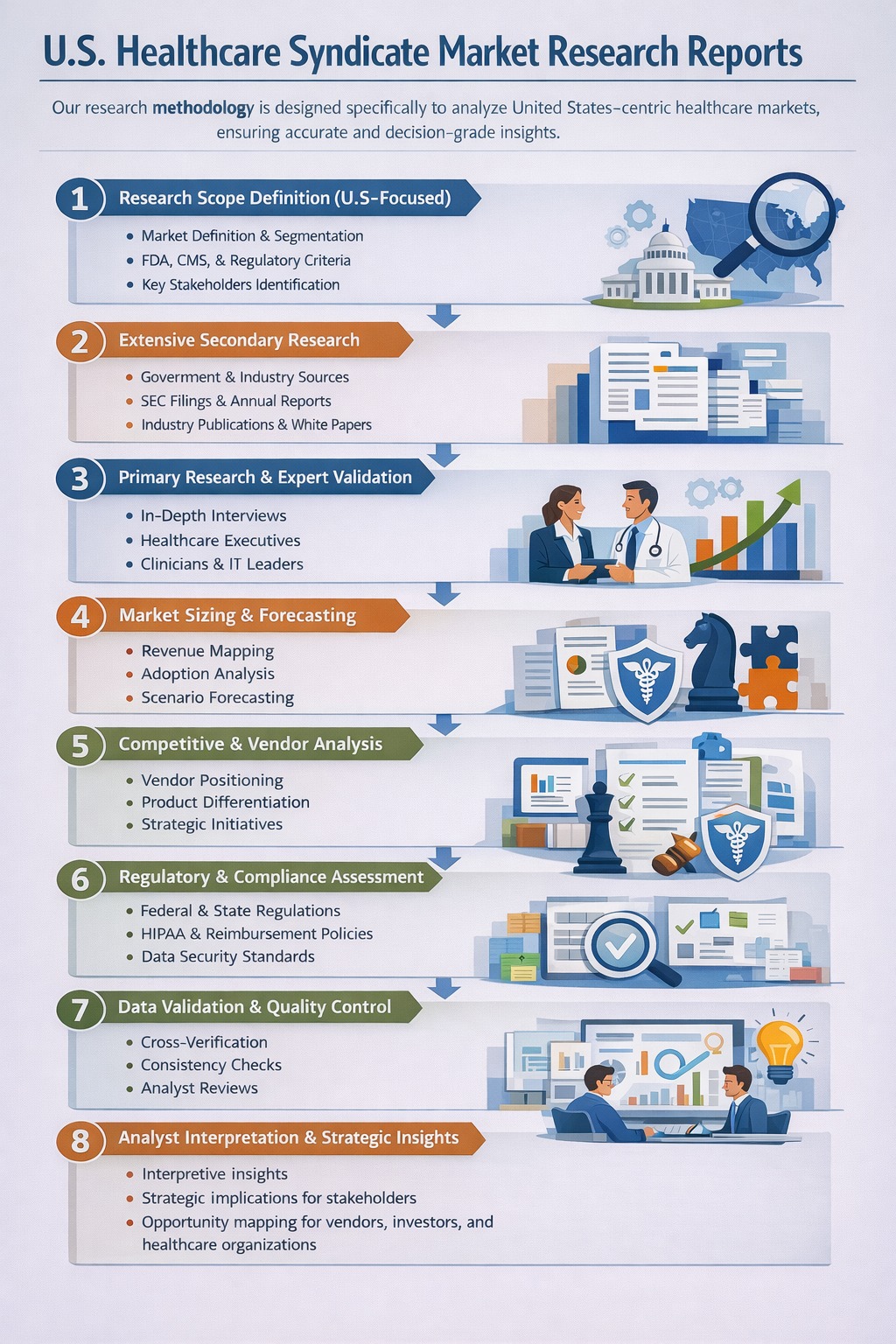
1.3 Research Methodology
1.3.1 Primary Data Collection
1.3.2 Secondary Data Sourcing
1.3.3 External Industry Collaborations
1.3.4 In-House Research Databases
1.4 Analytical Frameworks & Forecasting Model
1.5 Data Validation and Final Report Publishing
1.6 Key Assumptions
1.7 Market Ecosystem Overview
1.8 Stakeholder Analysis (Device Manufacturers, Component Suppliers, Hospitals, Cath Labs, Distributors, Regulatory Bodies)
What this section provides:
This section establishes the foundational scope, research rigor, and methodological transparency of the study, enabling stakeholders to assess data credibility, forecasting robustness, and coverage of the US TAVR delivery system ecosystem.
2. US Transcatheter Aortic Valve Delivery System Market: Executive Summary
2.1 Key Insights & Market Snapshot
2.2 Analyst Viewpoint
2.3 Market Attractiveness Index
2.4 Strategic Opportunity Assessment
What this section provides:
A concise, high-impact overview of market size, growth trajectory, competitive intensity, and key investment pockets, enabling quick executive-level decision-making.
3. US Transcatheter Aortic Valve Delivery System Market: Market Dynamics & Outlook
3.1 Market Drivers and Impact Analysis
3.2 Market Restraints and Impact Analysis
3.3 Market Opportunities and Emerging Use Cases
3.4 Clinical Adoption Trends (TAVR vs SAVR Shift)
3.5 Patent & Innovation Analysis (2020–2025)
What this section provides:
A structured evaluation of macro and micro forces shaping market expansion, including clinical adoption, reimbursement shifts, and innovation pipelines.
4. US Transcatheter Aortic Valve Delivery System Market: Market Environment & Industry Analysis
4.1 PESTEL Analysis
4.1.1 Political
4.1.2 Economic
4.1.3 Social
4.1.4 Technological
4.1.5 Environmental
4.1.6 Legal
4.2 Porter’s Five Forces Analysis
4.2.1 Threat of New Entrants
4.2.2 Bargaining Power of Buyers (Hospitals & IDNs)
4.2.3 Bargaining Power of Suppliers
4.2.4 Threat of Substitutes (SAVR, Medical Therapy)
4.2.5 Competitive Rivalry
4.3 Pricing Trend Analysis (2024–2030)
4.4 Value Chain & Supply Chain Analysis
4.5 Clinical Workflow Economics (Cath Lab Efficiency, LOS Impact)
4.6 Regulatory Framework Analysis (FDA PMA, CMS Reimbursement)
4.7 Reimbursement Landscape (Medicare, DRG, Bundled Payments)
4.8 Impact of Technological Advancements
4.9 Impact of Geopolitical & Supply Chain Disruptions
What this section provides:
A comprehensive view of the operating environment, including regulatory, economic, and competitive pressures influencing procurement and adoption decisions.
5. US Transcatheter Aortic Valve Delivery System Market – By Product Type
5.1 Overview
5.2 Segment Share Analysis, By Product Type, 2025 & 2035 (%)
5.3 Balloon-Expandable Delivery Systems
5.4 Self-Expanding Delivery Systems
5.5 Mechanically Expandable Delivery Systems
What this section provides:
Insights into product innovation trends, physician preferences, and segment-wise revenue contribution shaping device adoption.
6. US Transcatheter Aortic Valve Delivery System Market – By Access Route
6.1 Overview
6.2 Segment Share Analysis, By Access Route, 2025 & 2035 (%)
6.3 Transfemoral
6.4 Transapical
6.5 Transaortic
6.6 Transaxillary/Subclavian
6.7 Others
What this section provides:
Analysis of procedural approaches and how delivery system design aligns with evolving access preferences in US clinical practice.
7. US Transcatheter Aortic Valve Delivery System Market – By End User
7.1 Overview
7.2 Segment Share Analysis, By End User, 2025 & 2035 (%)
7.3 Hospitals
7.4 Cardiac Catheterization Laboratories
7.5 Ambulatory Surgical Centers
What this section provides:
Understanding of procurement behavior, procedural volumes, and infrastructure readiness across care settings.
8. US Transcatheter Aortic Valve Delivery System Market – By Indication
8.1 Overview
8.2 Segment Share Analysis, By Indication, 2025 & 2035 (%)
8.3 Severe Aortic Stenosis – High Risk
8.4 Severe Aortic Stenosis – Intermediate Risk
8.5 Severe Aortic Stenosis – Low Risk
8.6 Valve-in-Valve Procedures
What this section provides:
Breakdown of clinical indications driving demand expansion and influencing device design requirements.
9. US Transcatheter Aortic Valve Delivery System Market – By Geography
9.1 Introduction
9.2 Segment Share Analysis, By Geography, 2025 & 2035 (%)
9.3 West Region
9.3.1 Regional Overview & Trends
9.3.2 Key Manufacturers Presence in West Region
9.3.3 Market Size and Forecast by State, 2025–2035 (USD Million)
9.3.4 Market Size by Product Type
9.3.5 Market Size by Access Route
9.3.6 Market Size by End User
9.3.7 Market Size by Indication
9.3.8 California
9.3.9 Washington
9.3.10 Colorado
9.3.11 Arizona
9.3.12 Oregon
9.3.13 Others
9.3.13.1 Utah
9.3.13.2 Nevada
9.3.13.3 New Mexico
9.3.13.4 Idaho
9.3.13.5 Montana
9.3.13.6 Wyoming
9.3.13.7 Alaska
9.3.13.8 Hawaii
9.4 Northeast Region
9.4.1 Regional Overview & Trends
9.4.2 Key Manufacturers Presence
9.4.3 New York
9.4.4 Massachusetts
9.4.5 New Jersey
9.4.6 Pennsylvania
9.4.7 Connecticut
9.4.8 Others
9.4.8.1 Maine
9.4.8.2 Vermont
9.4.8.3 New Hampshire
9.4.8.4 Rhode Island
9.4.8.5 Delaware
9.5 South Region
9.5.1 Regional Overview & Trends
9.5.2 Key Manufacturers Presence
9.5.3 Texas
9.5.4 Florida
9.5.5 Georgia
9.5.6 North Carolina
9.5.7 Tennessee
9.5.8 South Carolina
9.5.9 Alabama
9.5.10 Others
9.5.10.1 Mississippi
9.5.10.2 Louisiana
9.5.10.3 Arkansas
9.5.10.4 Kentucky
9.5.10.5 Oklahoma
9.5.10.6 Virginia
9.5.10.7 Maryland
9.5.10.8 West Virginia
9.6 Midwest Region
9.6.1 Regional Overview & Trends
9.6.2 Key Manufacturers Presence
9.6.3 Illinois
9.6.4 Ohio
9.6.5 Michigan
9.6.6 Minnesota
9.6.7 Indiana
9.6.8 Wisconsin
9.6.9 Missouri
9.6.10 Others
9.6.10.1 Iowa
9.6.10.2 Kansas
9.6.10.3 Nebraska
9.6.10.4 North Dakota
9.6.10.5 South Dakota
What this section provides:
A granular, state-level intelligence framework identifying procedural hotspots, hospital expansion zones, and regional demand variability across the US.
10. US Transcatheter Aortic Valve Delivery System Market: Competitive Landscape & Company Profiles
10.1 Market Share Analysis (2025)
10.2 Company Positioning Matrix
10.3 Company Profiles
10.3.1 Edwards Lifesciences
10.3.2 Medtronic
10.3.3 Abbott Laboratories
10.3.4 Boston Scientific Corporation
10.3.5 JenaValve Technology Inc.
10.3.6 Meril Life Sciences Pvt. Ltd. (US Operations)
10.3.7 Venus Medtech Inc.
10.3.8 Peijia Medical Limited
10.3.9 Siemens Healthineers AG
10.3.10 GE HealthCare Technologies Inc.
10.3.11 Koninklijke Philips N.V.
10.3.12 Teleflex Incorporated
10.3.13 Cardinal Health Inc.
10.3.14 Cook Medical
10.3.15 Terumo Corporation (US Division)
10.3.16 Asahi Intecc USA Inc.
10.3.17 W.L. Gore & Associates Inc.
10.3.18 Shockwave Medical Inc.
10.3.19 AngioDynamics Inc.
10.3.20 B. Braun Melsungen AG
10.3.21 Penumbra Inc.
10.3.22 Inari Medical Inc.
10.3.23 Endologix LLC
10.3.24 Cordis (Cardinal Health spin-off)
10.3.25 Integer Holdings Corporation
What this section provides:
Detailed competitive benchmarking, strategic positioning, and innovation focus areas of key market participants.
11. US Transcatheter Aortic Valve Delivery System Market: Future Market Outlook (2025–2035)
11.1 Scenario Analysis (Optimistic, Realistic, Pessimistic)
11.2 Emerging Technology Impact
11.3 Structural Heart Market Convergence Trends
11.4 Investment & Expansion Opportunities
What this section provides:
Forward-looking insights into market evolution, disruptive innovation, and long-term investment potential.
12. US Transcatheter Aortic Valve Delivery System Market: Strategic Recommendations
What this section provides:
Actionable strategies for manufacturers, investors, and healthcare providers to optimize market entry, expansion, and competitive positioning.
13. US Transcatheter Aortic Valve Delivery System Market: Disclaimer
What this section provides:
Clarifies report limitations, data usage boundaries, and legal considerations for stakeholders.
List of Tables
TABLE 1: List of Data Sources
TABLE 2: Market Drivers; Impact Analysis
TABLE 3: Market Restraints; Impact Analysis
TABLE 4: US Transcatheter Aortic Valve Delivery System Market: Product Type Snapshot (2025)
TABLE 5: Segment Dashboard; Definition and Scope, by Product Type
TABLE 6: US Transcatheter Aortic Valve Delivery System Market, by Product Type, 2021–2035 (USD Million)
TABLE 7: US Transcatheter Aortic Valve Delivery System Market: Access Route Snapshot (2025)
TABLE 8: Segment Dashboard; Definition and Scope, by Access Route
TABLE 9: US Transcatheter Aortic Valve Delivery System Market, by Access Route, 2021–2035 (USD Million)
TABLE 10: US Transcatheter Aortic Valve Delivery System Market: End User Snapshot (2025)
TABLE 11: Segment Dashboard; Definition and Scope, by End User
TABLE 12: US Transcatheter Aortic Valve Delivery System Market, by End User, 2021–2035 (USD Million)
TABLE 13: US Transcatheter Aortic Valve Delivery System Market: Indication Snapshot (2025)
TABLE 14: Segment Dashboard; Definition and Scope, by Indication
TABLE 15: US Transcatheter Aortic Valve Delivery System Market, by Indication, 2021–2035 (USD Million)
TABLE 16: US Transcatheter Aortic Valve Delivery System Market: Regional Snapshot (2025)
TABLE 17: Segment Dashboard; Definition and Scope, by Region
TABLE 18: US Transcatheter Aortic Valve Delivery System Market, by Region, 2021–2035 (USD Million)
TABLE 19: California Transcatheter Aortic Valve Delivery System Market, by Product Type, 2021–2035 (USD Million)
TABLE 20: California Transcatheter Aortic Valve Delivery System Market, by Access Route, 2021–2035 (USD Million)
TABLE 21: California Transcatheter Aortic Valve Delivery System Market, by End User, 2021–2035 (USD Million)
TABLE 22: California Transcatheter Aortic Valve Delivery System Market, by Indication, 2021–2035 (USD Million)
TABLE 23: Washington Transcatheter Aortic Valve Delivery System Market, by Product Type, 2021–2035 (USD Million)
TABLE 24: Washington Transcatheter Aortic Valve Delivery System Market, by Access Route, 2021–2035 (USD Million)
TABLE 25: Washington Transcatheter Aortic Valve Delivery System Market, by End User, 2021–2035 (USD Million)
TABLE 26: Washington Transcatheter Aortic Valve Delivery System Market, by Indication, 2021–2035 (USD Million)
TABLE 27: Colorado Transcatheter Aortic Valve Delivery System Market, by Product Type, 2021–2035 (USD Million)
TABLE 28: Colorado Transcatheter Aortic Valve Delivery System Market, by Access Route, 2021–2035 (USD Million)
TABLE 29: Colorado Transcatheter Aortic Valve Delivery System Market, by End User, 2021–2035 (USD Million)
TABLE 30: Colorado Transcatheter Aortic Valve Delivery System Market, by Indication, 2021–2035 (USD Million)
TABLE 31: Arizona Transcatheter Aortic Valve Delivery System Market, by Product Type, 2021–2035 (USD Million)
TABLE 32: Arizona Transcatheter Aortic Valve Delivery System Market, by Access Route, 2021–2035 (USD Million)
TABLE 33: Arizona Transcatheter Aortic Valve Delivery System Market, by End User, 2021–2035 (USD Million)
TABLE 34: Arizona Transcatheter Aortic Valve Delivery System Market, by Indication, 2021–2035 (USD Million)
TABLE 35: Oregon Transcatheter Aortic Valve Delivery System Market, by Product Type, 2021–2035 (USD Million)
TABLE 36: Oregon Transcatheter Aortic Valve Delivery System Market, by Access Route, 2021–2035 (USD Million)
TABLE 37: Oregon Transcatheter Aortic Valve Delivery System Market, by End User, 2021–2035 (USD Million)
TABLE 38: Oregon Transcatheter Aortic Valve Delivery System Market, by Indication, 2021–2035 (USD Million)
TABLE 39: West – Others Transcatheter Aortic Valve Delivery System Market, by Product Type, 2021–2035 (USD Million)
TABLE 40: West – Others Transcatheter Aortic Valve Delivery System Market, by Access Route, 2021–2035 (USD Million)
TABLE 41: West – Others Transcatheter Aortic Valve Delivery System Market, by End User, 2021–2035 (USD Million)
TABLE 42: West – Others Transcatheter Aortic Valve Delivery System Market, by Indication, 2021–2035 (USD Million)
(Nevada, Utah, New Mexico, Idaho, Montana, Wyoming, Alaska, Hawaii)
TABLE 43: New York Transcatheter Aortic Valve Delivery System Market, by Product Type, 2021–2035 (USD Million)
TABLE 44: New York Transcatheter Aortic Valve Delivery System Market, by Access Route, 2021–2035 (USD Million)
TABLE 45: New York Transcatheter Aortic Valve Delivery System Market, by End User, 2021–2035 (USD Million)
TABLE 46: New York Transcatheter Aortic Valve Delivery System Market, by Indication, 2021–2035 (USD Million)
TABLE 47: Massachusetts Transcatheter Aortic Valve Delivery System Market, by Product Type, 2021–2035 (USD Million)
TABLE 48: Massachusetts Transcatheter Aortic Valve Delivery System Market, by Access Route, 2021–2035 (USD Million)
TABLE 49: Massachusetts Transcatheter Aortic Valve Delivery System Market, by End User, 2021–2035 (USD Million)
TABLE 50: Massachusetts Transcatheter Aortic Valve Delivery System Market, by Indication, 2021–2035 (USD Million)
TABLE 51: New Jersey Transcatheter Aortic Valve Delivery System Market, by Product Type, 2021–2035 (USD Million)
TABLE 52: New Jersey Transcatheter Aortic Valve Delivery System Market, by Access Route, 2021–2035 (USD Million)
TABLE 53: New Jersey Transcatheter Aortic Valve Delivery System Market, by End User, 2021–2035 (USD Million)
TABLE 54: New Jersey Transcatheter Aortic Valve Delivery System Market, by Indication, 2021–2035 (USD Million)
TABLE 55: Pennsylvania Transcatheter Aortic Valve Delivery System Market, by Product Type, 2021–2035 (USD Million)
TABLE 56: Pennsylvania Transcatheter Aortic Valve Delivery System Market, by Access Route, 2021–2035 (USD Million)
TABLE 57: Pennsylvania Transcatheter Aortic Valve Delivery System Market, by End User, 2021–2035 (USD Million)
TABLE 58: Pennsylvania Transcatheter Aortic Valve Delivery System Market, by Indication, 2021–2035 (USD Million)
TABLE 59: Connecticut Transcatheter Aortic Valve Delivery System Market, by Product Type, 2021–2035 (USD Million)
TABLE 60: Connecticut Transcatheter Aortic Valve Delivery System Market, by Access Route, 2021–2035 (USD Million)
TABLE 61: Connecticut Transcatheter Aortic Valve Delivery System Market, by End User, 2021–2035 (USD Million)
TABLE 62: Connecticut Transcatheter Aortic Valve Delivery System Market, by Indication, 2021–2035 (USD Million)
TABLE 63: Northeast – Others Transcatheter Aortic Valve Delivery System Market, by Product Type, 2021–2035 (USD Million)
TABLE 64: Northeast – Others Transcatheter Aortic Valve Delivery System Market, by Access Route, 2021–2035 (USD Million)
TABLE 65: Northeast – Others Transcatheter Aortic Valve Delivery System Market, by End User, 2021–2035 (USD Million)
TABLE 66: Northeast – Others Transcatheter Aortic Valve Delivery System Market, by Indication, 2021–2035 (USD Million)
(Maine, Vermont, New Hampshire, Rhode Island, Delaware)
TABLE 67: Texas Transcatheter Aortic Valve Delivery System Market, by Product Type, 2021–2035 (USD Million)
TABLE 68: Texas Transcatheter Aortic Valve Delivery System Market, by Access Route, 2021–2035 (USD Million)
TABLE 69: Texas Transcatheter Aortic Valve Delivery System Market, by End User, 2021–2035 (USD Million)
TABLE 70: Texas Transcatheter Aortic Valve Delivery System Market, by Indication, 2021–2035 (USD Million)
TABLE 71: Florida Transcatheter Aortic Valve Delivery System Market, by Product Type, 2021–2035 (USD Million)
TABLE 72: Florida Transcatheter Aortic Valve Delivery System Market, by Access Route, 2021–2035 (USD Million)
TABLE 73: Florida Transcatheter Aortic Valve Delivery System Market, by End User, 2021–2035 (USD Million)
TABLE 74: Florida Transcatheter Aortic Valve Delivery System Market, by Indication, 2021–2035 (USD Million)
TABLE 75: Georgia Transcatheter Aortic Valve Delivery System Market, by Product Type, 2021–2035 (USD Million)
TABLE 76: Georgia Transcatheter Aortic Valve Delivery System Market, by Access Route, 2021–2035 (USD Million)
TABLE 77: Georgia Transcatheter Aortic Valve Delivery System Market, by End User, 2021–2035 (USD Million)
TABLE 78: Georgia Transcatheter Aortic Valve Delivery System Market, by Indication, 2021–2035 (USD Million)
TABLE 79: North Carolina Transcatheter Aortic Valve Delivery System Market, by Product Type, 2021–2035 (USD Million)
TABLE 80: North Carolina Transcatheter Aortic Valve Delivery System Market, by Access Route, 2021–2035 (USD Million)
TABLE 81: North Carolina Transcatheter Aortic Valve Delivery System Market, by End User, 2021–2035 (USD Million)
TABLE 82: North Carolina Transcatheter Aortic Valve Delivery System Market, by Indication, 2021–2035 (USD Million)
TABLE 83: Tennessee Transcatheter Aortic Valve Delivery System Market, by Product Type, 2021–2035 (USD Million)
TABLE 84: Tennessee Transcatheter Aortic Valve Delivery System Market, by Access Route, 2021–2035 (USD Million)
TABLE 85: Tennessee Transcatheter Aortic Valve Delivery System Market, by End User, 2021–2035 (USD Million)
TABLE 86: Tennessee Transcatheter Aortic Valve Delivery System Market, by Indication, 2021–2035 (USD Million)
TABLE 87: South Carolina Transcatheter Aortic Valve Delivery System Market, by Product Type, 2021–2035 (USD Million)
TABLE 88: South Carolina Transcatheter Aortic Valve Delivery System Market, by Access Route, 2021–2035 (USD Million)
TABLE 89: South Carolina Transcatheter Aortic Valve Delivery System Market, by End User, 2021–2035 (USD Million)
TABLE 90: South Carolina Transcatheter Aortic Valve Delivery System Market, by Indication, 2021–2035 (USD Million)
TABLE 91: Alabama Transcatheter Aortic Valve Delivery System Market, by Product Type, 2021–2035 (USD Million)
TABLE 92: Alabama Transcatheter Aortic Valve Delivery System Market, by Access Route, 2021–2035 (USD Million)
TABLE 93: Alabama Transcatheter Aortic Valve Delivery System Market, by End User, 2021–2035 (USD Million)
TABLE 94: Alabama Transcatheter Aortic Valve Delivery System Market, by Indication, 2021–2035 (USD Million)
TABLE 95: South – Others Transcatheter Aortic Valve Delivery System Market, by Product Type, 2021–2035 (USD Million)
TABLE 96: South – Others Transcatheter Aortic Valve Delivery System Market, by Access Route, 2021–2035 (USD Million)
TABLE 97: South – Others Transcatheter Aortic Valve Delivery System Market, by End User, 2021–2035 (USD Million)
TABLE 98: South – Others Transcatheter Aortic Valve Delivery System Market, by Indication, 2021–2035 (USD Million)
(Mississippi, Louisiana, Arkansas, Kentucky, Oklahoma, Virginia, Maryland, West Virginia)
TABLE 99: Illinois Transcatheter Aortic Valve Delivery System Market, by Product Type, 2021–2035 (USD Million)
TABLE 100: Illinois Transcatheter Aortic Valve Delivery System Market, by Access Route, 2021–2035 (USD Million)
TABLE 101: Illinois Transcatheter Aortic Valve Delivery System Market, by End User, 2021–2035 (USD Million)
TABLE 102: Illinois Transcatheter Aortic Valve Delivery System Market, by Indication, 2021–2035 (USD Million)
TABLE 103: Ohio Transcatheter Aortic Valve Delivery System Market, by Product Type, 2021–2035 (USD Million)
TABLE 104: Ohio Transcatheter Aortic Valve Delivery System Market, by Access Route, 2021–2035 (USD Million)
TABLE 105: Ohio Transcatheter Aortic Valve Delivery System Market, by End User, 2021–2035 (USD Million)
TABLE 106: Ohio Transcatheter Aortic Valve Delivery System Market, by Indication, 2021–2035 (USD Million)
TABLE 107: Michigan Transcatheter Aortic Valve Delivery System Market, by Product Type, 2021–2035 (USD Million)
TABLE 108: Michigan Transcatheter Aortic Valve Delivery System Market, by Access Route, 2021–2035 (USD Million)
TABLE 109: Michigan Transcatheter Aortic Valve Delivery System Market, by End User, 2021–2035 (USD Million)
TABLE 110: Michigan Transcatheter Aortic Valve Delivery System Market, by Indication, 2021–2035 (USD Million)
TABLE 111: Minnesota Transcatheter Aortic Valve Delivery System Market, by Product Type, 2021–2035 (USD Million)
TABLE 112: Minnesota Transcatheter Aortic Valve Delivery System Market, by Access Route, 2021–2035 (USD Million)
TABLE 113: Minnesota Transcatheter Aortic Valve Delivery System Market, by End User, 2021–2035 (USD Million)
TABLE 114: Minnesota Transcatheter Aortic Valve Delivery System Market, by Indication, 2021–2035 (USD Million)
TABLE 115: Indiana Transcatheter Aortic Valve Delivery System Market, by Product Type, 2021–2035 (USD Million)
TABLE 116: Indiana Transcatheter Aortic Valve Delivery System Market, by Access Route, 2021–2035 (USD Million)
TABLE 117: Indiana Transcatheter Aortic Valve Delivery System Market, by End User, 2021–2035 (USD Million)
TABLE 118: Indiana Transcatheter Aortic Valve Delivery System Market, by Indication, 2021–2035 (USD Million)
TABLE 119: Wisconsin Transcatheter Aortic Valve Delivery System Market, by Product Type, 2021–2035 (USD Million)
TABLE 120: Wisconsin Transcatheter Aortic Valve Delivery System Market, by Access Route, 2021–2035 (USD Million)
TABLE 121: Wisconsin Transcatheter Aortic Valve Delivery System Market, by End User, 2021–2035 (USD Million)
TABLE 122: Wisconsin Transcatheter Aortic Valve Delivery System Market, by Indication, 2021–2035 (USD Million)
TABLE 123: Missouri Transcatheter Aortic Valve Delivery System Market, by Product Type, 2021–2035 (USD Million)
TABLE 124: Missouri Transcatheter Aortic Valve Delivery System Market, by Access Route, 2021–2035 (USD Million)
TABLE 125: Missouri Transcatheter Aortic Valve Delivery System Market, by End User, 2021–2035 (USD Million)
TABLE 126: Missouri Transcatheter Aortic Valve Delivery System Market, by Indication, 2021–2035 (USD Million)
TABLE 127: Midwest – Others Transcatheter Aortic Valve Delivery System Market, by Product Type, 2021–2035 (USD Million)
TABLE 128: Midwest – Others Transcatheter Aortic Valve Delivery System Market, by Access Route, 2021–2035 (USD Million)
TABLE 129: Midwest – Others Transcatheter Aortic Valve Delivery System Market, by End User, 2021–2035 (USD Million)
TABLE 130: Midwest – Others Transcatheter Aortic Valve Delivery System Market, by Indication, 2021–2035 (USD Million)
(Iowa, Kansas, Nebraska, North Dakota, South Dakota)
List of Figures
FIGURE 1: US Transcatheter Aortic Valve Delivery System Market Segmentation
FIGURE 2: Market Research Methodology
FIGURE 3: Value Chain Analysis
FIGURE 4: PESTEL Analysis
FIGURE 5: Porter’s Five Forces Analysis
FIGURE 6: Market Attractiveness Analysis
FIGURE 7: Market Dynamics
FIGURE 8: Innovation & Patent Landscape (2021–2025)
FIGURE 9: Competitive Landscape; Key Company Market Share Analysis, 2025
FIGURE 10: Product Type Segment Market Share Analysis, 2025 & 2035
FIGURE 11: Product Type Segment Market Size Forecast and Trend Analysis, 2025–2035 (USD Million)
FIGURE 12: Access Route Segment Market Share Analysis, 2025 & 2035
FIGURE 13: Access Route Segment Market Size Forecast and Trend Analysis, 2025–2035 (USD Million)
FIGURE 14: End User Segment Market Share Analysis, 2025 & 2035
FIGURE 15: End User Segment Market Size Forecast and Trend Analysis, 2025–2035 (USD Million)
FIGURE 16: Indication Segment Market Share Analysis, 2025 & 2035
FIGURE 17: Indication Segment Market Size Forecast and Trend Analysis, 2025–2035 (USD Million)
FIGURE 18: Regional Segment Market Share Analysis, 2025 & 2035
FIGURE 19: Regional Segment Market Size Forecast and Trend Analysis, 2025–2035 (USD Million)
FIGURE 20: West Region Market Share and Leading Players, 2025
FIGURE 21: Northeast Region Market Share and Leading Players, 2025
FIGURE 22: South Region Market Share and Leading Players, 2025
FIGURE 23: Midwest Region Market Share and Leading Players, 2025
FIGURE 24: West Region Market Share Analysis by State, 2025
FIGURE 25: California Market Size, Forecast and Trend Analysis, 2025–2035 (USD Million)
FIGURE 26: Washington Market Size, Forecast and Trend Analysis, 2025–2035 (USD Million)
FIGURE 27: Colorado Market Size, Forecast and Trend Analysis, 2025–2035 (USD Million)
FIGURE 28: Arizona Market Size, Forecast and Trend Analysis, 2025–2035 (USD Million)
FIGURE 29: Oregon Market Size, Forecast and Trend Analysis, 2025–2035 (USD Million)
FIGURE 30: Others (West Region) Market Size, Forecast and Trend Analysis, 2025–2035 (USD Million)
FIGURE 31: South Region Market Share Analysis by State, 2025
FIGURE 32: Texas Market Size, Forecast and Trend Analysis, 2025–2035 (USD Million)
FIGURE 33: Florida Market Size, Forecast and Trend Analysis, 2025–2035 (USD Million)
FIGURE 34: Georgia Market Size, Forecast and Trend Analysis, 2025–2035 (USD Million)
FIGURE 35: North Carolina Market Size, Forecast and Trend Analysis, 2025–2035 (USD Million)
FIGURE 36: Tennessee Market Size, Forecast and Trend Analysis, 2025–2035 (USD Million)
FIGURE 37: South Carolina Market Size, Forecast and Trend Analysis, 2025–2035 (USD Million)
FIGURE 38: Alabama Market Size, Forecast and Trend Analysis, 2025–2035 (USD Million)
FIGURE 39: Others (South Region) Market Size, Forecast and Trend Analysis, 2025–2035 (USD Million)
FIGURE 40: Midwest Region Market Share Analysis by State, 2025
FIGURE 41: Illinois Market Size, Forecast and Trend Analysis, 2025–2035 (USD Million)
FIGURE 42: Ohio Market Size, Forecast and Trend Analysis, 2025–2035 (USD Million)
FIGURE 43: Michigan Market Size, Forecast and Trend Analysis, 2025–2035 (USD Million)
FIGURE 44: Minnesota Market Size, Forecast and Trend Analysis, 2025–2035 (USD Million)
FIGURE 45: Indiana Market Size, Forecast and Trend Analysis, 2025–2035 (USD Million)
FIGURE 46: Wisconsin Market Size, Forecast and Trend Analysis, 2025–2035 (USD Million)
FIGURE 47: Missouri Market Size, Forecast and Trend Analysis, 2025–2035 (USD Million)
FIGURE 48: Others (Midwest Region) Market Size, Forecast and Trend Analysis, 2025–2035 (USD Million)
FIGURE 49: Northeast Region Market Share Analysis by State, 2025
FIGURE 50: New York Market Size, Forecast and Trend Analysis, 2025–2035 (USD Million)
FIGURE 51: Massachusetts Market Size, Forecast and Trend Analysis, 2025–2035 (USD Million)
FIGURE 52: New Jersey Market Size, Forecast and Trend Analysis, 2025–2035 (USD Million)
FIGURE 53: Pennsylvania Market Size, Forecast and Trend Analysis, 2025–2035 (USD Million)
FIGURE 54: Connecticut Market Size, Forecast and Trend Analysis, 2025–2035 (USD Million)
FIGURE 55: Others (Northeast Region) Market Size, Forecast and Trend Analysis, 2025–2035 (USD Million)
1. What is the real market headroom beyond current TAVR volumes?
US procedures are ~150K–170K annually, but the eligible pool exceeds 900K patients, indicating <20% penetration and strong expansion potential.
2. How do delivery systems impact hospital economics?
Advanced systems reduce complications (<3%) and cut procedure time by ~10–15 minutes, saving $1.5K–$3K per case.
3. Why is transfemoral access dominating?
Over 90% of procedures use transfemoral access, driving demand for low-profile (<14F) delivery systems.
4. How are hospitals making purchasing decisions?
Procurement is shifting toward bundled contracts, prioritizing total procedure cost, outcomes, and standardization across physicians.
5. What is driving growth in low-risk patients?
Low-risk patients will contribute ~40% of future growth, increasing demand for precision-focused delivery systems.
6. How important is the valve-in-valve segment?
Growing at 12–15% CAGR, it requires highly controlled, repositionable delivery systems for complex anatomies.
7. How does reimbursement shape adoption?
CMS reimburses $30K–$50K per case, but links payments to outcomes—favoring reliable delivery platforms.
8. How competitive is the market?
Top 2 players control ~85–90% share, creating high barriers but fast innovation cycles (every 2–3 years).
9. What clinical metrics matter most?
Key benchmarks include >95% success rate, <2% stroke rate, and <3% vascular complications.
10. Will outpatient TAVR change device design?
Expected to reach 15–20% by 2035, pushing demand for faster, simpler, and more efficient delivery systems.