
By Access Route (Transfemoral, Transapical, Transaortic, Transaxillary/Subclavian, and Others), By Product Type (Access Sheaths, Guidewires, Introducers, Closure Devices, and Ancillary Access Tools), By Procedure Setting (Hospital Cath Labs, Hybrid Operating Rooms, Ambulatory Surgical Centers), By End User (Large Academic Hospitals, Community Hospitals, Specialty Cardiac Centers), By Patient Risk Profile (Low Risk, Intermediate Risk, High Risk), By Region (Northeast, Midwest, South, and West) – Market Size, Industry Analysis, Segmental Insights, Regional Overview, Company Share Analysis, and Market Forecast, 2021–2035
Market Outlook
The US Transcatheter Aortic Valve Procedural Access System Market was valued at approximately USD 1.42 billion in 2025, with historical analysis covering 2021–2024. The market is projected to reach nearly USD 4.98 billion by 2035, expanding at a CAGR of 13.4% during the forecast period (2026–2035).
This market represents a highly specialized but rapidly expanding subsegment within structural heart interventions, driven by the procedural evolution of Transcatheter Aortic Valve Replacement (TAVR). As TAVR volumes in the U.S. continue to exceed 150,000 procedures annually, the importance of procedural access systems—including sheaths, delivery interfaces, and vascular closure solutions—has intensified due to their direct impact on procedural success, complication rates, and hospital economics.
Unlike earlier phases of TAVR adoption that were valve-centric, the current innovation cycle is increasingly access-driven, with manufacturers focusing on lower-profile delivery systems, enhanced vascular compatibility, and complication minimization. Access systems are now a critical determinant of patient eligibility, especially in expanding TAVR indications to younger and lower-risk populations.
From a hospital procurement standpoint, access systems are no longer commoditized components. They are evaluated based on clinical performance metrics such as vascular complication rates, procedural time reduction, and compatibility with multi-valve platforms, making them central to vendor selection decisions in structural heart programs.
Introduction
According to the US Transcatheter Aortic Valve Procedural Access System Market report, the market is fundamentally shaped by the intersection of clinical workflow optimization, device miniaturization, and expanding procedural eligibility criteria.
In the U.S., TAVR has transitioned from a niche intervention for inoperable patients to a frontline therapy across all surgical risk categories, supported by robust clinical evidence and favorable reimbursement policies under CMS. This expansion has created new demands on access systems, particularly in managing complex vascular anatomies, calcified vessels, and outpatient procedural models.
Access-related complications—such as vascular injury, bleeding, and device failure—remain among the most significant contributors to procedural cost and morbidity. As a result, device manufacturers are investing heavily in sheath profile reduction, hydrophilic coatings, steerability, and integrated closure technologies.
The U.S. remains the global epicenter for TAVR innovation due to its high procedural volumes, strong clinical trial infrastructure, and concentration of leading structural heart programs, particularly across academic medical centers and high-volume cardiac institutes.
Key Market Drivers: What’s Fueling Market Expansion
Rapid Expansion of TAVR Indications into Low-Risk Populations
The FDA approval of TAVR for low-risk patients has significantly increased procedural volumes across the U.S. healthcare system. This shift has elevated expectations for procedural safety and vascular access precision, as younger patients present longer life expectancy and lower tolerance for complications.
Access systems must now support repeatability, reduced trauma, and compatibility with future interventions, pushing innovation toward smaller profiles and atraumatic designs.
Clinical Emphasis on Minimally Invasive Transfemoral Access
Transfemoral access has become the dominant approach, accounting for over 90% of TAVR procedures in the U.S. This has intensified demand for advanced femoral access systems capable of navigating complex anatomies with minimal vascular injury.
Hospitals are prioritizing systems that enable percutaneous access with reliable closure, reducing ICU stays and enabling next-day discharge protocols.
Hospital Economics and Procedural Efficiency
From a clinical workflow economics perspective, access systems play a critical role in:
Reducing procedure time
Minimizing vascular complications
Enabling same-day or next-day discharge
Hospitals increasingly evaluate access systems based on their ability to lower total cost of care per TAVR episode, rather than just device acquisition cost.
Technological Advancements in Low-Profile Delivery Systems
Device manufacturers are competing aggressively to develop ultra-low profile sheaths (≤14 Fr) and integrated delivery systems. These innovations expand eligibility to patients with smaller or diseased vessels, particularly among elderly and female populations.
Innovation in Focus: How Manufacturers Are Redefining Access Systems
Innovation in this market is highly engineering-driven, with a focus on:
Sheath miniaturization without compromising structural integrity
Hydrophilic coatings to reduce friction and vascular trauma
Steerable and flexible delivery systems for complex anatomies
Integrated embolic protection compatibility
Closure device integration for complete procedural ecosystems
Additionally, manufacturers are aligning access systems with next-generation valve platforms, ensuring seamless compatibility and procedural predictability.
The emergence of fully percutaneous TAVR workflows is further accelerating demand for integrated access and closure solutions that support minimalist procedural approaches.
Segmentation Insights
By Access Route
- Transfemoral Access (Dominant Segment)
Transfemoral access dominates the U.S. market due to its minimally invasive nature and strong clinical outcomes. Hospitals increasingly standardize transfemoral-first strategies, supported by advancements in sheath technology and vascular closure systems. - Transaxillary/Subclavian Access
This segment is gaining traction for patients with unsuitable femoral anatomy. It requires specialized access systems with enhanced flexibility and navigation capabilities. - Transapical Access
Once widely used, transapical access has declined significantly due to its invasive nature and higher complication rates. However, it remains relevant in select complex cases. - Transaortic Access
Used in highly complex anatomies, this segment is niche but clinically important in tertiary care centers. - Other Access Routes
Includes transcaval and carotid approaches, representing emerging alternatives in specialized centers.
By Product Type
- Access Sheaths (Dominant Segment)
Access sheaths represent the largest revenue share due to their central role in every procedure. Innovation is focused on profile reduction, kink resistance, and atraumatic insertion. - Guidewires
Guidewires are critical for navigation and positioning. Advanced materials and coatings improve maneuverability in tortuous anatomies. - Introducers
Introducers facilitate initial vascular access and are evolving toward compatibility with smaller sheath sizes. - Closure Devices (Fastest Growing)
Closure devices are seeing rapid adoption due to the shift toward fully percutaneous procedures, reducing the need for surgical cutdowns. - Ancillary Access Tools
Includes dilators, catheters, and imaging-compatible tools that support procedural precision.
By Procedure Setting
- Hospital Cath Labs (Dominant)
Cath labs remain the primary setting due to cost efficiency and streamlined workflows. - Hybrid Operating Rooms
Used for complex cases requiring surgical backup, particularly in high-risk patients. - Ambulatory Surgical Centers (Emerging)
ASCs represent a future growth opportunity as TAVR becomes more standardized and minimally invasive.
By End User
- Large Academic Hospitals (Dominant)
These institutions drive innovation and perform high volumes of complex TAVR procedures. - Community Hospitals
Adoption is increasing as TAVR programs expand beyond major metropolitan centers. - Specialty Cardiac Centers
Focused cardiac institutes are key adopters of advanced access technologies.
By Patient Risk Profile
- Low-Risk Patients (Fastest Growing)
Expansion into this segment is driving demand for precision-focused, low-complication access systems. - Intermediate Risk Patients
Represents a stable and significant portion of procedural volume. - High-Risk Patients
Historically dominant but now a smaller share as indications expand.
Regional Insights: US State-Level Market Dynamics
West (Dominant Region)
The West leads the market, driven by California, Washington, and Colorado, which host some of the highest TAVR volumes in the U.S. California alone accounts for a substantial share due to its large population and concentration of top-tier cardiac centers such as Cedars-Sinai and Stanford Health Care.
The region benefits from early adoption of next-generation access systems, strong clinical trial participation, and proximity to medtech innovation hubs. Hospitals here prioritize cutting-edge access technologies that enable same-day discharge and outpatient TAVR pathways.
Northeast
The Northeast is characterized by high procedural complexity and academic leadership, with states like New York, Massachusetts, and Pennsylvania driving innovation.
Academic centers in this region focus heavily on complex anatomies and alternative access routes, creating demand for specialized access systems. The region also leads in clinical research and FDA trial participation, influencing national adoption trends.
South (Fastest Growing Region)
The South is experiencing the fastest growth, particularly in Texas, Florida, and North Carolina, driven by expanding hospital networks and increasing cardiovascular disease prevalence.
Large health systems are investing in scalable TAVR programs, creating demand for cost-effective yet high-performance access systems. The region is also seeing increased adoption of minimally invasive workflows, boosting demand for closure devices.
Midwest
The Midwest demonstrates steady growth, led by states such as Illinois, Ohio, and Michigan. Health systems in this region emphasize operational efficiency and cost containment, influencing procurement decisions toward value-based access solutions.
Rural hospital expansion and telecardiology integration are also supporting broader access to TAVR procedures.
Key Market Players
The US Transcatheter Aortic Valve Procedural Access System Market is moderately consolidated, with a mix of large cardiovascular device companies and specialized access technology firms.
- Edwards Lifesciences – Market leader with integrated TAVR systems and advanced delivery platforms widely used across U.S. hospitals.
- Medtronic – Strong presence with Evolut platform and complementary access technologies.
- Abbott Laboratories – Expanding structural heart portfolio with focus on minimally invasive access.
- Boston Scientific – Active in vascular access and closure technologies supporting TAVR workflows.
- Terumo Corporation (Terumo Medical USA) – Known for guidewires and sheath technologies widely used in U.S. cath labs.
- Cook Medical – Provides specialized access solutions for complex anatomies.
- Teleflex Incorporated – Offers vascular access products integrated into cardiac procedures.
- Becton Dickinson (BD) – Strong in introducers and vascular access devices.
- Merit Medical Systems – Focuses on cost-effective access and closure solutions.
- Cardinal Health – Supplies a wide range of procedural access tools across U.S. hospitals.
- Cordis (Cardinal Health) – Specialized vascular access technologies.
- Asahi Intecc USA – High-performance guidewires for complex navigation.
- Amecath – Emerging player in access device manufacturing.
- Vascular Solutions (Teleflex) – Known for niche vascular access innovations.
- Shockwave Medical – Indirect role through vessel preparation technologies improving access success.
- Inari Medical – Expanding into vascular intervention tools.
- Penumbra Inc. – Provides advanced catheter-based systems.
- AngioDynamics – Offers access and vascular intervention devices.
- Biotronik – Growing presence in interventional cardiology tools.
- MicroPort Scientific – Expanding U.S. footprint in structural heart devices.
- Venus Medtech (US operations) – Emerging competitor in TAVR ecosystem.
- Gore Medical – Known for vascular technologies supporting access durability.
- Integer Holdings – Supplies components for access system manufacturing.
- Freudenberg Medical – Contract manufacturer supporting device innovation.
- Integer Holdings – Key supplier in catheter and access system components.
Recent Developments
Recent developments highlight a strong shift toward fully integrated procedural ecosystems, where access systems are co-developed with valve platforms. U.S. hospitals are increasingly adopting next-generation low-profile sheaths that reduce vascular complications and enable broader patient eligibility.
There is also a growing emphasis on same-day discharge TAVR programs, particularly in high-volume centers, driving demand for reliable closure systems and simplified access workflows.
Additionally, FDA approvals of new delivery systems and ongoing clinical trials are accelerating innovation in alternative access routes and complex anatomy management.
Conclusion
The US Transcatheter Aortic Valve Procedural Access System Market is entering a phase of mature expansion driven by procedural optimization rather than basic adoption. Access systems are no longer ancillary components but core determinants of procedural success, cost efficiency, and patient outcomes.
With continued expansion of TAVR indications, rising procedural volumes, and increasing emphasis on minimally invasive care pathways, the market is well-positioned for sustained growth through 2035. Manufacturers that can deliver clinically superior, economically efficient, and workflow-compatible access solutions will define the competitive landscape.
1. US Transcatheter Aortic Valve Procedural Access System Market: Market Introduction & Context
1.1 Market Definition
1.2 Scope of the Study
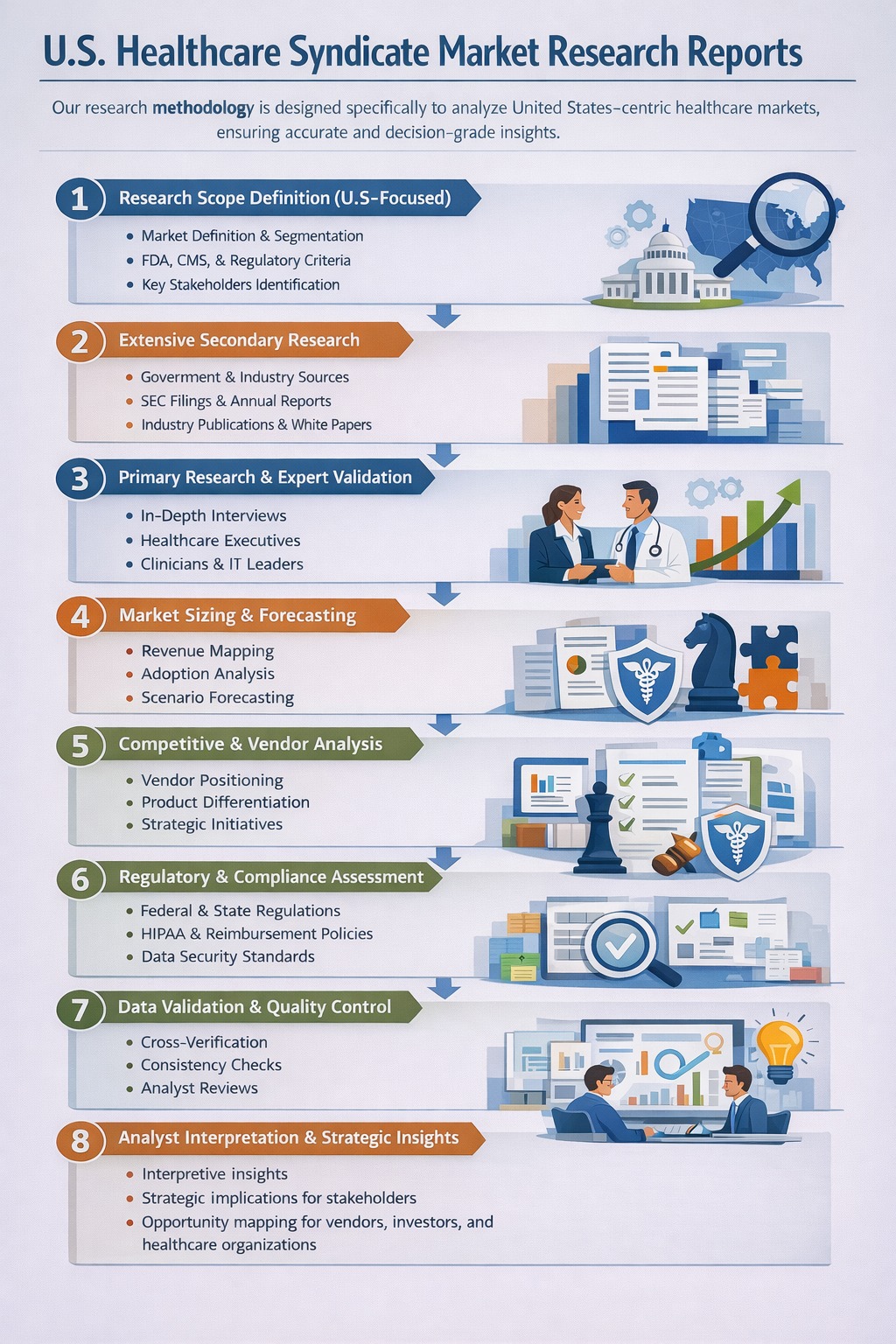
1.3 Research Methodology
1.3.1 Primary Data Collection
1.3.2 Secondary Data Sourcing
1.3.3 External Industry Collaborations
1.3.4 In-House Research Databases
1.4 Analytical Frameworks & Forecasting Models
1.5 Data Validation and Final Report Publishing
1.6 Key Assumptions
1.7 Market Ecosystem Overview
1.8 Stakeholder Analysis (Device Manufacturers, Hospitals, Cath Labs, Distributors, Regulatory Bodies)
What this section provides: Establishes the study scope, methodology robustness, data sources, and ecosystem structure to ensure credibility and transparency of insights.
2. US Transcatheter Aortic Valve Procedural Access System Market: Executive Summary
2.1 Key Insights & Market Snapshot
2.2 Analyst Viewpoint
2.3 Market Attractiveness Index
2.4 Strategic Opportunity Assessment
What this section provides: A concise yet high-impact overview of market size, growth trajectory, and strategic positioning for decision-makers.
3. US Transcatheter Aortic Valve Procedural Access System Market: Market Dynamics & Outlook
3.1 Market Drivers and Impact Analysis
3.2 Market Restraints and Impact Analysis
3.3 Market Opportunities and Emerging Trends
3.4 Procedural Volume Analysis (TAVR Growth Trends in US)
3.5 Patent & Innovation Analysis (2021–2025)
3.6 Reimbursement Landscape (CMS, DRG Payments, Outpatient TAVR Trends)
What this section provides: Deep evaluation of growth drivers, barriers, reimbursement dynamics, and innovation shaping long-term market expansion.
4. US Transcatheter Aortic Valve Procedural Access System Market: Market Environment & Industry Analysis
4.1 PESTEL Analysis
4.1.1 Political
4.1.2 Economic
4.1.3 Social
4.1.4 Technological
4.1.5 Environmental
4.1.6 Legal
4.2 Porter’s Five Forces Analysis
4.2.1 Threat of New Entrants
4.2.2 Bargaining Power of Buyers
4.2.3 Bargaining Power of Suppliers
4.2.4 Threat of Substitutes
4.2.5 Competitive Rivalry
4.3 Pricing Trend Analysis (2024–2035)
4.4 Value Chain & Supply Chain Analysis
4.5 Clinical Workflow Economics (Cath Lab vs Hybrid OR)
4.6 Regulatory Framework (FDA Pathways, Device Approvals)
4.7 Impact of Technological Advancements in Structural Heart
4.8 Import/Export & Tariff Impact
4.9 Impact of Geopolitical and Supply Chain Disruptions
What this section provides: A 360-degree view of the industry structure, regulatory landscape, pricing, and operational economics influencing procurement decisions.
5. US Transcatheter Aortic Valve Procedural Access System Market – By Access Route
5.1 Overview
5.2 Segment Share Analysis, By Access Route, 2025 & 2035 (%)
5.3 Transfemoral
5.4 Transaxillary/Subclavian
5.5 Transapical
5.6 Transaortic
5.7 Others (Transcaval, Carotid)
What this section provides: Identifies dominant and emerging procedural approaches shaping access system demand across clinical settings.
6. US Transcatheter Aortic Valve Procedural Access System Market – By Product Type
6.1 Overview
6.2 Segment Share Analysis, By Product Type, 2025 & 2035 (%)
6.3 Access Sheaths
6.4 Guidewires
6.5 Introducers
6.6 Closure Devices
6.7 Ancillary Access Tools
What this section provides: Breaks down revenue contribution by device category, highlighting innovation areas and procurement priorities.
7. US Transcatheter Aortic Valve Procedural Access System Market – By Procedure Setting
7.1 Overview
7.2 Segment Share Analysis, By Procedure Setting, 2025 & 2035 (%)
7.3 Hospital Cath Labs
7.4 Hybrid Operating Rooms
7.5 Ambulatory Surgical Centers
What this section provides: Explains how care delivery settings influence adoption, workflow efficiency, and device utilization.
8. US Transcatheter Aortic Valve Procedural Access System Market – By End User
8.1 Overview
8.2 Segment Share Analysis, By End User, 2025 & 2035 (%)
8.3 Large Academic Hospitals
8.4 Community Hospitals
8.5 Specialty Cardiac Centers
What this section provides: Highlights institutional adoption patterns and purchasing behavior across healthcare provider types.
9. US Transcatheter Aortic Valve Procedural Access System Market – By Patient Risk Profile
9.1 Overview
9.2 Segment Share Analysis, By Patient Risk Profile, 2025 & 2035 (%)
9.3 Low Risk
9.4 Intermediate Risk
9.5 High Risk
What this section provides: Connects clinical risk stratification with procedural access requirements and market expansion.
10. US Transcatheter Aortic Valve Procedural Access System Market – By Geography
10.1 Introduction
10.2 Segment Share Analysis, By Geography, 2025 & 2035 (%)
10.3 West Region
10.3.1 Regional Overview & Trends
10.3.2 Key Manufacturers in West Region
10.3.3 Market Size and Forecast, By Access Route, 2025–2035
10.3.4 Market Size and Forecast, By Product Type, 2025–2035
10.3.5 Market Size and Forecast, By Procedure Setting, 2025–2035
10.3.6 Market Size and Forecast, By End User, 2025–2035
State-Level Analysis
10.3.7 California
10.3.8 Washington
10.3.9 Colorado
10.3.10 Arizona
10.3.11 Oregon
10.3.12 Others
10.3.12.1 Utah
10.3.12.2 Nevada
10.3.12.3 New Mexico
10.3.12.4 Idaho
10.3.12.5 Montana
10.3.12.6 Wyoming
10.3.12.7 Alaska
10.3.12.8 Hawaii
10.4 Northeast Region
10.4.1 Regional Overview & Trends
State-Level Analysis
10.4.2 New York
10.4.3 Massachusetts
10.4.4 New Jersey
10.4.5 Pennsylvania
10.4.6 Connecticut
10.4.7 Others
10.4.7.1 Maine
10.4.7.2 Vermont
10.4.7.3 New Hampshire
10.4.7.4 Rhode Island
10.4.7.5 Delaware
10.5 South Region
10.5.1 Regional Overview & Trends
State-Level Analysis
10.5.2 Texas
10.5.3 Florida
10.5.4 Georgia
10.5.5 North Carolina
10.5.6 Tennessee
10.5.7 South Carolina
10.5.8 Alabama
10.5.9 Others
10.5.9.1 Mississippi
10.5.9.2 Louisiana
10.5.9.3 Arkansas
10.5.9.4 Kentucky
10.5.9.5 Oklahoma
10.5.9.6 Virginia
10.5.9.7 Maryland
10.5.9.8 West Virginia
10.6 Midwest Region
10.6.1 Regional Overview & Trends
State-Level Analysis
10.6.2 Illinois
10.6.3 Ohio
10.6.4 Michigan
10.6.5 Minnesota
10.6.6 Indiana
10.6.7 Wisconsin
10.6.8 Missouri
10.6.9 Others
10.6.9.1 Iowa
10.6.9.2 Kansas
10.6.9.3 Nebraska
10.6.9.4 North Dakota
10.6.9.5 South Dakota
What this section provides: Comprehensive state-level intelligence enabling identification of high-growth clusters, procedural density, and investment hotspots across the US.
11. US Transcatheter Aortic Valve Procedural Access System Market: Competitive Landscape & Company Profiles
11.1 Market Share Analysis (2025)
11.2 Company Positioning Matrix
11.3 Competitive Benchmarking
11.4 Company Profiles
11.4.1 Edwards Lifesciences
11.4.2 Medtronic
11.4.3 Abbott Laboratories
11.4.4 Boston Scientific
11.4.5 Terumo Medical Corporation
11.4.6 Cook Medical
11.4.7 Teleflex Incorporated
11.4.8 Becton Dickinson (BD)
11.4.9 Merit Medical Systems
11.4.10 Cardinal Health
11.4.11 Cordis
11.4.12 Asahi Intecc USA
11.4.13 Gore Medical
11.4.14 Shockwave Medical
11.4.15 AngioDynamics
11.4.16 Penumbra Inc.
11.4.17 Biotronik
11.4.18 MicroPort Scientific
11.4.19 Venus Medtech (US Operations)
11.4.20 Freudenberg Medical
11.4.21 Integer Holdings Corporation
11.4.22 Inari Medical
11.4.23 Amecath
11.4.24 Vascular Solutions (Teleflex)
11.4.25 Others
What this section provides: Competitive intelligence including market positioning, strategic initiatives, and benchmarking across leading and emerging players.
12. US Transcatheter Aortic Valve Procedural Access System Market: Future Market Outlook (2026–2035)
12.1 Scenario Analysis (Optimistic, Base, Conservative)
12.2 Impact of Next-Generation TAVR Technologies
12.3 Emerging Clinical Pathways (Outpatient TAVR)
12.4 Investment and Expansion Opportunities
What this section provides: Forward-looking insights into market evolution, disruption scenarios, and strategic growth opportunities.
13. US Transcatheter Aortic Valve Procedural Access System Market: Strategic Recommendations
13.1 Recommendations for Manufacturers
13.2 Recommendations for Hospitals & Providers
13.3 Investment Strategy Insights
What this section provides: Actionable strategies to maximize ROI, optimize market entry, and strengthen competitive positioning.
14. US Transcatheter Aortic Valve Procedural Access System Market: Disclaimer
What this section provides: Clarifies legal boundaries, data limitations, and usage terms of the report.
List of Tables
TABLE 1: List of Data Sources
TABLE 2: Market Drivers; Impact Analysis
TABLE 3: Market Restraints; Impact Analysis
TABLE 4: US Transcatheter Aortic Valve Procedural Access System Market: Access Route Snapshot (2025)
TABLE 5: Segment Dashboard; Definition and Scope, by Access Route
TABLE 6: US Transcatheter Aortic Valve Procedural Access System Market, by Access Route, 2021–2035 (USD Million)
TABLE 7: US Transcatheter Aortic Valve Procedural Access System Market: Product Type Snapshot (2025)
TABLE 8: Segment Dashboard; Definition and Scope, by Product Type
TABLE 9: US Transcatheter Aortic Valve Procedural Access System Market, by Product Type, 2021–2035 (USD Million)
TABLE 10: US Transcatheter Aortic Valve Procedural Access System Market: Procedure Setting Snapshot (2025)
TABLE 11: Segment Dashboard; Definition and Scope, by Procedure Setting
TABLE 12: US Transcatheter Aortic Valve Procedural Access System Market, by Procedure Setting, 2021–2035 (USD Million)
TABLE 13: US Transcatheter Aortic Valve Procedural Access System Market: End User Snapshot (2025)
TABLE 14: Segment Dashboard; Definition and Scope, by End User
TABLE 15: US Transcatheter Aortic Valve Procedural Access System Market, by End User, 2021–2035 (USD Million)
TABLE 16: US Transcatheter Aortic Valve Procedural Access System Market: Patient Risk Profile Snapshot (2025)
TABLE 17: Segment Dashboard; Definition and Scope, by Patient Risk Profile
TABLE 18: US Transcatheter Aortic Valve Procedural Access System Market, by Patient Risk Profile, 2021–2035 (USD Million)
TABLE 19: US Transcatheter Aortic Valve Procedural Access System Market: Regional Snapshot (2025)
TABLE 20: Segment Dashboard; Definition and Scope, by Region
TABLE 21: US Transcatheter Aortic Valve Procedural Access System Market, by Region, 2021–2035 (USD Million)
TABLE 22: California Transcatheter Aortic Valve Procedural Access System Market, by Access Route, 2021–2035 (USD Million)
TABLE 23: California Transcatheter Aortic Valve Procedural Access System Market, by Product Type, 2021–2035 (USD Million)
TABLE 24: California Transcatheter Aortic Valve Procedural Access System Market, by Procedure Setting, 2021–2035 (USD Million)
TABLE 25: California Transcatheter Aortic Valve Procedural Access System Market, by End User, 2021–2035 (USD Million)
TABLE 26: California Transcatheter Aortic Valve Procedural Access System Market, by Patient Risk Profile, 2021–2035 (USD Million)
TABLE 27: Washington Transcatheter Aortic Valve Procedural Access System Market, by Access Route, 2021–2035 (USD Million)
TABLE 28: Washington Transcatheter Aortic Valve Procedural Access System Market, by Product Type, 2021–2035 (USD Million)
TABLE 29: Washington Transcatheter Aortic Valve Procedural Access System Market, by Procedure Setting, 2021–2035 (USD Million)
TABLE 30: Washington Transcatheter Aortic Valve Procedural Access System Market, by End User, 2021–2035 (USD Million)
TABLE 31: Washington Transcatheter Aortic Valve Procedural Access System Market, by Patient Risk Profile, 2021–2035 (USD Million)
TABLE 32: Colorado Transcatheter Aortic Valve Procedural Access System Market, by Access Route, 2021–2035 (USD Million)
TABLE 33: Colorado Transcatheter Aortic Valve Procedural Access System Market, by Product Type, 2021–2035 (USD Million)
TABLE 34: Colorado Transcatheter Aortic Valve Procedural Access System Market, by Procedure Setting, 2021–2035 (USD Million)
TABLE 35: Colorado Transcatheter Aortic Valve Procedural Access System Market, by End User, 2021–2035 (USD Million)
TABLE 36: Colorado Transcatheter Aortic Valve Procedural Access System Market, by Patient Risk Profile, 2021–2035 (USD Million)
TABLE 37: Arizona Transcatheter Aortic Valve Procedural Access System Market, by Access Route, 2021–2035 (USD Million)
TABLE 38: Arizona Transcatheter Aortic Valve Procedural Access System Market, by Product Type, 2021–2035 (USD Million)
TABLE 39: Arizona Transcatheter Aortic Valve Procedural Access System Market, by Procedure Setting, 2021–2035 (USD Million)
TABLE 40: Arizona Transcatheter Aortic Valve Procedural Access System Market, by End User, 2021–2035 (USD Million)
TABLE 41: Arizona Transcatheter Aortic Valve Procedural Access System Market, by Patient Risk Profile, 2021–2035 (USD Million)
TABLE 42: Oregon Transcatheter Aortic Valve Procedural Access System Market, by Access Route, 2021–2035 (USD Million)
TABLE 43: Oregon Transcatheter Aortic Valve Procedural Access System Market, by Product Type, 2021–2035 (USD Million)
TABLE 44: Oregon Transcatheter Aortic Valve Procedural Access System Market, by Procedure Setting, 2021–2035 (USD Million)
TABLE 45: Oregon Transcatheter Aortic Valve Procedural Access System Market, by End User, 2021–2035 (USD Million)
TABLE 46: Oregon Transcatheter Aortic Valve Procedural Access System Market, by Patient Risk Profile, 2021–2035 (USD Million)
TABLE 47: West – Others Transcatheter Aortic Valve Procedural Access System Market, by Access Route, 2021–2035 (USD Million)
TABLE 48: West – Others Transcatheter Aortic Valve Procedural Access System Market, by Product Type, 2021–2035 (USD Million)
TABLE 49: West – Others Transcatheter Aortic Valve Procedural Access System Market, by Procedure Setting, 2021–2035 (USD Million)
TABLE 50: West – Others Transcatheter Aortic Valve Procedural Access System Market, by End User, 2021–2035 (USD Million)
TABLE 51: West – Others Transcatheter Aortic Valve Procedural Access System Market, by Patient Risk Profile, 2021–2035 (USD Million)
TABLE 52: New York Transcatheter Aortic Valve Procedural Access System Market, by Access Route, 2021–2035 (USD Million)
TABLE 53: New York Transcatheter Aortic Valve Procedural Access System Market, by Product Type, 2021–2035 (USD Million)
TABLE 54: New York Transcatheter Aortic Valve Procedural Access System Market, by Procedure Setting, 2021–2035 (USD Million)
TABLE 55: New York Transcatheter Aortic Valve Procedural Access System Market, by End User, 2021–2035 (USD Million)
TABLE 56: New York Transcatheter Aortic Valve Procedural Access System Market, by Patient Risk Profile, 2021–2035 (USD Million)
TABLE 57: Massachusetts Transcatheter Aortic Valve Procedural Access System Market, by Access Route, 2021–2035 (USD Million)
TABLE 58: Massachusetts Transcatheter Aortic Valve Procedural Access System Market, by Product Type, 2021–2035 (USD Million)
TABLE 59: Massachusetts Transcatheter Aortic Valve Procedural Access System Market, by Procedure Setting, 2021–2035 (USD Million)
TABLE 60: Massachusetts Transcatheter Aortic Valve Procedural Access System Market, by End User, 2021–2035 (USD Million)
TABLE 61: Massachusetts Transcatheter Aortic Valve Procedural Access System Market, by Patient Risk Profile, 2021–2035 (USD Million)
TABLE 62: New Jersey Transcatheter Aortic Valve Procedural Access System Market, by Access Route, 2021–2035 (USD Million)
TABLE 63: New Jersey Transcatheter Aortic Valve Procedural Access System Market, by Product Type, 2021–2035 (USD Million)
TABLE 64: New Jersey Transcatheter Aortic Valve Procedural Access System Market, by Procedure Setting, 2021–2035 (USD Million)
TABLE 65: New Jersey Transcatheter Aortic Valve Procedural Access System Market, by End User, 2021–2035 (USD Million)
TABLE 66: New Jersey Transcatheter Aortic Valve Procedural Access System Market, by Patient Risk Profile, 2021–2035 (USD Million)
TABLE 67: Pennsylvania Transcatheter Aortic Valve Procedural Access System Market, by Access Route, 2021–2035 (USD Million)
TABLE 68: Pennsylvania Transcatheter Aortic Valve Procedural Access System Market, by Product Type, 2021–2035 (USD Million)
TABLE 69: Pennsylvania Transcatheter Aortic Valve Procedural Access System Market, by Procedure Setting, 2021–2035 (USD Million)
TABLE 70: Pennsylvania Transcatheter Aortic Valve Procedural Access System Market, by End User, 2021–2035 (USD Million)
TABLE 71: Pennsylvania Transcatheter Aortic Valve Procedural Access System Market, by Patient Risk Profile, 2021–2035 (USD Million)
TABLE 72: Connecticut Transcatheter Aortic Valve Procedural Access System Market, by Access Route, 2021–2035 (USD Million)
TABLE 73: Connecticut Transcatheter Aortic Valve Procedural Access System Market, by Product Type, 2021–2035 (USD Million)
TABLE 74: Connecticut Transcatheter Aortic Valve Procedural Access System Market, by Procedure Setting, 2021–2035 (USD Million)
TABLE 75: Connecticut Transcatheter Aortic Valve Procedural Access System Market, by End User, 2021–2035 (USD Million)
TABLE 76: Connecticut Transcatheter Aortic Valve Procedural Access System Market, by Patient Risk Profile, 2021–2035 (USD Million)
TABLE 77: Northeast – Others Transcatheter Aortic Valve Procedural Access System Market, by Access Route, 2021–2035 (USD Million)
TABLE 78: Northeast – Others Transcatheter Aortic Valve Procedural Access System Market, by Product Type, 2021–2035 (USD Million)
TABLE 79: Northeast – Others Transcatheter Aortic Valve Procedural Access System Market, by Procedure Setting, 2021–2035 (USD Million)
TABLE 80: Northeast – Others Transcatheter Aortic Valve Procedural Access System Market, by End User, 2021–2035 (USD Million)
TABLE 81: Northeast – Others Transcatheter Aortic Valve Procedural Access System Market, by Patient Risk Profile, 2021–2035 (USD Million)
TABLE 82: Texas Transcatheter Aortic Valve Procedural Access System Market, by Access Route, 2021–2035 (USD Million)
TABLE 83: Texas Transcatheter Aortic Valve Procedural Access System Market, by Product Type, 2021–2035 (USD Million)
TABLE 84: Texas Transcatheter Aortic Valve Procedural Access System Market, by Procedure Setting, 2021–2035 (USD Million)
TABLE 85: Texas Transcatheter Aortic Valve Procedural Access System Market, by End User, 2021–2035 (USD Million)
TABLE 86: Texas Transcatheter Aortic Valve Procedural Access System Market, by Patient Risk Profile, 2021–2035 (USD Million)
TABLE 87: Florida Transcatheter Aortic Valve Procedural Access System Market, by Access Route, 2021–2035 (USD Million)
TABLE 88: Florida Transcatheter Aortic Valve Procedural Access System Market, by Product Type, 2021–2035 (USD Million)
TABLE 89: Florida Transcatheter Aortic Valve Procedural Access System Market, by Procedure Setting, 2021–2035 (USD Million)
TABLE 90: Florida Transcatheter Aortic Valve Procedural Access System Market, by End User, 2021–2035 (USD Million)
TABLE 91: Florida Transcatheter Aortic Valve Procedural Access System Market, by Patient Risk Profile, 2021–2035 (USD Million)
TABLE 92: Georgia Transcatheter Aortic Valve Procedural Access System Market, by Access Route, 2021–2035 (USD Million)
TABLE 93: Georgia Transcatheter Aortic Valve Procedural Access System Market, by Product Type, 2021–2035 (USD Million)
TABLE 94: Georgia Transcatheter Aortic Valve Procedural Access System Market, by Procedure Setting, 2021–2035 (USD Million)
TABLE 95: Georgia Transcatheter Aortic Valve Procedural Access System Market, by End User, 2021–2035 (USD Million)
TABLE 96: Georgia Transcatheter Aortic Valve Procedural Access System Market, by Patient Risk Profile, 2021–2035 (USD Million)
TABLE 97: North Carolina Transcatheter Aortic Valve Procedural Access System Market, by Access Route, 2021–2035 (USD Million)
TABLE 98: North Carolina Transcatheter Aortic Valve Procedural Access System Market, by Product Type, 2021–2035 (USD Million)
TABLE 99: North Carolina Transcatheter Aortic Valve Procedural Access System Market, by Procedure Setting, 2021–2035 (USD Million)
TABLE 100: North Carolina Transcatheter Aortic Valve Procedural Access System Market, by End User, 2021–2035 (USD Million)
TABLE 101: North Carolina Transcatheter Aortic Valve Procedural Access System Market, by Patient Risk Profile, 2021–2035 (USD Million)
TABLE 102: Tennessee Transcatheter Aortic Valve Procedural Access System Market, by Access Route, 2021–2035 (USD Million)
TABLE 103: Tennessee Transcatheter Aortic Valve Procedural Access System Market, by Product Type, 2021–2035 (USD Million)
TABLE 104: Tennessee Transcatheter Aortic Valve Procedural Access System Market, by Procedure Setting, 2021–2035 (USD Million)
TABLE 105: Tennessee Transcatheter Aortic Valve Procedural Access System Market, by End User, 2021–2035 (USD Million)
TABLE 106: Tennessee Transcatheter Aortic Valve Procedural Access System Market, by Patient Risk Profile, 2021–2035 (USD Million)
TABLE 107: South Carolina Transcatheter Aortic Valve Procedural Access System Market, by Access Route, 2021–2035 (USD Million)
TABLE 108: South Carolina Transcatheter Aortic Valve Procedural Access System Market, by Product Type, 2021–2035 (USD Million)
TABLE 109: South Carolina Transcatheter Aortic Valve Procedural Access System Market, by Procedure Setting, 2021–2035 (USD Million)
TABLE 110: South Carolina Transcatheter Aortic Valve Procedural Access System Market, by End User, 2021–2035 (USD Million)
TABLE 111: South Carolina Transcatheter Aortic Valve Procedural Access System Market, by Patient Risk Profile, 2021–2035 (USD Million)
TABLE 112: Alabama Transcatheter Aortic Valve Procedural Access System Market, by Access Route, 2021–2035 (USD Million)
TABLE 113: Alabama Transcatheter Aortic Valve Procedural Access System Market, by Product Type, 2021–2035 (USD Million)
TABLE 114: Alabama Transcatheter Aortic Valve Procedural Access System Market, by Procedure Setting, 2021–2035 (USD Million)
TABLE 115: Alabama Transcatheter Aortic Valve Procedural Access System Market, by End User, 2021–2035 (USD Million)
TABLE 116: Alabama Transcatheter Aortic Valve Procedural Access System Market, by Patient Risk Profile, 2021–2035 (USD Million)
TABLE 117: South – Others Transcatheter Aortic Valve Procedural Access System Market, by Access Route, 2021–2035 (USD Million)
TABLE 118: South – Others Transcatheter Aortic Valve Procedural Access System Market, by Product Type, 2021–2035 (USD Million)
TABLE 119: South – Others Transcatheter Aortic Valve Procedural Access System Market, by Procedure Setting, 2021–2035 (USD Million)
TABLE 120: South – Others Transcatheter Aortic Valve Procedural Access System Market, by End User, 2021–2035 (USD Million)
TABLE 121: South – Others Transcatheter Aortic Valve Procedural Access System Market, by Patient Risk Profile, 2021–2035 (USD Million)
TABLE 122: Illinois Transcatheter Aortic Valve Procedural Access System Market, by Access Route, 2021–2035 (USD Million)
TABLE 123: Illinois Transcatheter Aortic Valve Procedural Access System Market, by Product Type, 2021–2035 (USD Million)
TABLE 124: Illinois Transcatheter Aortic Valve Procedural Access System Market, by Procedure Setting, 2021–2035 (USD Million)
TABLE 125: Illinois Transcatheter Aortic Valve Procedural Access System Market, by End User, 2021–2035 (USD Million)
TABLE 126: Illinois Transcatheter Aortic Valve Procedural Access System Market, by Patient Risk Profile, 2021–2035 (USD Million)
TABLE 127: Ohio Transcatheter Aortic Valve Procedural Access System Market, by Access Route, 2021–2035 (USD Million)
TABLE 128: Ohio Transcatheter Aortic Valve Procedural Access System Market, by Product Type, 2021–2035 (USD Million)
TABLE 129: Ohio Transcatheter Aortic Valve Procedural Access System Market, by Procedure Setting, 2021–2035 (USD Million)
TABLE 130: Ohio Transcatheter Aortic Valve Procedural Access System Market, by End User, 2021–2035 (USD Million)
TABLE 131: Ohio Transcatheter Aortic Valve Procedural Access System Market, by Patient Risk Profile, 2021–2035 (USD Million)
TABLE 132: Michigan Transcatheter Aortic Valve Procedural Access System Market, by Access Route, 2021–2035 (USD Million)
TABLE 133: Michigan Transcatheter Aortic Valve Procedural Access System Market, by Product Type, 2021–2035 (USD Million)
TABLE 134: Michigan Transcatheter Aortic Valve Procedural Access System Market, by Procedure Setting, 2021–2035 (USD Million)
TABLE 135: Michigan Transcatheter Aortic Valve Procedural Access System Market, by End User, 2021–2035 (USD Million)
TABLE 136: Michigan Transcatheter Aortic Valve Procedural Access System Market, by Patient Risk Profile, 2021–2035 (USD Million)
TABLE 137: Minnesota Transcatheter Aortic Valve Procedural Access System Market, by Access Route, 2021–2035 (USD Million)
TABLE 138: Minnesota Transcatheter Aortic Valve Procedural Access System Market, by Product Type, 2021–2035 (USD Million)
TABLE 139: Minnesota Transcatheter Aortic Valve Procedural Access System Market, by Procedure Setting, 2021–2035 (USD Million)
TABLE 140: Minnesota Transcatheter Aortic Valve Procedural Access System Market, by End User, 2021–2035 (USD Million)
TABLE 141: Minnesota Transcatheter Aortic Valve Procedural Access System Market, by Patient Risk Profile, 2021–2035 (USD Million)
TABLE 142: Indiana Transcatheter Aortic Valve Procedural Access System Market, by Access Route, 2021–2035 (USD Million)
TABLE 143: Indiana Transcatheter Aortic Valve Procedural Access System Market, by Product Type, 2021–2035 (USD Million)
TABLE 144: Indiana Transcatheter Aortic Valve Procedural Access System Market, by Procedure Setting, 2021–2035 (USD Million)
TABLE 145: Indiana Transcatheter Aortic Valve Procedural Access System Market, by End User, 2021–2035 (USD Million)
TABLE 146: Indiana Transcatheter Aortic Valve Procedural Access System Market, by Patient Risk Profile, 2021–2035 (USD Million)
TABLE 147: Wisconsin Transcatheter Aortic Valve Procedural Access System Market, by Access Route, 2021–2035 (USD Million)
TABLE 148: Wisconsin Transcatheter Aortic Valve Procedural Access System Market, by Product Type, 2021–2035 (USD Million)
TABLE 149: Wisconsin Transcatheter Aortic Valve Procedural Access System Market, by Procedure Setting, 2021–2035 (USD Million)
TABLE 150: Wisconsin Transcatheter Aortic Valve Procedural Access System Market, by End User, 2021–2035 (USD Million)
TABLE 151: Wisconsin Transcatheter Aortic Valve Procedural Access System Market, by Patient Risk Profile, 2021–2035 (USD Million)
TABLE 152: Missouri Transcatheter Aortic Valve Procedural Access System Market, by Access Route, 2021–2035 (USD Million)
TABLE 153: Missouri Transcatheter Aortic Valve Procedural Access System Market, by Product Type, 2021–2035 (USD Million)
TABLE 154: Missouri Transcatheter Aortic Valve Procedural Access System Market, by Procedure Setting, 2021–2035 (USD Million)
TABLE 155: Missouri Transcatheter Aortic Valve Procedural Access System Market, by End User, 2021–2035 (USD Million)
TABLE 156: Missouri Transcatheter Aortic Valve Procedural Access System Market, by Patient Risk Profile, 2021–2035 (USD Million)
TABLE 157: Midwest – Others Transcatheter Aortic Valve Procedural Access System Market, by Access Route, 2021–2035 (USD Million)
TABLE 158: Midwest – Others Transcatheter Aortic Valve Procedural Access System Market, by Product Type, 2021–2035 (USD Million)
TABLE 159: Midwest – Others Transcatheter Aortic Valve Procedural Access System Market, by Procedure Setting, 2021–2035 (USD Million)
TABLE 160: Midwest – Others Transcatheter Aortic Valve Procedural Access System Market, by End User, 2021–2035 (USD Million)
TABLE 161: Midwest – Others Transcatheter Aortic Valve Procedural Access System Market, by Patient Risk Profile, 2021–2035 (USD Million)
List of Figures
FIGURE 1: US Transcatheter Aortic Valve Procedural Access System Market Segmentation
FIGURE 2: Market Research Methodology
FIGURE 3: Value Chain Analysis – Transcatheter Aortic Valve Procedural Access Systems
FIGURE 4: PESTLE Analysis
FIGURE 5: Porter’s Five Forces Analysis
FIGURE 6: Market Attractiveness Analysis
FIGURE 7: Market Dynamics
FIGURE 8: Innovation & Patent Landscape in Transcatheter Aortic Valve Procedural Access Systems (2021–2025)
FIGURE 9: Competitive Landscape; Key Company Market Share Analysis, 2025
FIGURE 10: Access Route Segment Market Share Analysis, 2025 & 2035
FIGURE 11: Access Route Segment Market Size Forecast and Trend Analysis, 2025–2035 (USD Million)
FIGURE 12: Product Type Segment Market Share Analysis, 2025 & 2035
FIGURE 13: Product Type Segment Market Size Forecast and Trend Analysis, 2025–2035 (USD Million)
FIGURE 14: Procedure Setting Segment Market Share Analysis, 2025 & 2035
FIGURE 15: Procedure Setting Segment Market Size Forecast and Trend Analysis, 2025–2035 (USD Million)
FIGURE 16: End User Segment Market Share Analysis, 2025 & 2035
FIGURE 17: End User Segment Market Size Forecast and Trend Analysis, 2025–2035 (USD Million)
FIGURE 18: Patient Risk Profile Segment Market Share Analysis, 2025 & 2035
FIGURE 19: Patient Risk Profile Segment Market Size Forecast and Trend Analysis, 2025–2035 (USD Million)
FIGURE 20: Regional Segment Market Share Analysis, 2025 & 2035
FIGURE 21: Regional Segment Market Size Forecast and Trend Analysis, 2025–2035 (USD Million)
FIGURE 22: West Region US Transcatheter Aortic Valve Procedural Access System Market Share and Leading Players, 2025
FIGURE 23: Northeast Region US Transcatheter Aortic Valve Procedural Access System Market Share and Leading Players, 2025
FIGURE 24: South Region US Transcatheter Aortic Valve Procedural Access System Market Share and Leading Players, 2025
FIGURE 25: Midwest Region US Transcatheter Aortic Valve Procedural Access System Market Share and Leading Players, 2025
FIGURE 26: West Region Market Share Analysis by State, 2025
FIGURE 27: California Transcatheter Aortic Valve Procedural Access System Market Size, Forecast and Trend Analysis, 2025–2035 (USD Million)
FIGURE 28: Washington Transcatheter Aortic Valve Procedural Access System Market Size, Forecast and Trend Analysis, 2025–2035 (USD Million)
FIGURE 29: Colorado Transcatheter Aortic Valve Procedural Access System Market Size, Forecast and Trend Analysis, 2025–2035 (USD Million)
FIGURE 30: Arizona Transcatheter Aortic Valve Procedural Access System Market Size, Forecast and Trend Analysis, 2025–2035 (USD Million)
FIGURE 31: Oregon Transcatheter Aortic Valve Procedural Access System Market Size, Forecast and Trend Analysis, 2025–2035 (USD Million)
FIGURE 32: Others (West Region) Transcatheter Aortic Valve Procedural Access System Market Size, Forecast and Trend Analysis, 2025–2035 (USD Million)
FIGURE 33: South Region Market Share Analysis by State, 2025
FIGURE 34: Texas Transcatheter Aortic Valve Procedural Access System Market Size, Forecast and Trend Analysis, 2025–2035 (USD Million)
FIGURE 35: Florida Transcatheter Aortic Valve Procedural Access System Market Size, Forecast and Trend Analysis, 2025–2035 (USD Million)
FIGURE 36: Georgia Transcatheter Aortic Valve Procedural Access System Market Size, Forecast and Trend Analysis, 2025–2035 (USD Million)
FIGURE 37: North Carolina Transcatheter Aortic Valve Procedural Access System Market Size, Forecast and Trend Analysis, 2025–2035 (USD Million)
FIGURE 38: Tennessee Transcatheter Aortic Valve Procedural Access System Market Size, Forecast and Trend Analysis, 2025–2035 (USD Million)
FIGURE 39: South Carolina Transcatheter Aortic Valve Procedural Access System Market Size, Forecast and Trend Analysis, 2025–2035 (USD Million)
FIGURE 40: Alabama Transcatheter Aortic Valve Procedural Access System Market Size, Forecast and Trend Analysis, 2025–2035 (USD Million)
FIGURE 41: Others (South Region) Transcatheter Aortic Valve Procedural Access System Market Size, Forecast and Trend Analysis, 2025–2035 (USD Million)
FIGURE 42: Midwest Region Market Share Analysis by State, 2025
FIGURE 43: Illinois Transcatheter Aortic Valve Procedural Access System Market Size, Forecast and Trend Analysis, 2025–2035 (USD Million)
FIGURE 44: Ohio Transcatheter Aortic Valve Procedural Access System Market Size, Forecast and Trend Analysis, 2025–2035 (USD Million)
FIGURE 45: Michigan Transcatheter Aortic Valve Procedural Access System Market Size, Forecast and Trend Analysis, 2025–2035 (USD Million)
FIGURE 46: Minnesota Transcatheter Aortic Valve Procedural Access System Market Size, Forecast and Trend Analysis, 2025–2035 (USD Million)
FIGURE 47: Indiana Transcatheter Aortic Valve Procedural Access System Market Size, Forecast and Trend Analysis, 2025–2035 (USD Million)
FIGURE 48: Wisconsin Transcatheter Aortic Valve Procedural Access System Market Size, Forecast and Trend Analysis, 2025–2035 (USD Million)
FIGURE 49: Missouri Transcatheter Aortic Valve Procedural Access System Market Size, Forecast and Trend Analysis, 2025–2035 (USD Million)
FIGURE 50: Others (Midwest Region) Transcatheter Aortic Valve Procedural Access System Market Size, Forecast and Trend Analysis, 2025–2035 (USD Million)
FIGURE 51: Northeast Region Market Share Analysis by State, 2025
FIGURE 52: New York Transcatheter Aortic Valve Procedural Access System Market Size, Forecast and Trend Analysis, 2025–2035 (USD Million)
FIGURE 53: Massachusetts Transcatheter Aortic Valve Procedural Access System Market Size, Forecast and Trend Analysis, 2025–2035 (USD Million)
FIGURE 54: New Jersey Transcatheter Aortic Valve Procedural Access System Market Size, Forecast and Trend Analysis, 2025–2035 (USD Million)
FIGURE 55: Pennsylvania Transcatheter Aortic Valve Procedural Access System Market Size, Forecast and Trend Analysis, 2025–2035 (USD Million)
FIGURE 56: Connecticut Transcatheter Aortic Valve Procedural Access System Market Size, Forecast and Trend Analysis, 2025–2035 (USD Million)
FIGURE 57: Others (Northeast Region) Transcatheter Aortic Valve Procedural Access System Market Size, Forecast and Trend Analysis, 2025–2035 (USD Million)
1. How large is the procedural opportunity tied to access systems vs. total TAVR market?
Access systems account for approximately 12–18% of total TAVR procedural spend in the U.S., translating to ~USD 1.4B in 2025, with growth closely tracking annual volumes exceeding 150,000+ procedures.
2. Why are access systems becoming a strategic procurement priority for hospitals?
Hospitals report that vascular complications add USD 8,000–15,000 per case, making advanced access systems critical for reducing total cost of care and improving DRG margins.
3. What is the clinical shift driving demand for low-profile access systems?
Over 65% of newly eligible TAVR patients (low-risk cohort) present with anatomies requiring ≤14 Fr sheath compatibility, accelerating demand for ultra-low profile systems.
4. How dominant is transfemoral access in the U.S. today?
Transfemoral access represents ~92–94% of all TAVR procedures, making it the primary driver of access system innovation and revenue concentration.
5. What role do closure devices play in market expansion?
Closure devices are growing at ~15–17% CAGR, outpacing overall market growth, driven by adoption of same-day discharge protocols in ~30% of high-volume centers.
6. How are hospital workflows evolving with access system innovation?
Procedure times have declined by 20–25% over the past 5 years, largely due to improvements in sheath deliverability and integrated access systems, enabling higher lab throughput.
7. Which U.S. regions are generating the highest procedural density?
California, Texas, and New York collectively account for over 30% of national TAVR volumes, with the West region leading due to early adoption of next-gen access technologies.
8. How does patient anatomy impact access system demand?
Approximately 25–30% of TAVR candidates have challenging vascular anatomies (calcification, tortuosity), requiring advanced guidewires and flexible sheath systems.
9. What is the competitive differentiation among key players?
Leading players differentiate through sheath profile reduction (1–2 Fr advantage), coating technology, and ecosystem integration, directly impacting complication rates and physician preference.
10. What is the long-term strategic outlook for this market?
By 2035, with market size approaching USD 5.0B, growth will be driven less by volume expansion and more by premiumization of access systems, integration with valve platforms, and outpatient procedural models.