
Market Outlook
The US Transcatheter Aortic Valve Replacement (TAVR) Devices Market was valued at approximately USD 6.48 billion in 2025 and is projected to reach nearly USD 14.92 billion by 2035, expanding at a CAGR of 8.72% during the forecast period 2026–2035. Historical analysis has been considered for 2022–2024. The steady growth trajectory reflects expanding clinical indications, favorable reimbursement coverage under Medicare and private insurers, rising prevalence of severe aortic stenosis (AS) among aging Americans, and continued technological refinement in valve design and delivery systems.
In the United States, aortic stenosis remains one of the most common valvular heart diseases, particularly affecting individuals above 65 years of age. With over 54 million Americans aged 65 and older and projections showing continued demographic aging, the addressable patient population for TAVR continues to widen. Since the expansion of FDA approvals for low-risk patients, TAVR procedures have increasingly replaced surgical aortic valve replacement (SAVR) in eligible cohorts. The procedural shift toward minimally invasive structural heart interventions is reshaping interventional cardiology practice across tertiary hospitals and community-based cardiac centers nationwide.
The US healthcare ecosystem supports advanced cardiovascular interventions through a well-established reimbursement framework. The Centers for Medicare & Medicaid Services (CMS) provide coverage for TAVR under National Coverage Determination (NCD), subject to institutional and operator requirements. This supportive policy environment, coupled with robust clinical evidence from landmark trials, continues to drive procedural volumes and device sales.
Introduction
According to the US Transcatheter Aortic Valve Replacement (TAVR) Devices Market Report, the market is shaped by clinical expansion, technology innovation, and structural heart program penetration across US hospitals. TAVR has evolved from a niche therapy for inoperable or high-risk patients to a mainstream intervention for a broad risk spectrum, including low surgical risk populations. The shift is supported by multicenter US-based clinical trials such as PARTNER and CoreValve studies, which demonstrated non-inferiority or superiority compared to surgical alternatives in selected populations.
The US structural heart market is characterized by a strong interventional cardiology base, high adoption of catheter-based therapies, and increasing investments in hybrid operating rooms. As hospitals compete to establish Centers of Excellence in structural heart disease, TAVR programs have become strategic growth drivers for cardiovascular service lines. With continuous improvements in valve durability, reduced paravalvular leak rates, and enhanced delivery precision, the technology continues to gain clinical trust among cardiologists and cardiothoracic surgeons.
Key Market Drivers: What’s Fueling the US TAVR Devices Market Growth?
- Rising Prevalence of Aortic Stenosis in an Aging Population
The prevalence of calcific aortic stenosis increases significantly with age. In the US, nearly 3% of individuals over 75 years are estimated to suffer from severe AS. With the Baby Boomer cohort entering advanced age, the burden of degenerative valvular disease is escalating. TAVR offers a less invasive alternative to open-heart surgery, making it particularly suitable for elderly patients with multiple comorbidities. This demographic shift is one of the primary long-term growth catalysts for the US TAVR Devices Market. - Expanded FDA Indications Across Surgical Risk Categories
Originally approved for inoperable and high-risk patients, TAVR devices now hold FDA approvals for intermediate and low-risk surgical candidates. The inclusion of low-risk populations significantly expanded the addressable market. US-based randomized clinical trials demonstrated comparable outcomes to surgical valve replacement in terms of mortality and stroke rates, prompting broader guideline recommendations from the American College of Cardiology (ACC) and American Heart Association (AHA). As a result, interventional cardiologists increasingly consider TAVR as first-line therapy for suitable patients. - Favorable Reimbursement and Hospital Economics
Medicare covers a substantial proportion of TAVR patients, as the disease primarily affects older adults. CMS reimbursement, along with Diagnosis-Related Group (DRG) payments, supports hospital adoption. Although device costs remain high, reduced ICU stay durations, shorter hospitalizations, and faster recovery timelines improve overall economic efficiency compared to open surgery in selected cohorts. For US hospitals seeking to optimize cardiovascular revenue streams, TAVR programs represent high-value service offerings. - Technological Innovation and Device Iterations
Continuous improvements in valve design, including lower-profile delivery systems, repositionable valves, and enhanced sealing skirts, have reduced complication rates such as vascular injury and paravalvular regurgitation. Manufacturers are investing in next-generation platforms that improve ease of use and expand anatomical eligibility, including patients with bicuspid valves. These technological advancements strengthen physician confidence and sustain procedural growth. - Market Restraints and Challenges
Despite robust growth, certain challenges remain. Device costs are significant, placing pressure on hospital budgets. Long-term durability data beyond 10–15 years is still evolving, particularly for younger low-risk patients. Additionally, strict CMS facility requirements limit TAVR procedures to hospitals meeting structural and volume standards, potentially restricting adoption in smaller rural centers. Workforce training and heart team coordination also present operational complexities.
Recent Developments
Recent years have seen increasing procedure volumes across US hospitals, with continuous improvements in valve durability and reduced stroke rates. Manufacturers are investing in next-generation imaging integration, AI-guided procedural planning, and enhanced catheter delivery systems. Clinical research in bicuspid valve patients and younger demographics is ongoing, aiming to broaden patient eligibility further.
Conclusion
The US Transcatheter Aortic Valve Replacement (TAVR) Devices Market Size & Share is positioned for sustained growth through 2035. Driven by demographic aging, expanding clinical indications, strong reimbursement support, and continuous innovation, TAVR has become a cornerstone of structural heart therapy in the United States. As hospitals strengthen cardiovascular service lines and manufacturers refine device performance, the market is expected to maintain a steady CAGR of 8.72%, reaching nearly USD 14.92 billion by 2035.
Key Market Players
The US Transcatheter Aortic Valve Replacement Competitive Landscape is characterized by a concentrated yet innovation-driven environment. Leading companies invest heavily in R&D, clinical trials, and physician training programs.
- Edwards Lifesciences Corporation remains a dominant player in the US TAVR market, with a strong installed base and extensive clinical evidence supporting its balloon-expandable valve portfolio.
- Medtronic plc maintains significant market share through its self-expanding valve systems and continuous product refinement for diverse anatomical indications.
- Abbott Laboratories participates in the structural heart space with expanding transcatheter valve technologies and integration with its cardiovascular portfolio.
- Boston Scientific Corporation is strengthening its structural heart presence through acquisitions and next-generation valve development initiatives in the US.
- JenaValve Technology focuses on transcatheter solutions for aortic regurgitation and niche indications within the US market.
- Meril Life Sciences has entered the competitive landscape with expanding regulatory pursuits and partnerships in North America.
- CryoLife (Artivion, Inc.) supports valve technologies and complementary cardiac surgical solutions.
- LivaNova PLC contributes to cardiovascular device innovation and potential structural heart expansions.
- MicroPort CardioFlow is pursuing growth strategies aimed at penetrating the US structural heart market.
- Venus Medtech is exploring US expansion through regulatory and partnership pathways.
- HighLife SAS is developing transcatheter mitral and aortic solutions with long-term US ambitions.
- Cardiac Dimensions focuses on structural heart repair technologies complementing valve interventions.
- Colibri Heart Valve is engaged in next-generation transcatheter valve research.
- Anteris Technologies is developing novel biomaterial-based transcatheter valves targeting US approvals.
- Foldax, Inc. emphasizes polymer-based valve technologies with potential US commercialization.
- Neovasc Inc. (acquired assets) contributes to structural heart innovation pipelines.
- Transcatheter Technologies GmbH is pursuing clinical validation for transcatheter systems.
- JC Medical is working toward broader international and potential US expansion.
- Tendyne (Abbott portfolio) complements structural heart offerings with transcatheter mitral technologies.
- Cook Medical participates in interventional cardiology device supply chains supporting structural heart programs.
- Balloon-Expandable Valves
Balloon-expandable valves account for a substantial share of the US TAVR Devices Market. These devices are widely adopted due to their precise deployment and established clinical evidence. They are frequently used in transfemoral procedures and are favored in anatomies where controlled expansion is critical. US cardiology centers with high procedural volumes often rely on balloon-expandable platforms for predictable outcomes and reduced paravalvular leak incidence. - Self-Expanding Valves
Self-expanding valves represent a strong and growing segment, particularly in patients with complex anatomies or larger annulus sizes. Their ability to adapt to varying annular geometries enhances procedural flexibility. In the US, these valves are commonly selected for patients with challenging vascular access or bicuspid valve morphology. Continuous design refinements have improved radial strength and sealing performance. - Mechanically Expanding Valves
Mechanically expanding valves, although representing a smaller market share, are designed to allow controlled deployment and repositionability. These devices are utilized in specialized centers and continue to evolve with engineering advancements. As US physicians seek greater precision and retrieval capability during implantation, this segment may experience gradual adoption growth.
- Transfemoral Approach
The transfemoral route dominates the US TAVR procedure landscape, accounting for the majority of interventions. This minimally invasive approach is associated with shorter recovery times and lower complication rates compared to alternative access routes. Most US hospitals prioritize transfemoral eligibility when evaluating patients for TAVR. - Transapical Approach
The transapical approach is used in patients with unsuitable femoral access due to peripheral artery disease or vascular calcification. While its utilization has declined relative to transfemoral procedures, it remains clinically relevant in selected US tertiary centers. - Transaortic Approach
Transaortic access is another alternative used in anatomically challenging cases. Though less common, it supports procedural success in patients with contraindications to other access routes. - Transsubclavian/Transaxillary Approach
This approach has gained traction as a viable alternative when transfemoral access is not feasible. US structural heart programs are increasingly adopting transaxillary strategies due to improved outcomes and reduced invasiveness compared to transapical access.
- Hospitals
Hospitals represent the dominant end-user segment in the US TAVR Devices Market. The majority of TAVR procedures are performed in large tertiary hospitals with dedicated structural heart programs and hybrid operating rooms. Academic medical centers in states such as California, Texas, New York, and Massachusetts perform high annual procedure volumes. - Ambulatory Surgical Centers
While TAVR remains largely hospital-based, technological advancements and shorter post-procedure observation times may gradually support selective migration to advanced ambulatory settings in the future, particularly for low-risk patients. - Specialty Cardiac Centers
Dedicated cardiovascular institutes and heart hospitals play a crucial role in expanding access. These centers often serve as referral hubs for complex structural heart interventions.
- Severe Aortic Stenosis – High Risk
Initially the primary indication, high-risk patients continue to undergo TAVR due to reduced surgical tolerance. This segment remains clinically significant. - Intermediate Risk
Intermediate-risk patients constitute a substantial procedural base, particularly in community hospitals expanding structural heart programs. - Low Risk
The low-risk segment is the fastest growing category in the US, driven by FDA approvals and guideline updates supporting TAVR as an alternative to surgery. - Valve-in-Valve Procedures
TAVR for failed bioprosthetic valves is gaining popularity. Valve-in-valve interventions offer a minimally invasive solution for patients previously treated with surgical valves.
West
The West region leads in procedural innovation and early adoption. California represents one of the largest state-level markets, supported by major academic centers such as Stanford Health Care, Cedars-Sinai, and UCLA Health. Washington and Colorado also show strong adoption due to advanced cardiovascular programs. Arizona and Oregon are witnessing increased TAVR penetration driven by growing retiree populations. States including Nevada, Utah, and New Mexico contribute to steady growth as healthcare systems expand structural heart capabilities.
Northeast
The Northeast exhibits high procedural density due to well-established academic institutions. New York and Massachusetts are major contributors, supported by institutions like Mount Sinai and Massachusetts General Hospital. Pennsylvania and New Jersey maintain strong structural heart networks. Connecticut and other smaller states demonstrate high per capita procedure rates, reflecting robust healthcare access and aging demographics.
South
The South represents the fastest-growing regional segment. Texas and Florida account for significant procedure volumes, supported by large Medicare populations. Georgia, North Carolina, and Tennessee are expanding structural heart programs in metropolitan hubs such as Atlanta, Charlotte, and Nashville. States including Alabama, Louisiana, and South Carolina are investing in cardiovascular infrastructure modernization. The combination of population growth and high cardiovascular disease burden fuels regional demand.
Midwest
The Midwest demonstrates steady growth driven by states such as Illinois, Ohio, Michigan, and Minnesota. Major healthcare systems in Chicago, Cleveland, and Minneapolis anchor regional procedural volumes. Indiana, Wisconsin, and Missouri show expanding TAVR adoption in community hospitals. Rural states including Iowa and Nebraska are gradually improving access through regional referral networks.
1. US Transcatheter Aortic Valve Replacement (TAVR) Devices Market: Market Introduction & Context
1.1 Market Definition
1.2 Scope of the Study
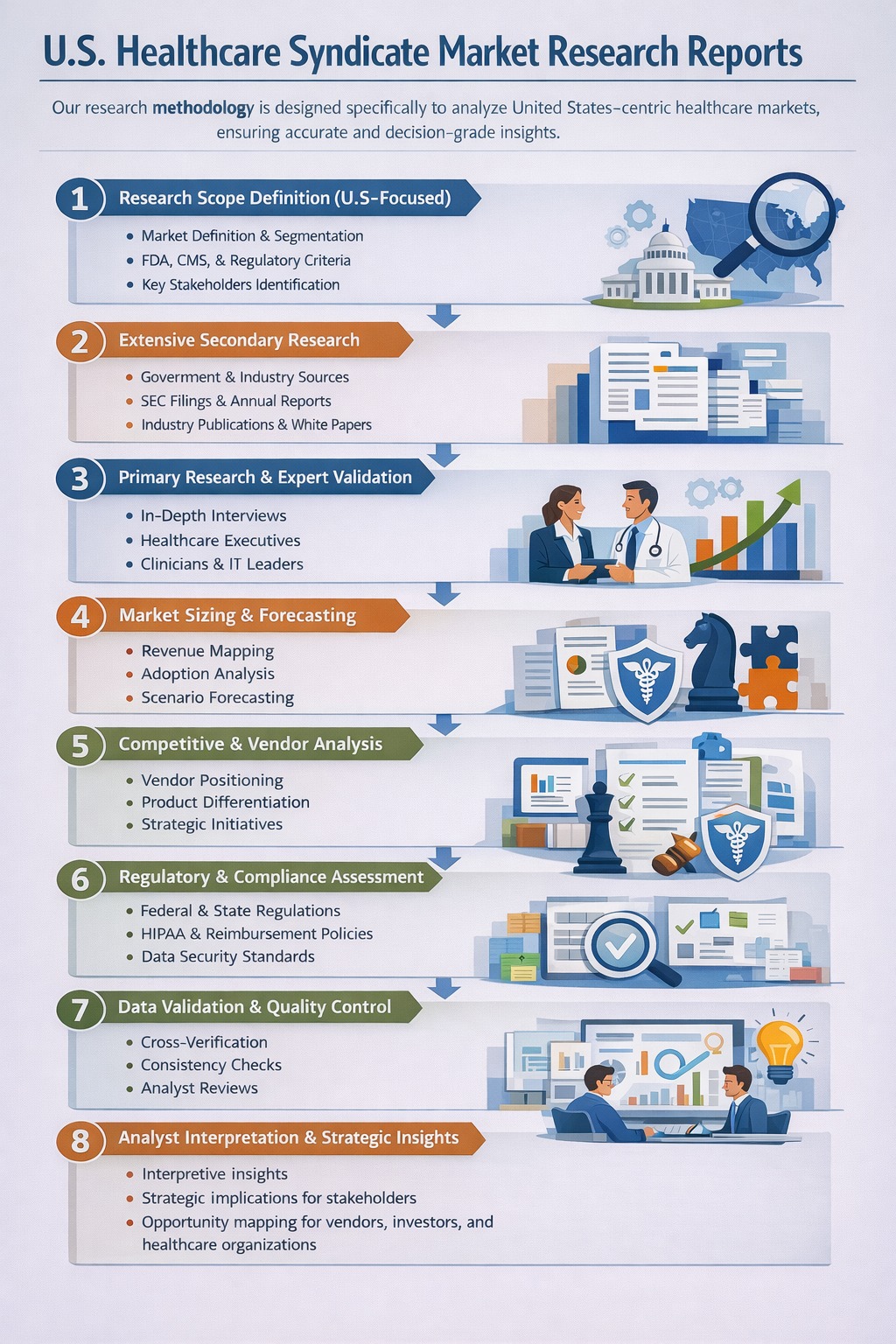
1.3 Research Methodology
1.3.1 Primary Data Collection
1.3.2 Secondary Data Sourcing
1.3.3 External Industry Collaborations
1.3.4 In-House Research Databases
1.3.5 Analytical Frameworks & Forecasting Models
1.3.6 Data Validation and Final Report Publishing
1.4 Key Assumptions
1.5 Market Ecosystem Overview
1.6 Stakeholder Analysis (Device Manufacturers, Component Suppliers, Hospitals, Distributors, Regulatory Bodies, CMS, Group Purchasing Organizations)
What this section provides: Defines the US TAVR devices market scope, methodology, validation standards, ecosystem participants, and core assumptions used in forecasting 2022–2035 market estimates.
2. US Transcatheter Aortic Valve Replacement (TAVR) Devices Market: Executive Summary
2.1 Key Insights & Market Snapshot
2.2 Analyst Viewpoint
2.3 Market Attractiveness Index
2.4 Strategic Imperatives for Stakeholders
What this section provides: Concise overview of US market size (2025), forecast (2035), CAGR (2026–2035), growth momentum, competitive intensity, and investment hotspots.
3. US Transcatheter Aortic Valve Replacement (TAVR) Devices Market: Market Dynamics & Outlook
3.1 Market Drivers and Impact Analysis
3.1.1 Rising Prevalence of Aortic Stenosis
3.1.2 Expanding Geriatric Population (65+)
3.1.3 FDA Expansion to Low-Risk Indications
3.1.4 Favorable CMS Reimbursement & NCD Updates
3.1.5 Technological Advancements in Valve Platforms
3.2 Market Restraints and Impact Analysis
3.2.1 High Device & Procedural Costs
3.2.2 Long-Term Durability Considerations
3.2.3 CMS Facility Volume Requirements
3.3 Market Opportunities and Impact Analysis
3.3.1 Valve-in-Valve Expansion
3.3.2 Bicuspid Valve Indication Expansion
3.3.3 Community Hospital Penetration
3.3.4 Imaging & AI Integration
3.4 Patent & Innovation Landscape (2020–2025)
What this section provides: In-depth evaluation of drivers, restraints, reimbursement, regulatory evolution, and innovation patterns shaping the US TAVR devices market.
4. US Transcatheter Aortic Valve Replacement (TAVR) Devices Market: Market Environment & Industry Analysis
4.1 PESTEL Analysis
4.1.1 Political
4.1.2 Economic
4.1.3 Social
4.1.4 Technological
4.1.5 Environmental
4.1.6 Legal
4.2 Porter’s Five Forces Analysis
4.2.1 Threat of New Entrants
4.2.2 Bargaining Power of Buyers
4.2.3 Bargaining Power of Suppliers
4.2.4 Threat of Substitutes (SAVR, Medical Therapy)
4.2.5 Competitive Rivalry
4.3 Pricing Trend Analysis by Region (2024–2030)
4.4 Value Chain & Supply Chain Analysis
4.5 Regulatory Framework (FDA, CMS, ACC/AHA Guidelines)
4.6 Import/Export & Tariff Impact
4.7 Government Initiatives & Cardiovascular Funding
4.8 Impact of Geopolitical & Supply Chain Disruptions
What this section provides: Structural evaluation of the US structural heart industry, competitive pressures, regulatory climate, reimbursement landscape, and supply chain dynamics.
5. US TAVR Devices Market – By Product Type
5.1 Overview
5.2 Segment Share Analysis, By Product Type, 2025 & 2035 (%)
5.2.1 Balloon-Expandable Valves
5.2.2 Self-Expanding Valves
5.2.3 Mechanically Expanding Valves
What this section provides: Revenue contribution, growth outlook, and competitive positioning across valve technology platforms.
6. US TAVR Devices Market – By Procedure Type
6.1 Overview
6.2 Segment Share Analysis, By Procedure Type, 2025 & 2035 (%)
6.2.1 Transfemoral
6.2.2 Transapical
6.2.3 Transaortic
6.2.4 Transsubclavian/Transaxillary
What this section provides: Procedural access route distribution, clinical preference trends, and adoption outlook in US structural heart centers.
7. US TAVR Devices Market – By Indication
7.1 Overview
7.2 Segment Share Analysis, By Indication, 2025 & 2035 (%)
7.2.1 Severe AS – High Risk
7.2.2 Severe AS – Intermediate Risk
7.2.3 Severe AS – Low Risk
7.2.4 Valve-in-Valve Procedures
What this section provides: Patient risk stratification expansion and its influence on total addressable market growth.
8. US TAVR Devices Market – By End User
8.1 Overview
8.2 Segment Share Analysis, By End User, 2025 & 2035 (%)
8.2.1 Hospitals
8.2.2 Ambulatory Surgical Centers
8.2.3 Specialty Cardiac Centers
What this section provides: Institutional adoption patterns and structural heart program distribution across US care settings.
9. US TAVR Devices Market – By Geography
9.1 Introduction
9.2 Segment Share Analysis, By Geography, 2025 & 2035 (%)
9.3 West Region
9.3.1 Regional Overview & Trends
9.3.2 Market Size and Forecast by Segment (2025–2035)
9.3.3 California
9.3.4 Washington
9.3.5 Colorado
9.3.6 Arizona
9.3.7 Oregon
9.3.8 Others
9.3.8.1 Utah
9.3.8.2 Nevada
9.3.8.3 New Mexico
9.3.8.4 Idaho
9.3.8.5 Montana
9.3.8.6 Wyoming
9.3.8.7 Alaska
9.3.8.8 Hawaii
9.4 Northeast Region
9.4.1 Regional Overview & Trends
9.4.2 New York
9.4.3 Massachusetts
9.4.4 New Jersey
9.4.5 Pennsylvania
9.4.6 Connecticut
9.4.7 Others
9.4.7.1 Maine
9.4.7.2 Vermont
9.4.7.3 New Hampshire
9.4.7.4 Rhode Island
9.4.7.5 Delaware
9.5 South Region
9.5.1 Regional Overview & Trends
9.5.2 Texas
9.5.3 Florida
9.5.4 Georgia
9.5.5 North Carolina
9.5.6 Tennessee
9.5.7 South Carolina
9.5.8 Alabama
9.5.9 Others
9.5.9.1 Mississippi
9.5.9.2 Louisiana
9.5.9.3 Arkansas
9.5.9.4 Kentucky
9.5.9.5 Oklahoma
9.5.9.6 Virginia
9.5.9.7 Maryland
9.5.9.8 West Virginia
9.6 Midwest Region
9.6.1 Regional Overview & Trends
9.6.2 Illinois
9.6.3 Ohio
9.6.4 Michigan
9.6.5 Minnesota
9.6.6 Indiana
9.6.7 Wisconsin
9.6.8 Missouri
9.6.9 Others
9.6.9.1 Iowa
9.6.9.2 Kansas
9.6.9.3 Nebraska
9.6.9.4 North Dakota
9.6.9.5 South Dakota
What this section provides: State-wise revenue forecasting, structural heart center density analysis, procedural volume distribution, and growth hotspots across all US regions.
10. US TAVR Devices Market: Competitive Landscape & Company Profiles
10.1 Market Share Analysis (2025)
10.2 Company Positioning Matrix
10.3 Company Profiles
10.3.1 Edwards Lifesciences Corporation
10.3.2 Medtronic plc
10.3.3 Abbott Laboratories
10.3.4 Boston Scientific Corporation
10.3.5 JenaValve Technology, Inc.
10.3.6 Meril Life Sciences Pvt. Ltd.
10.3.7 Artivion, Inc.
10.3.8 LivaNova PLC
10.3.9 MicroPort CardioFlow
10.3.10 Venus Medtech
10.3.11 Anteris Technologies Ltd.
10.3.12 Foldax, Inc.
10.3.13 Colibri Heart Valve, LLC
10.3.14 JC Medical, Inc.
10.3.15 Tendyne Holdings, Inc.
10.3.16 Cook Medical
10.3.17 HighLife SAS
10.3.18 Cardiac Dimensions
10.3.19 Transcatheter Technologies GmbH
10.3.20 Shanghai NewMed Medical Co., Ltd.
What this section provides: Company benchmarking, US strategy mapping, innovation pipeline assessment, and competitive share positioning.
11. US TAVR Devices Market: Future Market Outlook (2025–2035)
11.1 Scenario Analysis (Optimistic, Realistic, Pessimistic)
11.2 Next-Generation Valve Platforms
11.3 AI & Imaging Integration
11.4 M&A and Investment Trends
What this section provides: Forward-looking assessment of technological shifts, regulatory evolution, and structural heart ecosystem expansion.
12. US TAVR Devices Market: Strategic Recommendations
What this section provides: Actionable growth strategies for manufacturers, hospitals, investors, and policymakers.
13. US TAVR Devices Market: Disclaimer
What this section provides: Legal boundaries, data limitations, and report usage terms.
List of Tables
TABLE 1: List of Data Sources
TABLE 2: Market Drivers; Impact Analysis
TABLE 3: Market Restraints; Impact Analysis
TABLE 4: US Transcatheter Aortic Valve Replacement (TAVR) Devices Market: Product Type Snapshot (2025)
TABLE 5: Segment Dashboard; Definition and Scope, by Product Type
TABLE 6: US Transcatheter Aortic Valve Replacement (TAVR) Devices Market, by Product Type, 2022–2035 (USD Million)
TABLE 7: US Transcatheter Aortic Valve Replacement (TAVR) Devices Market: Procedure Type Snapshot (2025)
TABLE 8: Segment Dashboard; Definition and Scope, by Procedure Type
TABLE 9: US Transcatheter Aortic Valve Replacement (TAVR) Devices Market, by Procedure Type, 2022–2035 (USD Million)
TABLE 10: US Transcatheter Aortic Valve Replacement (TAVR) Devices Market: Indication Snapshot (2025)
TABLE 11: Segment Dashboard; Definition and Scope, by Indication
TABLE 12: US Transcatheter Aortic Valve Replacement (TAVR) Devices Market, by Indication, 2022–2035 (USD Million)
TABLE 13: US Transcatheter Aortic Valve Replacement (TAVR) Devices Market: End-User Snapshot (2025)
TABLE 14: Segment Dashboard; Definition and Scope, by End-User
TABLE 15: US Transcatheter Aortic Valve Replacement (TAVR) Devices Market, by End-User, 2022–2035 (USD Million)
TABLE 16: US Transcatheter Aortic Valve Replacement (TAVR) Devices Market: Regional Snapshot (2025)
TABLE 17: Segment Dashboard; Definition and Scope, by Region
TABLE 18: US Transcatheter Aortic Valve Replacement (TAVR) Devices Market, by Region, 2022–2035 (USD Million)
TABLE 19: California Transcatheter Aortic Valve Replacement (TAVR) Devices Market, by Product Type, 2022–2035 (USD Million)
TABLE 20: California Transcatheter Aortic Valve Replacement (TAVR) Devices Market, by Procedure Type, 2022–2035 (USD Million)
TABLE 21: California Transcatheter Aortic Valve Replacement (TAVR) Devices Market, by Indication, 2022–2035 (USD Million)
TABLE 22: California Transcatheter Aortic Valve Replacement (TAVR) Devices Market, by End-User, 2022–2035 (USD Million)
TABLE 23: Washington Transcatheter Aortic Valve Replacement (TAVR) Devices Market, by Product Type, 2022–2035 (USD Million)
TABLE 24: Washington Transcatheter Aortic Valve Replacement (TAVR) Devices Market, by Procedure Type, 2022–2035 (USD Million)
TABLE 25: Washington Transcatheter Aortic Valve Replacement (TAVR) Devices Market, by Indication, 2022–2035 (USD Million)
TABLE 26: Washington Transcatheter Aortic Valve Replacement (TAVR) Devices Market, by End-User, 2022–2035 (USD Million)
TABLE 27: Colorado Transcatheter Aortic Valve Replacement (TAVR) Devices Market, by Product Type, 2022–2035 (USD Million)
TABLE 28: Colorado Transcatheter Aortic Valve Replacement (TAVR) Devices Market, by Procedure Type, 2022–2035 (USD Million)
TABLE 29: Colorado Transcatheter Aortic Valve Replacement (TAVR) Devices Market, by Indication, 2022–2035 (USD Million)
TABLE 30: Colorado Transcatheter Aortic Valve Replacement (TAVR) Devices Market, by End-User, 2022–2035 (USD Million)
TABLE 31: Arizona Transcatheter Aortic Valve Replacement (TAVR) Devices Market, by Product Type, 2022–2035 (USD Million)
TABLE 32: Arizona Transcatheter Aortic Valve Replacement (TAVR) Devices Market, by Procedure Type, 2022–2035 (USD Million)
TABLE 33: Arizona Transcatheter Aortic Valve Replacement (TAVR) Devices Market, by Indication, 2022–2035 (USD Million)
TABLE 34: Arizona Transcatheter Aortic Valve Replacement (TAVR) Devices Market, by End-User, 2022–2035 (USD Million)
TABLE 35: Oregon Transcatheter Aortic Valve Replacement (TAVR) Devices Market, by Product Type, 2022–2035 (USD Million)
TABLE 36: Oregon Transcatheter Aortic Valve Replacement (TAVR) Devices Market, by Procedure Type, 2022–2035 (USD Million)
TABLE 37: Oregon Transcatheter Aortic Valve Replacement (TAVR) Devices Market, by Indication, 2022–2035 (USD Million)
TABLE 38: Oregon Transcatheter Aortic Valve Replacement (TAVR) Devices Market, by End-User, 2022–2035 (USD Million)
TABLE 39: West – Others Transcatheter Aortic Valve Replacement (TAVR) Devices Market, by Product Type, 2022–2035 (USD Million)
TABLE 40: West – Others Transcatheter Aortic Valve Replacement (TAVR) Devices Market, by Procedure Type, 2022–2035 (USD Million)
TABLE 41: West – Others Transcatheter Aortic Valve Replacement (TAVR) Devices Market, by Indication, 2022–2035 (USD Million)
TABLE 42: West – Others Transcatheter Aortic Valve Replacement (TAVR) Devices Market, by End-User, 2022–2035 (USD Million)
(Nevada, Utah, New Mexico, Idaho, Montana, Wyoming, Alaska, Hawaii)
TABLE 43: New York Transcatheter Aortic Valve Replacement (TAVR) Devices Market, by Product Type, 2022–2035 (USD Million)
TABLE 44: New York Transcatheter Aortic Valve Replacement (TAVR) Devices Market, by Procedure Type, 2022–2035 (USD Million)
TABLE 45: New York Transcatheter Aortic Valve Replacement (TAVR) Devices Market, by Indication, 2022–2035 (USD Million)
TABLE 46: New York Transcatheter Aortic Valve Replacement (TAVR) Devices Market, by End-User, 2022–2035 (USD Million)
TABLE 47: Massachusetts Transcatheter Aortic Valve Replacement (TAVR) Devices Market, by Product Type, 2022–2035 (USD Million)
TABLE 48: Massachusetts Transcatheter Aortic Valve Replacement (TAVR) Devices Market, by Procedure Type, 2022–2035 (USD Million)
TABLE 49: Massachusetts Transcatheter Aortic Valve Replacement (TAVR) Devices Market, by Indication, 2022–2035 (USD Million)
TABLE 50: Massachusetts Transcatheter Aortic Valve Replacement (TAVR) Devices Market, by End-User, 2022–2035 (USD Million)
TABLE 51: New Jersey Transcatheter Aortic Valve Replacement (TAVR) Devices Market, by Product Type, 2022–2035 (USD Million)
TABLE 52: New Jersey Transcatheter Aortic Valve Replacement (TAVR) Devices Market, by Procedure Type, 2022–2035 (USD Million)
TABLE 53: New Jersey Transcatheter Aortic Valve Replacement (TAVR) Devices Market, by Indication, 2022–2035 (USD Million)
TABLE 54: New Jersey Transcatheter Aortic Valve Replacement (TAVR) Devices Market, by End-User, 2022–2035 (USD Million)
TABLE 55: Pennsylvania Transcatheter Aortic Valve Replacement (TAVR) Devices Market, by Product Type, 2022–2035 (USD Million)
TABLE 56: Pennsylvania Transcatheter Aortic Valve Replacement (TAVR) Devices Market, by Procedure Type, 2022–2035 (USD Million)
TABLE 57: Pennsylvania Transcatheter Aortic Valve Replacement (TAVR) Devices Market, by Indication, 2022–2035 (USD Million)
TABLE 58: Pennsylvania Transcatheter Aortic Valve Replacement (TAVR) Devices Market, by End-User, 2022–2035 (USD Million)
TABLE 59: Connecticut Transcatheter Aortic Valve Replacement (TAVR) Devices Market, by Product Type, 2022–2035 (USD Million)
TABLE 60: Connecticut Transcatheter Aortic Valve Replacement (TAVR) Devices Market, by Procedure Type, 2022–2035 (USD Million)
TABLE 61: Connecticut Transcatheter Aortic Valve Replacement (TAVR) Devices Market, by Indication, 2022–2035 (USD Million)
TABLE 62: Connecticut Transcatheter Aortic Valve Replacement (TAVR) Devices Market, by End-User, 2022–2035 (USD Million)
TABLE 63: Northeast – Others Transcatheter Aortic Valve Replacement (TAVR) Devices Market, by Product Type, 2022–2035 (USD Million)
TABLE 64: Northeast – Others Transcatheter Aortic Valve Replacement (TAVR) Devices Market, by Procedure Type, 2022–2035 (USD Million)
TABLE 65: Northeast – Others Transcatheter Aortic Valve Replacement (TAVR) Devices Market, by Indication, 2022–2035 (USD Million)
TABLE 66: Northeast – Others Transcatheter Aortic Valve Replacement (TAVR) Devices Market, by End-User, 2022–2035 (USD Million)
(Maine, Vermont, New Hampshire, Rhode Island, Delaware)
TABLE 67: Texas Transcatheter Aortic Valve Replacement (TAVR) Devices Market, by Product Type, 2022–2035 (USD Million)
TABLE 68: Texas Transcatheter Aortic Valve Replacement (TAVR) Devices Market, by Procedure Type, 2022–2035 (USD Million)
TABLE 69: Texas Transcatheter Aortic Valve Replacement (TAVR) Devices Market, by Indication, 2022–2035 (USD Million)
TABLE 70: Texas Transcatheter Aortic Valve Replacement (TAVR) Devices Market, by End-User, 2022–2035 (USD Million)
TABLE 71: Florida Transcatheter Aortic Valve Replacement (TAVR) Devices Market, by Product Type, 2022–2035 (USD Million)
TABLE 72: Florida Transcatheter Aortic Valve Replacement (TAVR) Devices Market, by Procedure Type, 2022–2035 (USD Million)
TABLE 73: Florida Transcatheter Aortic Valve Replacement (TAVR) Devices Market, by Indication, 2022–2035 (USD Million)
TABLE 74: Florida Transcatheter Aortic Valve Replacement (TAVR) Devices Market, by End-User, 2022–2035 (USD Million)
TABLE 75: Georgia Transcatheter Aortic Valve Replacement (TAVR) Devices Market, by Product Type, 2022–2035 (USD Million)
TABLE 76: Georgia Transcatheter Aortic Valve Replacement (TAVR) Devices Market, by Procedure Type, 2022–2035 (USD Million)
TABLE 77: Georgia Transcatheter Aortic Valve Replacement (TAVR) Devices Market, by Indication, 2022–2035 (USD Million)
TABLE 78: Georgia Transcatheter Aortic Valve Replacement (TAVR) Devices Market, by End-User, 2022–2035 (USD Million)
TABLE 79: North Carolina Transcatheter Aortic Valve Replacement (TAVR) Devices Market, by Product Type, 2022–2035 (USD Million)
TABLE 80: North Carolina Transcatheter Aortic Valve Replacement (TAVR) Devices Market, by Procedure Type, 2022–2035 (USD Million)
TABLE 81: North Carolina Transcatheter Aortic Valve Replacement (TAVR) Devices Market, by Indication, 2022–2035 (USD Million)
TABLE 82: North Carolina Transcatheter Aortic Valve Replacement (TAVR) Devices Market, by End-User, 2022–2035 (USD Million)
TABLE 83: Tennessee Transcatheter Aortic Valve Replacement (TAVR) Devices Market, by Product Type, 2022–2035 (USD Million)
TABLE 84: Tennessee Transcatheter Aortic Valve Replacement (TAVR) Devices Market, by Procedure Type, 2022–2035 (USD Million)
TABLE 85: Tennessee Transcatheter Aortic Valve Replacement (TAVR) Devices Market, by Indication, 2022–2035 (USD Million)
TABLE 86: Tennessee Transcatheter Aortic Valve Replacement (TAVR) Devices Market, by End-User, 2022–2035 (USD Million)
TABLE 87: South Carolina Transcatheter Aortic Valve Replacement (TAVR) Devices Market, by Product Type, 2022–2035 (USD Million)
TABLE 88: South Carolina Transcatheter Aortic Valve Replacement (TAVR) Devices Market, by Procedure Type, 2022–2035 (USD Million)
TABLE 89: South Carolina Transcatheter Aortic Valve Replacement (TAVR) Devices Market, by Indication, 2022–2035 (USD Million)
TABLE 90: South Carolina Transcatheter Aortic Valve Replacement (TAVR) Devices Market, by End-User, 2022–2035 (USD Million)
TABLE 91: Alabama Transcatheter Aortic Valve Replacement (TAVR) Devices Market, by Product Type, 2022–2035 (USD Million)
TABLE 92: Alabama Transcatheter Aortic Valve Replacement (TAVR) Devices Market, by Procedure Type, 2022–2035 (USD Million)
TABLE 93: Alabama Transcatheter Aortic Valve Replacement (TAVR) Devices Market, by Indication, 2022–2035 (USD Million)
TABLE 94: Alabama Transcatheter Aortic Valve Replacement (TAVR) Devices Market, by End-User, 2022–2035 (USD Million)
TABLE 95: South – Others Transcatheter Aortic Valve Replacement (TAVR) Devices Market, by Product Type, 2022–2035 (USD Million)
TABLE 96: South – Others Transcatheter Aortic Valve Replacement (TAVR) Devices Market, by Procedure Type, 2022–2035 (USD Million)
TABLE 97: South – Others Transcatheter Aortic Valve Replacement (TAVR) Devices Market, by Indication, 2022–2035 (USD Million)
TABLE 98: South – Others Transcatheter Aortic Valve Replacement (TAVR) Devices Market, by End-User, 2022–2035 (USD Million)
(Mississippi, Louisiana, Arkansas, Kentucky, Oklahoma, Virginia, Maryland, West Virginia)
TABLE 99: Illinois Transcatheter Aortic Valve Replacement (TAVR) Devices Market, by Product Type, 2022–2035 (USD Million)
TABLE 100: Illinois Transcatheter Aortic Valve Replacement (TAVR) Devices Market, by Procedure Type, 2022–2035 (USD Million)
TABLE 101: Illinois Transcatheter Aortic Valve Replacement (TAVR) Devices Market, by Indication, 2022–2035 (USD Million)
TABLE 102: Illinois Transcatheter Aortic Valve Replacement (TAVR) Devices Market, by End-User, 2022–2035 (USD Million)
TABLE 103: Ohio Transcatheter Aortic Valve Replacement (TAVR) Devices Market, by Product Type, 2022–2035 (USD Million)
TABLE 104: Ohio Transcatheter Aortic Valve Replacement (TAVR) Devices Market, by Procedure Type, 2022–2035 (USD Million)
TABLE 105: Ohio Transcatheter Aortic Valve Replacement (TAVR) Devices Market, by Indication, 2022–2035 (USD Million)
TABLE 106: Ohio Transcatheter Aortic Valve Replacement (TAVR) Devices Market, by End-User, 2022–2035 (USD Million)
TABLE 107: Michigan Transcatheter Aortic Valve Replacement (TAVR) Devices Market, by Product Type, 2022–2035 (USD Million)
TABLE 108: Michigan Transcatheter Aortic Valve Replacement (TAVR) Devices Market, by Procedure Type, 2022–2035 (USD Million)
TABLE 109: Michigan Transcatheter Aortic Valve Replacement (TAVR) Devices Market, by Indication, 2022–2035 (USD Million)
TABLE 110: Michigan Transcatheter Aortic Valve Replacement (TAVR) Devices Market, by End-User, 2022–2035 (USD Million)
TABLE 111: Minnesota Transcatheter Aortic Valve Replacement (TAVR) Devices Market, by Product Type, 2022–2035 (USD Million)
TABLE 112: Minnesota Transcatheter Aortic Valve Replacement (TAVR) Devices Market, by Procedure Type, 2022–2035 (USD Million)
TABLE 113: Minnesota Transcatheter Aortic Valve Replacement (TAVR) Devices Market, by Indication, 2022–2035 (USD Million)
TABLE 114: Minnesota Transcatheter Aortic Valve Replacement (TAVR) Devices Market, by End-User, 2022–2035 (USD Million)
TABLE 115: Indiana Transcatheter Aortic Valve Replacement (TAVR) Devices Market, by Product Type, 2022–2035 (USD Million)
TABLE 116: Indiana Transcatheter Aortic Valve Replacement (TAVR) Devices Market, by Procedure Type, 2022–2035 (USD Million)
TABLE 117: Indiana Transcatheter Aortic Valve Replacement (TAVR) Devices Market, by Indication, 2022–2035 (USD Million)
TABLE 118: Indiana Transcatheter Aortic Valve Replacement (TAVR) Devices Market, by End-User, 2022–2035 (USD Million)
TABLE 119: Wisconsin Transcatheter Aortic Valve Replacement (TAVR) Devices Market, by Product Type, 2022–2035 (USD Million)
TABLE 120: Wisconsin Transcatheter Aortic Valve Replacement (TAVR) Devices Market, by Procedure Type, 2022–2035 (USD Million)
TABLE 121: Wisconsin Transcatheter Aortic Valve Replacement (TAVR) Devices Market, by Indication, 2022–2035 (USD Million)
TABLE 122: Wisconsin Transcatheter Aortic Valve Replacement (TAVR) Devices Market, by End-User, 2022–2035 (USD Million)
TABLE 123: Missouri Transcatheter Aortic Valve Replacement (TAVR) Devices Market, by Product Type, 2022–2035 (USD Million)
TABLE 124: Missouri Transcatheter Aortic Valve Replacement (TAVR) Devices Market, by Procedure Type, 2022–2035 (USD Million)
TABLE 125: Missouri Transcatheter Aortic Valve Replacement (TAVR) Devices Market, by Indication, 2022–2035 (USD Million)
TABLE 126: Missouri Transcatheter Aortic Valve Replacement (TAVR) Devices Market, by End-User, 2022–2035 (USD Million)
TABLE 127: Midwest – Others Transcatheter Aortic Valve Replacement (TAVR) Devices Market, by Product Type, 2022–2035 (USD Million)
TABLE 128: Midwest – Others Transcatheter Aortic Valve Replacement (TAVR) Devices Market, by Procedure Type, 2022–2035 (USD Million)
TABLE 129: Midwest – Others Transcatheter Aortic Valve Replacement (TAVR) Devices Market, by Indication, 2022–2035 (USD Million)
TABLE 130: Midwest – Others Transcatheter Aortic Valve Replacement (TAVR) Devices Market, by End-User, 2022–2035 (USD Million)
(Iowa, Kansas, Nebraska, North Dakota, South Dakota)
List of Figures
FIGURE 1: US Transcatheter Aortic Valve Replacement (TAVR) Devices Market Segmentation
FIGURE 2: Market Research Methodology
FIGURE 3: Value Chain Analysis
FIGURE 4: PESTEL Analysis
FIGURE 5: Porter’s Five Forces Analysis
FIGURE 6: Market Attractiveness Analysis
FIGURE 7: Market Dynamics
FIGURE 8: Innovation & Patent Landscape (2020–2025)
FIGURE 9: Competitive Landscape; Key Company Market Share Analysis, 2025
FIGURE 10: Product Type Segment Market Share Analysis, 2025 & 2035
FIGURE 11: Product Type Segment Market Size Forecast and Trend Analysis, 2025–2035 (USD Million)
FIGURE 12: Procedure Type Segment Market Share Analysis, 2025 & 2035
FIGURE 13: Procedure Type Segment Market Size Forecast and Trend Analysis, 2025–2035 (USD Million)
FIGURE 14: Indication Segment Market Share Analysis, 2025 & 2035
FIGURE 15: Indication Segment Market Size Forecast and Trend Analysis, 2025–2035 (USD Million)
FIGURE 16: End-User Segment Market Share Analysis, 2025 & 2035
FIGURE 17: End-User Segment Market Size Forecast and Trend Analysis, 2025–2035 (USD Million)
FIGURE 18: Regional Segment Market Share Analysis, 2025 & 2035
FIGURE 19: Regional Segment Market Size Forecast and Trend Analysis, 2025–2035 (USD Million)
FIGURE 20: West Region US Transcatheter Aortic Valve Replacement (TAVR) Devices Market Share and Leading Players, 2025
FIGURE 21: Northeast Region US Transcatheter Aortic Valve Replacement (TAVR) Devices Market Share and Leading Players, 2025
FIGURE 22: South Region US Transcatheter Aortic Valve Replacement (TAVR) Devices Market Share and Leading Players, 2025
FIGURE 23: Midwest Region US Transcatheter Aortic Valve Replacement (TAVR) Devices Market Share and Leading Players, 2025
FIGURE 24: West Region Market Share Analysis by State, 2025
FIGURE 25: California Transcatheter Aortic Valve Replacement (TAVR) Devices Market Size, Forecast and Trend Analysis, 2025–2035 (USD Million)
FIGURE 26: Washington Transcatheter Aortic Valve Replacement (TAVR) Devices Market Size, Forecast and Trend Analysis, 2025–2035 (USD Million)
FIGURE 27: Colorado Transcatheter Aortic Valve Replacement (TAVR) Devices Market Size, Forecast and Trend Analysis, 2025–2035 (USD Million)
FIGURE 28: Arizona Transcatheter Aortic Valve Replacement (TAVR) Devices Market Size, Forecast and Trend Analysis, 2025–2035 (USD Million)
FIGURE 29: Oregon Transcatheter Aortic Valve Replacement (TAVR) Devices Market Size, Forecast and Trend Analysis, 2025–2035 (USD Million)
FIGURE 30: Others (West Region) Transcatheter Aortic Valve Replacement (TAVR) Devices Market Size, Forecast and Trend Analysis, 2025–2035 (USD Million)
FIGURE 31: South Region Market Share Analysis by State, 2025
FIGURE 32: Texas Transcatheter Aortic Valve Replacement (TAVR) Devices Market Size, Forecast and Trend Analysis, 2025–2035 (USD Million)
FIGURE 33: Florida Transcatheter Aortic Valve Replacement (TAVR) Devices Market Size, Forecast and Trend Analysis, 2025–2035 (USD Million)
FIGURE 34: Georgia Transcatheter Aortic Valve Replacement (TAVR) Devices Market Size, Forecast and Trend Analysis, 2025–2035 (USD Million)
FIGURE 35: North Carolina Transcatheter Aortic Valve Replacement (TAVR) Devices Market Size, Forecast and Trend Analysis, 2025–2035 (USD Million)
FIGURE 36: Tennessee Transcatheter Aortic Valve Replacement (TAVR) Devices Market Size, Forecast and Trend Analysis, 2025–2035 (USD Million)
FIGURE 37: South Carolina Transcatheter Aortic Valve Replacement (TAVR) Devices Market Size, Forecast and Trend Analysis, 2025–2035 (USD Million)
FIGURE 38: Alabama Transcatheter Aortic Valve Replacement (TAVR) Devices Market Size, Forecast and Trend Analysis, 2025–2035 (USD Million)
FIGURE 39: Others (South Region) Transcatheter Aortic Valve Replacement (TAVR) Devices Market Size, Forecast and Trend Analysis, 2025–2035 (USD Million)
FIGURE 40: Midwest Region Market Share Analysis by State, 2025
FIGURE 41: Illinois Transcatheter Aortic Valve Replacement (TAVR) Devices Market Size, Forecast and Trend Analysis, 2025–2035 (USD Million)
FIGURE 42: Ohio Transcatheter Aortic Valve Replacement (TAVR) Devices Market Size, Forecast and Trend Analysis, 2025–2035 (USD Million)
FIGURE 43: Michigan Transcatheter Aortic Valve Replacement (TAVR) Devices Market Size, Forecast and Trend Analysis, 2025–2035 (USD Million)
FIGURE 44: Minnesota Transcatheter Aortic Valve Replacement (TAVR) Devices Market Size, Forecast and Trend Analysis, 2025–2035 (USD Million)
FIGURE 45: Indiana Transcatheter Aortic Valve Replacement (TAVR) Devices Market Size, Forecast and Trend Analysis, 2025–2035 (USD Million)
FIGURE 46: Wisconsin Transcatheter Aortic Valve Replacement (TAVR) Devices Market Size, Forecast and Trend Analysis, 2025–2035 (USD Million)
FIGURE 47: Missouri Transcatheter Aortic Valve Replacement (TAVR) Devices Market Size, Forecast and Trend Analysis, 2025–2035 (USD Million)
FIGURE 48: Others (Midwest Region) Transcatheter Aortic Valve Replacement (TAVR) Devices Market Size, Forecast and Trend Analysis, 2025–2035 (USD Million)
FIGURE 49: Northeast Region Market Share Analysis by State, 2025
FIGURE 50: New York Transcatheter Aortic Valve Replacement (TAVR) Devices Market Size, Forecast and Trend Analysis, 2025–2035 (USD Million)
FIGURE 51: Massachusetts Transcatheter Aortic Valve Replacement (TAVR) Devices Market Size, Forecast and Trend Analysis, 2025–2035 (USD Million)
FIGURE 52: New Jersey Transcatheter Aortic Valve Replacement (TAVR) Devices Market Size, Forecast and Trend Analysis, 2025–2035 (USD Million)
FIGURE 53: Pennsylvania Transcatheter Aortic Valve Replacement (TAVR) Devices Market Size, Forecast and Trend Analysis, 2025–2035 (USD Million)
FIGURE 54: Connecticut Transcatheter Aortic Valve Replacement (TAVR) Devices Market Size, Forecast and Trend Analysis, 2025–2035 (USD Million)
FIGURE 55: Others (Northeast Region) Transcatheter Aortic Valve Replacement (TAVR) Devices Market Size, Forecast and Trend Analysis, 2025–2035 (USD Million)