
Market Outlook
The U.S. Population Health Management (PHM) IT Market is projected to reach approximately USD 61.5 billion by 2035, expanding at a CAGR of 15.8% during the forecast period 2026–2035. In 2025, the market was valued at nearly USD 15.4 billion, driven by strong federal support for healthcare digitalization, expanding adoption of value-based care models, and a growing focus on preventive health analytics.
The PHM IT landscape in the U.S. has shifted from reactive, siloed healthcare delivery to proactive, data-driven health management. With a rising prevalence of chronic conditions, healthcare providers, payers, and state health departments are investing in robust PHM platforms that unify patient data across care settings to improve outcomes and reduce costs.
The U.S. federal government's continuous push toward interoperability (FHIR standards), accountable care organizations (ACOs), and the Medicare Shared Savings Program are creating fertile ground for PHM IT adoption. Increasing cloud penetration, integration of AI-driven predictive analytics, and interoperability among electronic health record (EHR) systems are further transforming how healthcare data is managed and utilized nationwide.
Introduction
The U.S. Population Health Management IT Market reflects the nation’s accelerating digital transition in healthcare. The growing complexity of patient care, rising healthcare expenditure, and the need for population-wide data visibility are driving the integration of analytics-driven PHM platforms.
Modern PHM IT systems empower healthcare providers to monitor entire patient populations, identify at-risk individuals, manage chronic diseases, and deliver personalized interventions. By aggregating clinical, claims, and social determinants of health (SDOH) data, these platforms create a holistic view of patient health at both individual and community levels.
Key government initiatives, such as the Centers for Medicare & Medicaid Services (CMS) Value-Based Care Programs, and mandates under the 21st Century Cures Act, are propelling data transparency and interoperability. Combined with advances in artificial intelligence, cloud computing, and predictive analytics, the PHM IT ecosystem in the U.S. is evolving into a core enabler of preventive, equitable, and cost-efficient healthcare delivery.
Key Market Drivers: What’s Fueling the U.S. PHM IT Market Boom?
- Rising Burden of Chronic Diseases:
Over 40% of U.S. adults suffer from at least one chronic disease, driving hospitals and insurers to adopt PHM IT solutions for risk stratification and care coordination. - Shift Toward Value-Based Care Models:
Transition from fee-for-service to outcome-based reimbursement models is increasing demand for PHM platforms that measure, report, and improve population-level outcomes. - Government Incentives for Digital Health Integration:
Federal initiatives under CMS and ONC encourage healthcare entities to adopt interoperable, cloud-based PHM solutions that enhance data accessibility. - Growing Adoption of Cloud and AI in Healthcare:
Cloud-based analytics tools allow real-time population monitoring and predictive insights, enabling early interventions for high-risk cohorts. - Expanding Role of Social Determinants of Health (SDOH):
PHM IT systems are now integrating socioeconomic and behavioral data, enabling more personalized care programs and community-based health strategies.
Innovation in Focus: How Vendors Are Elevating PHM IT
Leading U.S. technology and healthcare companies are integrating AI-driven predictive algorithms, real-time clinical data streams, and patient engagement apps into PHM solutions.
Recent innovations include API-based interoperability, FHIR-enabled data exchange, digital twin modeling for population risk, and cloud-native PHM analytics platforms tailored for large provider networks and ACOs.
Tech giants are entering partnerships with EHR vendors, payers, and public health agencies to co-develop secure, HIPAA-compliant data ecosystems. This collaborative innovation is improving decision-making, reducing readmissions, and optimizing healthcare delivery at the community and state levels.
Recent Developments
- 2025: CMS expanded its Value-Based Care initiatives, integrating PHM tools for Medicare Advantage and Medicaid programs.
- 2026: Innovaccer launched a nationwide PHM cloud suite offering AI-powered social determinants analysis.
- Oracle Health integrated population analytics modules within its EHR cloud after Cerner acquisition.
- ZeOmega announced a partnership with several Blue Cross affiliates to standardize PHM analytics for payer networks.
- Epic Systems enhanced its “Population Health Compass” for ACOs in collaboration with Mayo Clinic and Cleveland Clinic.
Conclusion
The U.S. Population Health Management IT Market is rapidly maturing as healthcare organizations transition toward coordinated, outcome-based care models. The convergence of cloud computing, AI analytics, and data interoperability standards positions PHM IT as a cornerstone of sustainable healthcare transformation in the United States.
By 2035, the market will not only redefine how population health is managed but also enable a shift from reactive disease treatment to proactive, preventive, and equitable healthcare delivery. Continuous investments in digital health infrastructure, supportive policy frameworks, and vendor innovation will ensure that PHM IT remains a fundamental enabler of healthier communities across all U.S. states.
Key Market Players
The U.S. PHM IT market features a balanced mix of technology innovators and healthcare IT providers, offering robust analytics, interoperability, and integration capabilities.
- Cerner (Oracle Health): Offers integrated PHM analytics within Millennium EHR; supports large ACO and payer networks across multiple states.
- Epic Systems Corporation: Provides PHM modules embedded in its EHR platform, adopted widely by top-tier hospitals like Mayo Clinic and Cleveland Clinic.
- Optum (UnitedHealth Group): Leading payer-focused PHM platform combining claims and clinical data for predictive modeling and value-based outcomes.
- IBM Watson Health: Specializes in AI-enabled population analytics and clinical decision support across multi-state hospital systems.
- Allscripts Healthcare Solutions: Delivers interoperable PHM tools for mid-sized providers emphasizing open data exchange and analytics-driven performance.
- Athenahealth: Cloud-based PHM solutions tailored for ambulatory networks and physician practices.
- Philips Healthcare: Integrates PHM into connected care platforms, combining imaging, monitoring, and predictive analytics.
- Medecision: Focuses on payer-driven PHM solutions supporting Medicaid and Medicare Advantage programs.
- Health Catalyst: Offers data warehousing and analytics platforms supporting health system performance and cost optimization.
- Arcadia.io: Known for risk stratification and predictive analytics; strong presence in ACO and payer environments.
- ZeOmega: U.S.-based leader in end-to-end PHM platforms serving payers and state agencies under federal data standards.
- Innovaccer Inc.: Provides FHIR-native PHM cloud infrastructure for interoperability across hospital networks.
- eClinicalWorks: Offers PHM modules integrated with ambulatory EHRs, widely adopted by community health centers.
- Enli Health Intelligence (formerly Kryptiq): Focuses on collaborative care management and primary care analytics for mid-sized provider groups.
- SAS Institute Inc.: Delivers advanced PHM analytics and machine learning capabilities for large-scale payer networks.
- Persivia Inc.: Provides unified PHM and quality reporting solutions that comply with CMS and NCQA standards.
- Caradigm (GE Healthcare): Integrates population analytics into enterprise health management platforms with predictive capabilities.
- Orion Health: Specializes in population-level interoperability solutions for statewide health information exchanges (HIEs).
- NextGen Healthcare: Focuses on PHM solutions for ambulatory and specialty practices with embedded analytics and patient engagement tools.
- Lightbeam Health Solutions: U.S.-based vendor offering AI-powered PHM dashboards supporting ACOs and provider networks nationwide.
- Software (Dominant Segment):
Comprising data aggregation, analytics dashboards, and visualization tools, software dominates the PHM IT landscape, with high deployment among hospitals, payers, and integrated delivery networks (IDNs). - Hardware:
Includes data storage servers, network infrastructure, and wearable integration devices. Growth in IoMT and connected care solutions sustains steady demand. - Services (Fastest-Growing Segment):
Managed services, implementation, data integration, and analytics consulting drive service revenue growth as providers seek end-to-end support.
- Cloud-Based (Dominant & Fastest-Growing):
Offers scalability, interoperability, and cost efficiency. Adoption is rising among payers and ACOs for multi-site integration. - On-Premise:
Preferred by large hospitals with stringent data control and security needs, though growth remains modest. - Web-Based:
Ideal for small and mid-sized clinics seeking cost-effective population data access through browser-based systems.
- Care Management (Dominant):
Integrates care coordination, patient engagement, and disease management tools, enabling real-time intervention tracking. - Clinical Analytics:
Provides predictive insights from clinical and claims data, supporting evidence-based clinical and operational decisions. - Risk Stratification:
AI-based stratification identifies high-cost, high-risk populations, optimizing resource allocation. - Data Integration (Fastest-Growing):
Enables unified data ecosystems across EHR, claims, labs, and social datasets.
Segmentation By Application
- Chronic Disease Management (Dominant):
Solutions for diabetes, hypertension, cardiovascular, and COPD care coordination form the backbone of PHM IT demand. - Preventive Care (Fastest-Growing):
Population-level screening and early intervention analytics tools are gaining traction. - Public Health Surveillance:
State and local agencies increasingly rely on PHM platforms for outbreak management, vaccine tracking, and epidemiological insights. - Health System Performance Management:
Analytics that monitor cost, efficiency, and patient satisfaction metrics across care networks.
- Healthcare Providers (Dominant):
Hospitals, ACOs, and IDNs use PHM IT for risk scoring, patient tracking, and reporting. - Payers (Fastest-Growing):
Insurance companies employ PHM tools for cost containment, utilization management, and predictive modeling. - Government Agencies:
State health departments and federal bodies deploy PHM IT for population surveillance and public health reporting. - Employers:
Corporate health programs increasingly integrate PHM dashboards to monitor employee wellness and reduce healthcare costs.
West (Dominant Region):
Home to Silicon Valley, Seattle, and Denver, the West leads with strong digital health innovation.
California and Washington anchor large-scale PHM deployments supported by major technology vendors.
- California: Leads adoption due to large health systems (Kaiser Permanente, Sutter Health) and tech-driven care models.
- Colorado & Arizona: Accelerating adoption through value-based care initiatives.
- Oregon & Utah: Emerging as testbeds for rural PHM integration and Medicaid analytics programs.
Northeast:
The Northeast exhibits strong academic-medical integration and research-led innovation.
- Massachusetts and New York house some of the earliest ACO and PHM program adopters (Mass General Brigham, Mount Sinai Health).
- Pennsylvania and New Jersey are rapidly modernizing payer networks with advanced risk stratification systems.
- Connecticut & Rhode Island: Implementing cross-state data-sharing programs under HIE modernization projects.
South (Fastest-Growing Region):
The Southern U.S. is witnessing a digital health renaissance driven by Medicaid modernization and healthcare access expansion.
- Texas and Florida: Lead the South with large-scale PHM deployments in major hospital chains (HCA, Baylor Scott & White).
- Georgia, North Carolina, and Tennessee: Advancing PHM through telehealth integration and rural outreach analytics.
- Virginia & Maryland: Accelerating adoption through federal contracts and proximity to CMS & NIH data ecosystems.
Midwest:
Steady and innovation-led growth, focusing on operational efficiency and interoperability.
- Illinois & Ohio: Strong payer-provider collaborations in PHM analytics.
- Michigan & Minnesota: Leveraging predictive PHM IT for chronic care management.
- Wisconsin & Missouri: Expanding PHM adoption among public health agencies for surveillance and social determinants tracking.
1. U.S. Population Health Management IT Market: Market Introduction & Context
1.1 Market Definition
1.2 Scope of the Study
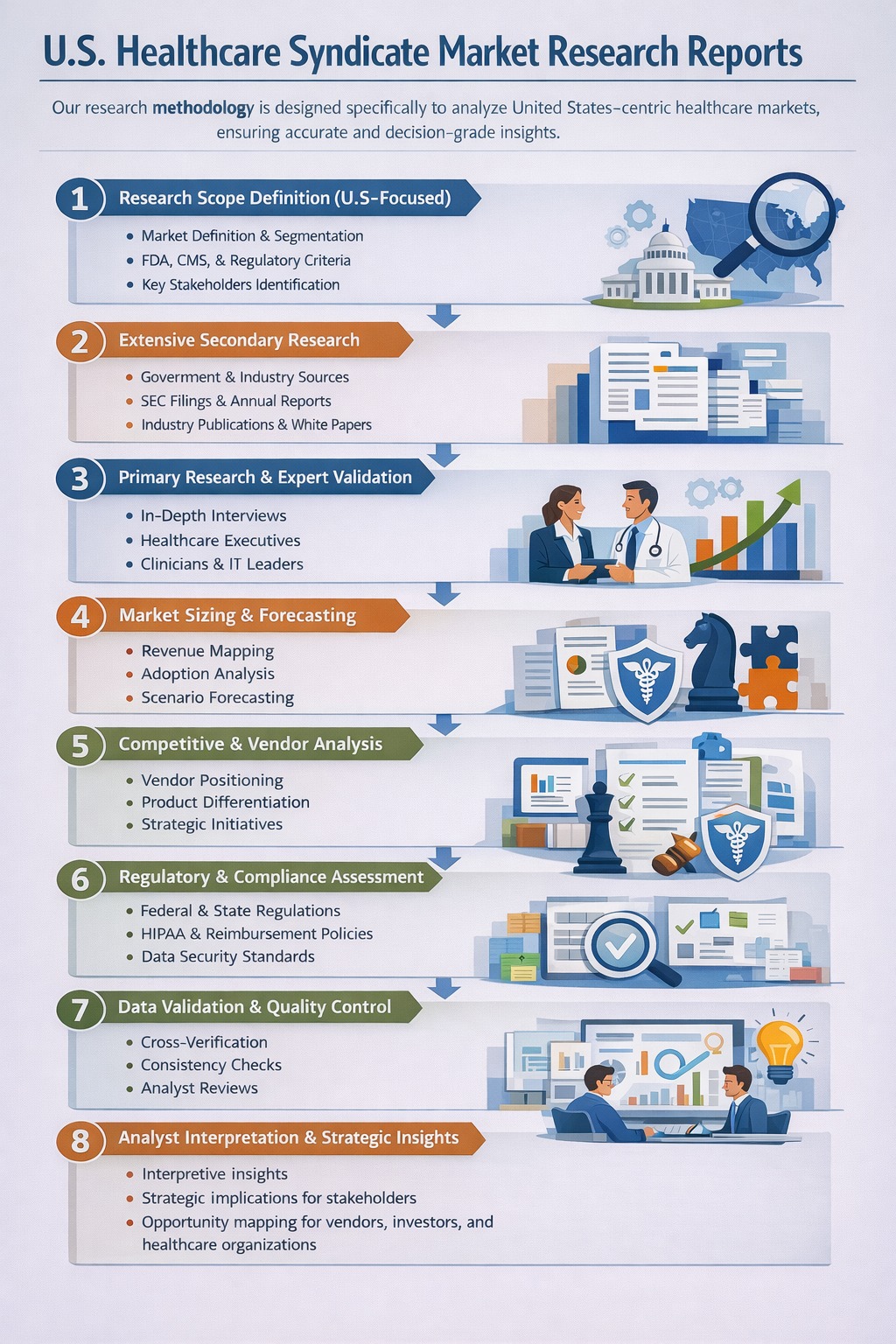
1.3 Research Methodology
1.3.1 Primary Data Collection
1.3.2 Secondary Data Sourcing
1.3.3 External Industry Collaborations
1.3.4 In-House Research Databases
1.3.5 Analytical Frameworks & Forecasting End-Users
1.3.6 Data Validation and Final Report Publishing
1.4 Key Assumptions
1.5 Market Ecosystem Overview
1.6 Stakeholder Analysis (Technology Vendors, Payers, Providers, EHR Companies, State Health Departments)
What this section provides:
Introduces the study’s framework, scope, data sources, and methodologies ensuring transparency and reliability in assessing the U.S. Population Health Management IT Market.
2. U.S. Population Health Management IT Market: Executive Summary
2.1 Key Insights & Market Snapshots
2.2 Analyst Viewpoint
2.3 Market Attractiveness Index
What this section provides:
Delivers a concise overview of market potential, growth opportunities, and strategic highlights offering a top-level understanding for quick decision-making.
3. U.S. Population Health Management IT Market: Market Dynamics & Outlook
3.1 Market Drivers and Their Impact
3.2 Market Restraints and Challenges
3.3 Market Opportunities (Emerging Technologies & Cloud Expansion)
3.4 Patent and Innovation Analysis (2020–2025)
What this section provides:
Examines core market drivers, restraints, and innovation trends influencing adoption and competitive positioning in the PHM IT ecosystem.
4. U.S. Population Health Management IT Market: Market Environment & Industry Overview
4.1 PESTEL Analysis
4.1.1 Political
4.1.2 Economic
4.1.3 Social
4.1.4 Technological
4.1.5 Environmental
4.1.6 Legal
4.2 Porter’s Five Forces Analysis
4.2.1 Threat of New Entrants
4.2.2 Bargaining Power of Buyers
4.2.3 Bargaining Power of Suppliers
4.2.4 Threat of Substitutes
4.2.5 Competitive Rivalry
4.3 Pricing Trend Analysis by Region (2024–2030)
4.4 Value Chain & Supply Chain Analysis
4.5 Regulatory Framework Analysis (ONC, CMS, HHS Policies)
4.6 Impact of Digitalization and Interoperability Mandates
4.7 Government Initiatives: Value-Based Care & ACO Support
What this section provides:
Analyzes macroeconomic, regulatory, and technological factors shaping market structure, pricing, and competitiveness.
5. U.S. Population Health Management IT Market – By Component
5.1 Overview
5.2 Segment Share Analysis, By Component, 2025 & 2035 (%)
5.2.1 Software
5.2.2 Hardware
5.2.3 Services
What this section provides:
Identifies demand distribution across core PHM IT components, revealing where investment and innovation will drive future growth.
6. U.S. Population Health Management IT Market – By Mode of Delivery
6.1 Overview
6.2 Segment Share Analysis, By Mode of Delivery, 2025 & 2035 (%)
6.2.1 Cloud-Based
6.2.2 On-Premise
6.2.3 Web-Based
What this section provides:
Explains PHM IT deployment preferences and scalability options influencing adoption trends across healthcare organizations.
7. U.S. Population Health Management IT Market – By Functionality
7.1 Overview
7.2 Segment Share Analysis, By Functionality, 2025 & 2035 (%)
7.2.1 Care Management
7.2.2 Clinical Analytics
7.2.3 Risk Stratification
7.2.4 Data Integration
What this section provides:
Details critical functionalities within PHM IT systems that enhance predictive, preventive, and coordinated care capabilities.
8. U.S. Population Health Management IT Market – By Application
8.1 Overview
8.2 Segment Share Analysis, By Application, 2025 & 2035 (%)
8.2.1 Chronic Disease Management
8.2.2 Preventive Care
8.2.3 Public Health Surveillance
8.2.4 Health System Performance Management
What this section provides:
Highlights PHM IT use-cases shaping healthcare transformation across clinical and administrative domains.
9. U.S. Population Health Management IT Market – By End User
9.1 Overview
9.2 Segment Share Analysis, By End User, 2025 & 2035 (%)
9.2.1 Healthcare Providers
9.2.2 Payers
9.2.3 Government Agencies
9.2.4 Employers
What this section provides:
Identifies key stakeholder categories adopting PHM IT solutions and their respective market contributions.
10. U.S. Population Health Management IT Market – By Geography
10.1 Introduction
10.2 Segment Share Analysis, By Geography, 2025 & 2035 (%)
10.3 West Region
Regional Overview & Trends
Key PHM IT Vendors Active in West
Market Size and Forecast by:
Component | Functionality | Application | End User | Mode of Delivery
California – Detailed state-level analysis
Washington – State-level PHM system evolution
Colorado – Provider and payer adoption trends
Arizona – Chronic care analytics adoption
Oregon – Medicaid modernization projects
Others (Utah, Nevada, Idaho, New Mexico, Montana, Wyoming, Alaska, Hawaii)
10.4 Northeast Region
Regional Overview & Trends
Key PHM IT Vendors in Northeast
Market Size and Forecast by:
Component | Functionality | Application | End User | Mode of Delivery
New York
Massachusetts
New Jersey
Pennsylvania
Connecticut
Others (Maine, Vermont, New Hampshire, Rhode Island, Delaware)
10.5 South Region
Regional Overview & Trends
Key PHM IT Vendors in South
Market Size and Forecast by:
Component | Functionality | Application | End User | Mode of Delivery
Texas
Florida
Georgia
North Carolina
Tennessee
South Carolina
Alabama
Others (Mississippi, Louisiana, Arkansas, Kentucky, Oklahoma, Virginia, Maryland, West Virginia)
10.6 Midwest Region
Regional Overview & Trends
Key PHM IT Vendors in Midwest
Market Size and Forecast by:
Component | Functionality | Application | End User | Mode of Delivery
Illinois
Ohio
Michigan
Minnesota
Indiana
Wisconsin
Missouri
Others (Iowa, Kansas, Nebraska, North Dakota, South Dakota)
What this section provides:
Offers comprehensive state-level market mapping, showcasing regional growth dynamics, healthcare digitization rates, and vendor presence across all 50 states.
11. U.S. Population Health Management IT Market: Competitive Landscape & Company Profiles
11.1 Market Share Analysis (2025)
11.2 Company Positioning Matrix (Leaders, Innovators, Emerging Players)
11.3 Company Profiles
Key Players
11.3.1 Cerner (Oracle Health)
11.3.2 Epic Systems Corporation
11.3.3 Optum (UnitedHealth Group)
11.3.4 IBM Watson Health
11.3.5 Allscripts Healthcare Solutions
11.3.6 Athenahealth
11.3.7 Philips Healthcare
11.3.8 Medecision
11.3.9 Health Catalyst
11.3.10 Arcadia.io
11.3.11 ZeOmega
11.3.12 Innovaccer Inc.
11.3.13 eClinicalWorks
11.3.14 Enli Health Intelligence
11.3.15 SAS Institute Inc.
11.3.16 Persivia Inc.
11.3.17 Caradigm (GE Healthcare)
11.3.18 Orion Health
11.3.19 NextGen Healthcare
11.3.20 Lightbeam Health Solutions
11.3.21 Others
What this section provides:
Evaluates the market shares, product portfolios, and growth strategies of major players shaping the U.S. PHM IT landscape.
12. U.S. Population Health Management IT Market: Future Outlook (2025–2035)
12.1 Scenario Analysis (Optimistic, Realistic, Pessimistic)
12.2 Impact of Disruptive Technologies (AI, FHIR, SDOH Analytics)
12.3 Emerging Business Trends
12.4 Opportunities for New Entrants & Startups
What this section provides:
Forecasts the evolution of market trends, highlighting upcoming technologies, regulatory shifts, and innovation-driven opportunities.
13. U.S. Population Health Management IT Market: Strategic Recommendations
13.1 Recommendations for Providers
13.2 Recommendations for Payers
13.3 Recommendations for Vendors & Policy Makers
What this section provides:
Outlines actionable insights and strategies for industry stakeholders to strengthen competitive positioning and long-term ROI.
14. U.S. Population Health Management IT Market: Disclaimer
What this section provides:
Clarifies research boundaries, data limitations, and disclaimers governing the study’s usage and interpretation.
LIST OF TABLES
TABLE 1: List of Data Sources
TABLE 2: Market Drivers; Impact Analysis
TABLE 3: Market Restraints; Impact Analysis
TABLE 4: U.S. Population Health Management IT Market: Component Snapshot (2025)
TABLE 5: Segment Dashboard; Definition and Scope, by Component
TABLE 6: U.S. Population Health Management IT Market, by Component, 2022–2035 (USD Million)
TABLE 7: U.S. Population Health Management IT Market: Mode of Delivery Snapshot (2025)
TABLE 8: Segment Dashboard; Definition and Scope, by Mode of Delivery
TABLE 9: U.S. Population Health Management IT Market, by Mode of Delivery, 2022–2035 (USD Million)
TABLE 10: U.S. Population Health Management IT Market: Functionality Snapshot (2025)
TABLE 11: Segment Dashboard; Definition and Scope, by Functionality
TABLE 12: U.S. Population Health Management IT Market, by Functionality, 2022–2035 (USD Million)
TABLE 13: U.S. Population Health Management IT Market: Application Snapshot (2025)
TABLE 14: Segment Dashboard; Definition and Scope, by Application
TABLE 15: U.S. Population Health Management IT Market, by Application, 2022–2035 (USD Million)
TABLE 16: U.S. Population Health Management IT Market: End-User Snapshot (2025)
TABLE 17: Segment Dashboard; Definition and Scope, by End-User
TABLE 18: U.S. Population Health Management IT Market, by End-User, 2022–2035 (USD Million)
TABLE 19: U.S. Population Health Management IT Market: Regional Snapshot (2025)
TABLE 20: Segment Dashboard; Definition and Scope, by Region
TABLE 21: U.S. Population Health Management IT Market, by Region, 2022–2035 (USD Million)
TABLE 22: California Population Health Management IT Market, by Component, 2022–2035 (USD Million)
TABLE 23: California Population Health Management IT Market, by Mode of Delivery, 2022–2035 (USD Million)
TABLE 24: California Population Health Management IT Market, by Functionality, 2022–2035 (USD Million)
TABLE 25: California Population Health Management IT Market, by Application, 2022–2035 (USD Million)
TABLE 26: California Population Health Management IT Market, by End-User, 2022–2035 (USD Million)
TABLE 27: Washington Population Health Management IT Market, by Component, 2022–2035 (USD Million)
TABLE 28: Washington Population Health Management IT Market, by Mode of Delivery, 2022–2035 (USD Million)
TABLE 29: Washington Population Health Management IT Market, by Functionality, 2022–2035 (USD Million)
TABLE 30: Washington Population Health Management IT Market, by Application, 2022–2035 (USD Million)
TABLE 31: Washington Population Health Management IT Market, by End-User, 2022–2035 (USD Million)
TABLE 32: Colorado Population Health Management IT Market, by Component, 2022–2035 (USD Million)
TABLE 33: Colorado Population Health Management IT Market, by Mode of Delivery, 2022–2035 (USD Million)
TABLE 34: Colorado Population Health Management IT Market, by Functionality, 2022–2035 (USD Million)
TABLE 35: Colorado Population Health Management IT Market, by Application, 2022–2035 (USD Million)
TABLE 36: Colorado Population Health Management IT Market, by End-User, 2022–2035 (USD Million)
TABLE 37: Arizona Population Health Management IT Market, by Component, 2022–2035 (USD Million)
TABLE 38: Arizona Population Health Management IT Market, by Mode of Delivery, 2022–2035 (USD Million)
TABLE 39: Arizona Population Health Management IT Market, by Functionality, 2022–2035 (USD Million)
TABLE 40: Arizona Population Health Management IT Market, by Application, 2022–2035 (USD Million)
TABLE 41: Arizona Population Health Management IT Market, by End-User, 2022–2035 (USD Million)
TABLE 42: Oregon Population Health Management IT Market, by Component, 2022–2035 (USD Million)
TABLE 43: Oregon Population Health Management IT Market, by Mode of Delivery, 2022–2035 (USD Million)
TABLE 44: Oregon Population Health Management IT Market, by Functionality, 2022–2035 (USD Million)
TABLE 45: Oregon Population Health Management IT Market, by Application, 2022–2035 (USD Million)
TABLE 46: Oregon Population Health Management IT Market, by End-User, 2022–2035 (USD Million)
TABLE 47: West – Others Population Health Management IT Market, by Component, 2022–2035 (USD Million)
TABLE 48: West – Others Population Health Management IT Market, by Mode of Delivery, 2022–2035 (USD Million)
TABLE 49: West – Others Population Health Management IT Market, by Functionality, 2022–2035 (USD Million)
TABLE 50: West – Others Population Health Management IT Market, by Application, 2022–2035 (USD Million)
TABLE 51: West – Others Population Health Management IT Market, by End-User, 2022–2035 (USD Million)
(Nevada, Utah, New Mexico, Idaho, Montana, Wyoming, Alaska, Hawaii)
TABLE 52: New York Population Health Management IT Market, by Component, 2022–2035 (USD Million)
TABLE 53: New York Population Health Management IT Market, by Mode of Delivery, 2022–2035 (USD Million)
TABLE 54: New York Population Health Management IT Market, by Functionality, 2022–2035 (USD Million)
TABLE 55: New York Population Health Management IT Market, by Application, 2022–2035 (USD Million)
TABLE 56: New York Population Health Management IT Market, by End-User, 2022–2035 (USD Million)
TABLE 57: Massachusetts Population Health Management IT Market, by Component, 2022–2035 (USD Million)
TABLE 58: Massachusetts Population Health Management IT Market, by Mode of Delivery, 2022–2035 (USD Million)
TABLE 59: Massachusetts Population Health Management IT Market, by Functionality, 2022–2035 (USD Million)
TABLE 60: Massachusetts Population Health Management IT Market, by Application, 2022–2035 (USD Million)
TABLE 61: Massachusetts Population Health Management IT Market, by End-User, 2022–2035 (USD Million)
TABLE 62: New Jersey Population Health Management IT Market, by Component, 2022–2035 (USD Million)
TABLE 63: New Jersey Population Health Management IT Market, by Mode of Delivery, 2022–2035 (USD Million)
TABLE 64: New Jersey Population Health Management IT Market, by Functionality, 2022–2035 (USD Million)
TABLE 65: New Jersey Population Health Management IT Market, by Application, 2022–2035 (USD Million)
TABLE 66: New Jersey Population Health Management IT Market, by End-User, 2022–2035 (USD Million)
TABLE 67: Pennsylvania Population Health Management IT Market, by Component, 2022–2035 (USD Million)
TABLE 68: Pennsylvania Population Health Management IT Market, by Mode of Delivery, 2022–2035 (USD Million)
TABLE 69: Pennsylvania Population Health Management IT Market, by Functionality, 2022–2035 (USD Million)
TABLE 70: Pennsylvania Population Health Management IT Market, by Application, 2022–2035 (USD Million)
TABLE 71: Pennsylvania Population Health Management IT Market, by End-User, 2022–2035 (USD Million)
TABLE 72: Connecticut Population Health Management IT Market, by Component, 2022–2035 (USD Million)
TABLE 73: Connecticut Population Health Management IT Market, by Mode of Delivery, 2022–2035 (USD Million)
TABLE 74: Connecticut Population Health Management IT Market, by Functionality, 2022–2035 (USD Million)
TABLE 75: Connecticut Population Health Management IT Market, by Application, 2022–2035 (USD Million)
TABLE 76: Connecticut Population Health Management IT Market, by End-User, 2022–2035 (USD Million)
TABLE 77: Northeast – Others Population Health Management IT Market, by Component, 2022–2035 (USD Million)
TABLE 78: Northeast – Others Population Health Management IT Market, by Mode of Delivery, 2022–2035 (USD Million)
TABLE 79: Northeast – Others Population Health Management IT Market, by Functionality, 2022–2035 (USD Million)
TABLE 80: Northeast – Others Population Health Management IT Market, by Application, 2022–2035 (USD Million)
TABLE 81: Northeast – Others Population Health Management IT Market, by End-User, 2022–2035 (USD Million)
(Maine, Vermont, New Hampshire, Rhode Island, Delaware)
TABLE 82: Texas Population Health Management IT Market, by Component, 2022–2035 (USD Million)
TABLE 83: Texas Population Health Management IT Market, by Mode of Delivery, 2022–2035 (USD Million)
TABLE 84: Texas Population Health Management IT Market, by Functionality, 2022–2035 (USD Million)
TABLE 85: Texas Population Health Management IT Market, by Application, 2022–2035 (USD Million)
TABLE 86: Texas Population Health Management IT Market, by End-User, 2022–2035 (USD Million)
TABLE 87: Florida Population Health Management IT Market, by Component, 2022–2035 (USD Million)
TABLE 88: Florida Population Health Management IT Market, by Mode of Delivery, 2022–2035 (USD Million)
TABLE 89: Florida Population Health Management IT Market, by Functionality, 2022–2035 (USD Million)
TABLE 90: Florida Population Health Management IT Market, by Application, 2022–2035 (USD Million)
TABLE 91: Florida Population Health Management IT Market, by End-User, 2022–2035 (USD Million)
TABLE 92: Georgia Population Health Management IT Market, by Component, 2022–2035 (USD Million)
TABLE 93: Georgia Population Health Management IT Market, by Mode of Delivery, 2022–2035 (USD Million)
TABLE 94: Georgia Population Health Management IT Market, by Functionality, 2022–2035 (USD Million)
TABLE 95: Georgia Population Health Management IT Market, by Application, 2022–2035 (USD Million)
TABLE 96: Georgia Population Health Management IT Market, by End-User, 2022–2035 (USD Million)
TABLE 97: North Carolina Population Health Management IT Market, by Component, 2022–2035 (USD Million)
TABLE 98: North Carolina Population Health Management IT Market, by Mode of Delivery, 2022–2035 (USD Million)
TABLE 99: North Carolina Population Health Management IT Market, by Functionality, 2022–2035 (USD Million)
TABLE 100: North Carolina Population Health Management IT Market, by Application, 2022–2035 (USD Million)
TABLE 101: North Carolina Population Health Management IT Market, by End-User, 2022–2035 (USD Million)
TABLE 102: Tennessee Population Health Management IT Market, by Component, 2022–2035 (USD Million)
TABLE 103: Tennessee Population Health Management IT Market, by Mode of Delivery, 2022–2035 (USD Million)
TABLE 104: Tennessee Population Health Management IT Market, by Functionality, 2022–2035 (USD Million)
TABLE 105: Tennessee Population Health Management IT Market, by Application, 2022–2035 (USD Million)
TABLE 106: Tennessee Population Health Management IT Market, by End-User, 2022–2035 (USD Million)
TABLE 107: South Carolina Population Health Management IT Market, by Component, 2022–2035 (USD Million)
TABLE 108: South Carolina Population Health Management IT Market, by Mode of Delivery, 2022–2035 (USD Million)
TABLE 109: South Carolina Population Health Management IT Market, by Functionality, 2022–2035 (USD Million)
TABLE 110: South Carolina Population Health Management IT Market, by Application, 2022–2035 (USD Million)
TABLE 111: South Carolina Population Health Management IT Market, by End-User, 2022–2035 (USD Million)
TABLE 112: Alabama Population Health Management IT Market, by Component, 2022–2035 (USD Million)
TABLE 113: Alabama Population Health Management IT Market, by Mode of Delivery, 2022–2035 (USD Million)
TABLE 114: Alabama Population Health Management IT Market, by Functionality, 2022–2035 (USD Million)
TABLE 115: Alabama Population Health Management IT Market, by Application, 2022–2035 (USD Million)
TABLE 116: Alabama Population Health Management IT Market, by End-User, 2022–2035 (USD Million)
TABLE 117: South – Others Population Health Management IT Market, by Component, 2022–2035 (USD Million)
TABLE 118: South – Others Population Health Management IT Market, by Mode of Delivery, 2022–2035 (USD Million)
TABLE 119: South – Others Population Health Management IT Market, by Functionality, 2022–2035 (USD Million)
TABLE 120: South – Others Population Health Management IT Market, by Application, 2022–2035 (USD Million)
TABLE 121: South – Others Population Health Management IT Market, by End-User, 2022–2035 (USD Million)
(Mississippi, Louisiana, Arkansas, Kentucky, Oklahoma, Virginia, Maryland, West Virginia)
TABLE 122: Illinois Population Health Management IT Market, by Component, 2022–2035 (USD Million)
TABLE 123: Illinois Population Health Management IT Market, by Mode of Delivery, 2022–2035 (USD Million)
TABLE 124: Illinois Population Health Management IT Market, by Functionality, 2022–2035 (USD Million)
TABLE 125: Illinois Population Health Management IT Market, by Application, 2022–2035 (USD Million)
TABLE 126: Illinois Population Health Management IT Market, by End-User, 2022–2035 (USD Million)
TABLE 127: Ohio Population Health Management IT Market, by Component, 2022–2035 (USD Million)
TABLE 128: Ohio Population Health Management IT Market, by Mode of Delivery, 2022–2035 (USD Million)
TABLE 129: Ohio Population Health Management IT Market, by Functionality, 2022–2035 (USD Million)
TABLE 130: Ohio Population Health Management IT Market, by Application, 2022–2035 (USD Million)
TABLE 131: Ohio Population Health Management IT Market, by End-User, 2022–2035 (USD Million)
TABLE 132: Michigan Population Health Management IT Market, by Component, 2022–2035 (USD Million)
TABLE 133: Michigan Population Health Management IT Market, by Mode of Delivery, 2022–2035 (USD Million)
TABLE 134: Michigan Population Health Management IT Market, by Functionality, 2022–2035 (USD Million)
TABLE 135: Michigan Population Health Management IT Market, by Application, 2022–2035 (USD Million)
TABLE 136: Michigan Population Health Management IT Market, by End-User, 2022–2035 (USD Million)
TABLE 137: Minnesota Population Health Management IT Market, by Component, 2022–2035 (USD Million)
TABLE 138: Minnesota Population Health Management IT Market, by Mode of Delivery, 2022–2035 (USD Million)
TABLE 139: Minnesota Population Health Management IT Market, by Functionality, 2022–2035 (USD Million)
TABLE 140: Minnesota Population Health Management IT Market, by Application, 2022–2035 (USD Million)
TABLE 141: Minnesota Population Health Management IT Market, by End-User, 2022–2035 (USD Million)
TABLE 142: Indiana Population Health Management IT Market, by Component, 2022–2035 (USD Million)
TABLE 143: Indiana Population Health Management IT Market, by Mode of Delivery, 2022–2035 (USD Million)
TABLE 144: Indiana Population Health Management IT Market, by Functionality, 2022–2035 (USD Million)
TABLE 145: Indiana Population Health Management IT Market, by Application, 2022–2035 (USD Million)
TABLE 146: Indiana Population Health Management IT Market, by End-User, 2022–2035 (USD Million)
TABLE 147: Wisconsin Population Health Management IT Market, by Component, 2022–2035 (USD Million)
TABLE 148: Wisconsin Population Health Management IT Market, by Mode of Delivery, 2022–2035 (USD Million)
TABLE 149: Wisconsin Population Health Management IT Market, by Functionality, 2022–2035 (USD Million)
TABLE 150: Wisconsin Population Health Management IT Market, by Application, 2022–2035 (USD Million)
TABLE 151: Wisconsin Population Health Management IT Market, by End-User, 2022–2035 (USD Million)
TABLE 152: Missouri Population Health Management IT Market, by Component, 2022–2035 (USD Million)
TABLE 153: Missouri Population Health Management IT Market, by Mode of Delivery, 2022–2035 (USD Million)
TABLE 154: Missouri Population Health Management IT Market, by Functionality, 2022–2035 (USD Million)
TABLE 155: Missouri Population Health Management IT Market, by Application, 2022–2035 (USD Million)
TABLE 156: Missouri Population Health Management IT Market, by End-User, 2022–2035 (USD Million)
TABLE 157: Midwest – Others Population Health Management IT Market, by Component, 2022–2035 (USD Million)
TABLE 158: Midwest – Others Population Health Management IT Market, by Mode of Delivery, 2022–2035 (USD Million)
TABLE 159: Midwest – Others Population Health Management IT Market, by Functionality, 2022–2035 (USD Million)
TABLE 160: Midwest – Others Population Health Management IT Market, by Application, 2022–2035 (USD Million)
TABLE 161: Midwest – Others Population Health Management IT Market, by End-User, 2022–2035 (USD Million)
(Iowa, Kansas, Nebraska, North Dakota, South Dakota)
LIST OF FIGURES
FIGURE 1: U.S. Population Health Management IT Market Segmentation
FIGURE 2: Market Research Methodology
FIGURE 3: Value Chain Analysis
FIGURE 4: PESTLE Analysis
FIGURE 5: Porter’s Five Forces Analysis
FIGURE 6: Market Attractiveness Analysis
FIGURE 7: Market Dynamics
FIGURE 8: Innovation & Patent Landscape (2020–2024)
FIGURE 9: Competitive Landscape; Key Company Market Share Analysis, 2023
FIGURE 10: Component Segment Market Share Analysis, 2025 & 2035
FIGURE 11: Component Segment Market Size Forecast and Trend Analysis, 2025–2035 (USD Million)
FIGURE 12: Mode of Delivery Segment Market Share Analysis, 2025 & 2035
FIGURE 13: Mode of Delivery Segment Market Size Forecast and Trend Analysis, 2025–2035 (USD Million)
FIGURE 14: Functionality Segment Market Share Analysis, 2025 & 2035
FIGURE 15: Functionality Segment Market Size Forecast and Trend Analysis, 2025–2035 (USD Million)
FIGURE 16: Application Segment Market Share Analysis, 2025 & 2035
FIGURE 17: Application Segment Market Size Forecast and Trend Analysis, 2025–2035 (USD Million)
FIGURE 18: End-User Segment Market Share Analysis, 2025 & 2035
FIGURE 19: End-User Segment Market Size Forecast and Trend Analysis, 2025–2035 (USD Million)
FIGURE 20: Regional Segment Market Share Analysis, 2025 & 2035
FIGURE 21: Regional Segment Market Size Forecast and Trend Analysis, 2025–2035 (USD Million)
FIGURE 22: West Region U.S. Population Health Management IT Market Share and Leading Players, 2024
FIGURE 23: Northeast Region U.S. Population Health Management IT Market Share and Leading Players, 2024
FIGURE 24: South Region U.S. Population Health Management IT Market Share and Leading Players, 2024
FIGURE 25: Midwest Region U.S. Population Health Management IT Market Share and Leading Players, 2024
FIGURE 26: West Region Market Share Analysis by State, 2024
FIGURE 27: California Population Health Management IT Market Size, Forecast and Trend Analysis, 2025–2035 (USD Million)
FIGURE 28: Washington Population Health Management IT Market Size, Forecast and Trend Analysis, 2025–2035 (USD Million)
FIGURE 29: Colorado Population Health Management IT Market Size, Forecast and Trend Analysis, 2025–2035 (USD Million)
FIGURE 30: Arizona Population Health Management IT Market Size, Forecast and Trend Analysis, 2025–2035 (USD Million)
FIGURE 31: Oregon Population Health Management IT Market Size, Forecast and Trend Analysis, 2025–2035 (USD Million)
FIGURE 32: Others (West Region) Population Health Management IT Market Size, Forecast and Trend Analysis, 2025–2035 (USD Million)
FIGURE 33: South Region Market Share Analysis by State, 2023
FIGURE 34: Texas Population Health Management IT Market Size, Forecast and Trend Analysis, 2025–2035 (USD Million)
FIGURE 35: Florida Population Health Management IT Market Size, Forecast and Trend Analysis, 2025–2035 (USD Million)
FIGURE 36: Georgia Population Health Management IT Market Size, Forecast and Trend Analysis, 2025–2035 (USD Million)
FIGURE 37: North Carolina Population Health Management IT Market Size, Forecast and Trend Analysis, 2025–2035 (USD Million)
FIGURE 38: Tennessee Population Health Management IT Market Size, Forecast and Trend Analysis, 2025–2035 (USD Million)
FIGURE 39: South Carolina Population Health Management IT Market Size, Forecast and Trend Analysis, 2025–2035 (USD Million)
FIGURE 40: Alabama Population Health Management IT Market Size, Forecast and Trend Analysis, 2025–2035 (USD Million)
FIGURE 41: Others (South Region) Population Health Management IT Market Size, Forecast and Trend Analysis, 2025–2035 (USD Million)
FIGURE 42: Midwest Region Market Share Analysis by State, 2023
FIGURE 43: Illinois Population Health Management IT Market Size, Forecast and Trend Analysis, 2025–2035 (USD Million)
FIGURE 44: Ohio Population Health Management IT Market Size, Forecast and Trend Analysis, 2025–2035 (USD Million)
FIGURE 45: Michigan Population Health Management IT Market Size, Forecast and Trend Analysis, 2025–2035 (USD Million)
FIGURE 46: Minnesota Population Health Management IT Market Size, Forecast and Trend Analysis, 2025–2035 (USD Million)
FIGURE 47: Indiana Population Health Management IT Market Size, Forecast and Trend Analysis, 2025–2035 (USD Million)
FIGURE 48: Wisconsin Population Health Management IT Market Size, Forecast and Trend Analysis, 2025–2035 (USD Million)
FIGURE 49: Missouri Population Health Management IT Market Size, Forecast and Trend Analysis, 2025–2035 (USD Million)
FIGURE 50: Others (Midwest Region) Population Health Management IT Market Size, Forecast and Trend Analysis, 2025–2035 (USD Million)
FIGURE 51: Northeast Region Market Share Analysis by State, 2023
FIGURE 52: New York Population Health Management IT Market Size, Forecast and Trend Analysis, 2025–2035 (USD Million)
FIGURE 53: Massachusetts Population Health Management IT Market Size, Forecast and Trend Analysis, 2025–2035 (USD Million)
FIGURE 54: New Jersey Population Health Management IT Market Size, Forecast and Trend Analysis, 2025–2035 (USD Million)
FIGURE 55: Pennsylvania Population Health Management IT Market Size, Forecast and Trend Analysis, 2025–2035 (USD Million)
FIGURE 56: Connecticut Population Health Management IT Market Size, Forecast and Trend Analysis, 2025–2035 (USD Million)
FIGURE 57: Others (Northeast Region) Population Health Management IT Market Size, Forecast and Trend Analysis, 2025–2035 (USD Million)