
Market Outlook
The U.S. Revenue Cycle Management (RCM) Automation Market is projected to reach USD 24.56 billion by 2035, expanding at a CAGR of 12.3% from 2026 to 2035. The market, valued at USD 8.92 billion in 2025, is witnessing rapid adoption as U.S. healthcare providers face mounting reimbursement complexity, labor shortages, and the need for greater operational efficiency.
RCM automation is redefining how hospitals, physician groups, and health systems manage billing, claims, payments, and patient financial interactions. With automation and AI-driven tools streamlining workflows, healthcare organizations can reduce claim denials, accelerate reimbursements, and enhance patient satisfaction.
The transition from manual to digital-first RCM systems reflects a broader U.S. healthcare push toward efficiency, transparency, and value-based care. The integration of robotic process automation (RPA), AI-enabled coding, and predictive analytics is enabling providers to recover lost revenue while minimizing administrative burden.
By 2035, the market’s growth will be driven by cloud-based automation, payer-provider data integration, and interoperable digital platforms that support the evolving U.S. healthcare reimbursement ecosystem.
Introduction
Revenue Cycle Management automation has become a cornerstone for operational excellence in U.S. healthcare. With billing cycles growing more complex, healthcare providers are investing in AI-powered automation, claims analytics, and digital workflow orchestration to optimize financial outcomes.
This transformation is not just technological, it’s strategic. Hospitals and physician practices are re-engineering their revenue processes to minimize errors, increase cash flow, and meet stringent payer compliance requirements. The use of automated denial management systems, eligibility verification bots, and predictive reimbursement analytics is reshaping back-office operations and administrative efficiencies.
The U.S. remains the largest and most advanced RCM automation market globally due to its robust payer ecosystem, evolving healthcare policies, and strong investment in healthcare IT infrastructure.
Key Market Drivers
- Escalating Administrative Costs
In the U.S., administrative expenses account for nearly 25% of total healthcare spending. Hospitals spend billions annually on manual billing, claims, and documentation. RCM automation platforms streamline these functions, significantly lowering operating costs while improving billing accuracy and compliance. - Rising Claim Denials and Reimbursement Delays
With increasing payer scrutiny, claim denial rates in the U.S. have reached 10–15% in some states. Automated claims scrubbing, coding validation, and denial analytics reduce error rates and improve first-pass resolution rates, ensuring faster reimbursement cycles. - Workforce Shortages and Labor Optimization
The U.S. healthcare system continues to face revenue cycle staffing shortages. Automation fills the gap by enabling scalable workflows and freeing up skilled personnel for higher-value tasks like patient engagement and financial counseling. - Regulatory Mandates and Value-Based Care Initiatives
CMS (Centers for Medicare & Medicaid Services) and private payers are driving compliance automation. Automated systems help hospitals maintain audit readiness, ensure HIPAA compliance, and adapt to coding updates like ICD-11 and CPT revisions. - Interoperability and Digital Transformation
As EHR integration and interoperability become central to healthcare data management, automation solutions that integrate seamlessly with major EHRs (Epic, Cerner, Meditech) and payer portals are seeing rapid adoption.
Innovation in Focus: The Automation-First Approach
Modern RCM platforms are evolving from reactive billing solutions to proactive financial intelligence ecosystems. Leading providers leverage:
- AI-based denial prediction to prevent revenue loss
- RPA bots for eligibility verification and prior authorizations
- NLP-based coding assistants that extract key data from clinical documentation
- Predictive analytics for payment forecasting and revenue integrity
Hospitals are increasingly investing in cloud-native RCM automation solutions for real-time dashboards, patient cost estimators, and digital payment portals, reflecting a patient-centric financial approach.
Recent Developments
- Optum Insight integrated Change Healthcare’s automation tools to offer unified cloud RCM solutions post-merger.
- Waystar introduced an AI-based denial prevention engine that predicts claim rejections with 97% accuracy.
- R1 RCM expanded partnerships with Ascension and Intermountain Health for end-to-end automation services.
- Cerner Oracle launched automated patient billing systems with integrated real-time payment capabilities.
- Experian Health introduced automation for patient identity verification, reducing registration errors by 40%.
- CMS initiatives promoting interoperability and digital claims submission are boosting automation adoption.
Conclusion
The U.S. Revenue Cycle Management Automation Market is entering a transformative decade. Automation is no longer a back-office function, it’s a strategic enabler of financial health and patient satisfaction.
With AI, RPA, and predictive analytics powering the next generation of RCM solutions, providers can achieve sustainable cost reduction, operational efficiency, and transparency.
The market’s long-term success will depend on:
- Seamless EHR integration,
- Regulatory alignment,
- Workforce reskilling for automation readiness, and
- Ongoing innovation partnerships between payers, providers, and tech companies.
By 2035, RCM automation will be a foundational pillar of U.S. healthcare operations, supporting financial integrity and the value-based care model.
Key Market Players
The competitive landscape is moderately consolidated, with a mix of healthcare IT giants and specialized RCM automation vendors. Leading companies focus on AI-driven platforms, cloud-based interoperability, and end-to-end revenue cycle digitization.
- Optum (UnitedHealth Group) – Leader in analytics-driven RCM automation with payer-provider integration solutions.
- Change Healthcare (Optum Insight) – Offers advanced AI-based claims management and coding automation tools.
- Waystar – Major U.S. RCM automation firm providing cloud-native financial automation and predictive analytics.
- Experian Health – Focuses on eligibility verification and patient access automation solutions.
- R1 RCM – Provides comprehensive outsourced automation-enabled RCM services for large health systems.
- nThrive (FinThrive) – Offers unified revenue integrity platforms integrated with payer systems.
- Cerner (Oracle Health) – Integrates RCM automation directly within EHR workflows.
- Epic Systems – Leading EHR provider with native RCM automation and denial analytics modules.
- Athenahealth – Provides cloud-based RCM automation for physician practices and small clinics.
- McKesson Corporation – Expanding automation capabilities for payer data management and claims analytics.
- 3M Health Information Systems – Offers AI-powered coding and documentation improvement automation.
- Conifer Health Solutions – RCM outsourcing specialist serving multi-hospital systems.
- Allscripts (Veradigm) – Provides cloud-based billing and RCM workflow automation for mid-size healthcare providers.
- Optum360 – Joint venture focusing on RCM automation and data-driven payer-provider coordination.
- eClinicalWorks – Expands integrated billing automation for ambulatory centers.
- NextGen Healthcare – Offers AI-assisted RCM automation for specialty practices.
- Cognizant – Provides RPA and analytics for healthcare back-office automation.
- Infosys Public Services – Implements RCM automation for U.S. government and Medicaid clients.
- Tebra (Kareo + PatientPop) – Focused on small practice RCM automation solutions.
- GeBBS Healthcare Solutions – U.S.-based automation outsourcing provider specializing in coding and denial management.
These firms collectively drive innovation through cloud-first strategies, AI-based revenue analytics, and partnerships with U.S. hospitals and payers.
- Software (Dominant Segment)
Software solutions hold the largest market share, driven by end-to-end RCM platforms that integrate billing, coding, claim management, and analytics. Cloud-native solutions are preferred due to easy scalability and integration with EHR systems. - Services (Fastest-Growing Segment)
Managed RCM and automation-as-a-service models are expanding rapidly. Hospitals increasingly outsource RCM operations to specialized automation service providers to reduce in-house administrative burdens. - Hardware
Limited but relevant for on-premise data centers and secure automation servers supporting private health networks.
- Claims Processing & Management (Dominant)
Automated claims management improves first-pass resolution and reduces resubmission rates, crucial for hospital margins. - Patient Access & Eligibility Verification
RPA bots verify insurance eligibility and patient demographics in real time, enhancing patient onboarding and reducing registration errors. - Medical Coding Automation
AI-driven natural language processing enables accurate CPT and ICD coding directly from clinical documentation. - Payment Posting & Reconciliation
Automated reconciliation systems ensure accurate mapping between payer remittances and EHR entries, minimizing revenue leakage. - Denial Management (Fastest Growing)
Predictive analytics tools identify root causes of denials and automate resubmission workflows for faster revenue recovery. - Analytics & Reporting
Data-driven dashboards provide real-time insights into financial performance, aiding CFOs and RCM directors in decision-making.
- Cloud-Based (Dominant & Fastest Growing)
The U.S. market is shifting toward cloud-first deployment for flexibility, cost reduction, and interoperability. Major providers prefer multi-cloud solutions for data redundancy and compliance. - On-Premise
Retained by health systems with stringent data security or internal hosting policies, particularly among government or large not-for-profit hospitals.
- Hospitals & Health Systems (Dominant)
With over 6,000 hospitals in the U.S., large-scale adoption of RCM automation is driven by the need for efficient billing and unified financial management. - Physician Groups & Ambulatory Centers (Fastest Growing)
Smaller providers are adopting affordable automation platforms to improve cash flow and reduce dependency on third-party billing vendors. - Health Insurance Companies
Payers are using automation for claims adjudication, payment integrity, and fraud detection. - Laboratories & Diagnostic Centers
Automation assists in handling high-volume billing, minimizing rejected claims, and improving turnaround times.
West (Dominant Region)
Key States: California, Washington, Arizona, Colorado, Oregon, Utah
- The West leads the U.S. RCM automation market due to strong healthcare innovation ecosystems, particularly in California and Washington.
- Presence of major RCM tech hubs in San Francisco, Seattle, and Phoenix drives early adoption.
- Integration with major EHRs (Epic, Cerner) and tech partnerships (Microsoft Azure, AWS Health) accelerates automation in large hospital networks.
- Health systems like Kaiser Permanente and Providence Health are early adopters of predictive RCM analytics and digital payment tools.
Northeast
Key States: New York, Massachusetts, New Jersey, Pennsylvania, Connecticut
- The Northeast demonstrates rapid uptake due to academic medical centers and payer density.
- Boston’s healthcare IT cluster and New York’s hospital systems lead in automation adoption, with growing investment in compliance-driven RCM solutions.
- Hospitals such as Mount Sinai, Mass General Brigham, and UPMC are investing in revenue integrity platforms and AI-based denial analytics.
South (Fastest Growing)
Key States: Texas, Florida, Georgia, North Carolina, Tennessee
- Rapid modernization of healthcare systems and high outpatient service growth make the South a key expansion zone.
- States like Texas and Florida are driving cloud-based adoption due to large multi-hospital systems.
- HCA Healthcare, headquartered in Nashville, and Tenet Health in Dallas are implementing enterprise-wide RCM automation programs.
Midwest
Key States: Illinois, Ohio, Michigan, Minnesota, Indiana, Wisconsin
- Growth is steady, supported by strong healthcare payer networks and technology adoption by academic health systems.
- Major initiatives by Cleveland Clinic, Mayo Clinic, and Advocate Health include deploying RPA tools for coding and billing automation.
1.0 U.S. RCM Automation Market: Market Introduction & Context
1.1 Market Definition
1.2 Scope of the Study
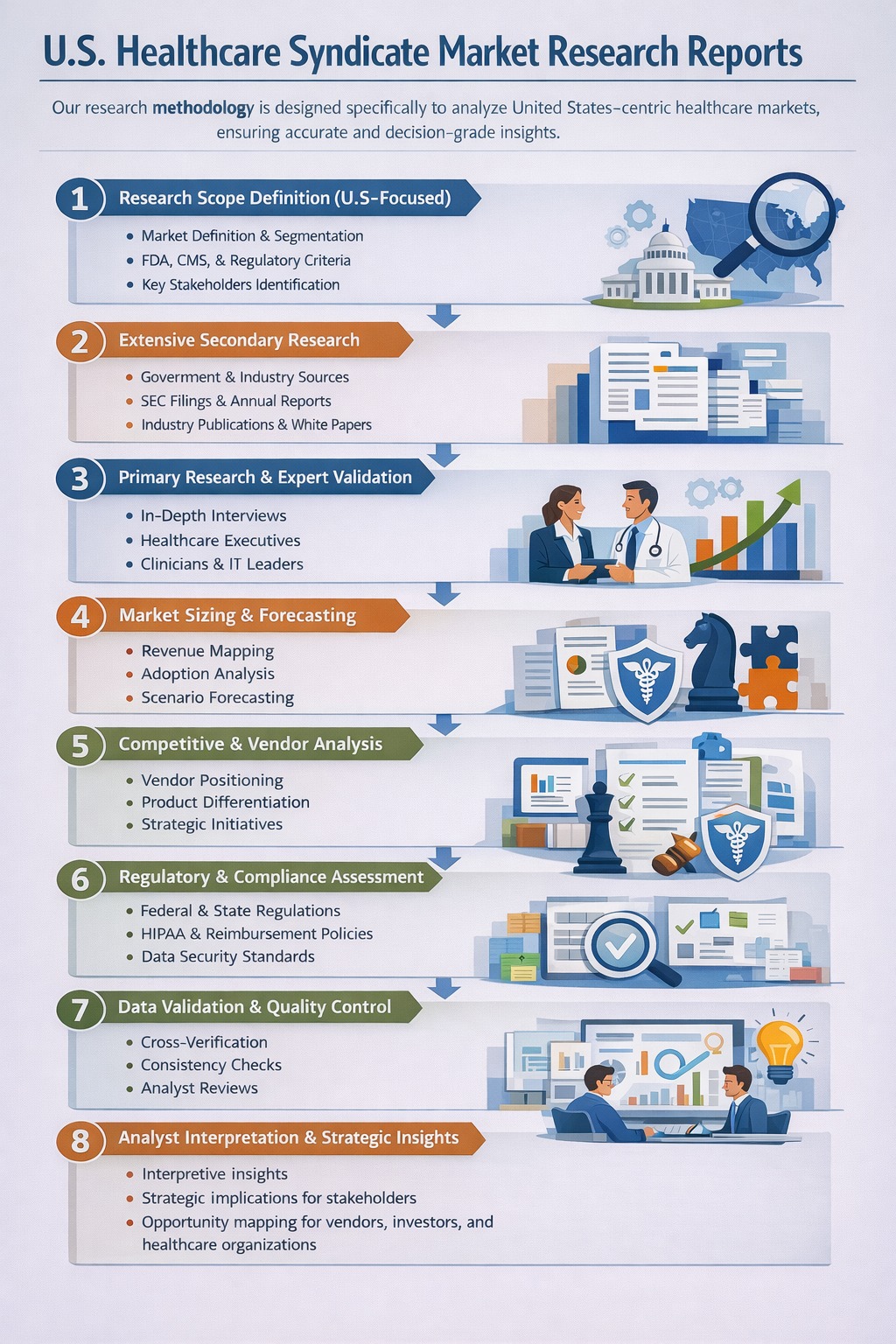
1.3 Research Methodology
1.3.1 Primary Data Collection
1.3.2 Secondary Data Sourcing
1.3.3 External Industry Collaborations
1.3.4 In-House Research Databases
1.4 Analytical Frameworks & Forecasting Methodologies
1.5 Data Validation and Final Report Publishing
1.6 Key Assumptions
1.7 Market Ecosystem Overview
1.8 Stakeholder Analysis (Technology Providers, Automation Vendors, Payers, Providers, IT Integrators)
What this section provides:
Defines scope, methodology, and assumptions used in this study, ensuring analytical transparency and reliability.
2.0 U.S. RCM Automation Market: Executive Summary
2.1 Key Insights & Market Snapshots (2025–2035)
2.2 Analyst Viewpoint
2.3 Market Attractiveness Index (By Component, Function, Deployment Mode, End User, Region)
What this section provides:
Summarizes core findings, market highlights, and competitive outlook for quick executive understanding.
3.0 U.S. RCM Automation Market: Market Dynamics & Outlook
3.1 Market Drivers and Impact Analysis
3.2 Market Restraints and Challenges
3.3 Market Opportunities (Cloud, Workflow Digitization, Payer Integration)
3.4 Key Market Trends (2026–2035)
3.5 Patent & Innovation Landscape (2021–2025)
What this section provides:
Explores key growth factors, restraints, and innovation shifts influencing U.S. RCM automation demand.
4.0 U.S. RCM Automation Market: Market Environment & Industry Landscape
4.1 PESTEL Analysis
4.1.1 Political
4.1.2 Economic
4.1.3 Social
4.1.4 Technological
4.1.5 Environmental
4.1.6 Legal
4.2 Porter’s Five Forces Analysis
4.2.1 Threat of New Entrants
4.2.2 Bargaining Power of Buyers
4.2.3 Bargaining Power of Suppliers
4.2.4 Substitution Risk
4.2.5 Competitive Rivalry
4.3 Pricing Trend Analysis by Region (2025–2030)
4.4 Value Chain & Supply Chain Analysis
4.5 Impact of Digital Transformation & Interoperability
4.6 Application & Innovation Landscape (2025–2035)
4.7 Regulatory Framework Overview
4.8 Government Initiatives & Funding Programs
4.9 Impact of Economic & Geopolitical Trends
What this section provides:
Offers a macro-level understanding of external and internal factors shaping RCM automation development.
5.0 U.S. RCM Automation Market – By Component
5.1 Overview
5.2 Segment Share Analysis (2025 & 2035 %)
5.2.1 Software
5.2.2 Services
5.2.3 Hardware
What this section provides:
Analyzes the composition of automation solutions by component, emphasizing software and service-led growth.
6.0 U.S. RCM Automation Market – By Function
6.1 Overview
6.2 Segment Share Analysis (2025 & 2035 %)
6.2.1 Claims Processing & Management
6.2.2 Patient Access & Eligibility Verification
6.2.3 Medical Coding Automation
6.2.4 Denial Management
6.2.5 Payment Posting & Reconciliation
6.2.6 Analytics & Reporting
What this section provides:
Highlights the evolution of automation use cases across healthcare revenue workflows.
7.0 U.S. RCM Automation Market – By Deployment Mode
7.1 Overview
7.2 Segment Share Analysis (2025 & 2035 %)
7.2.1 On-Premise
7.2.2 Cloud-Based
What this section provides:
Compares deployment models by cost efficiency, scalability, and compliance compatibility.
8.0 U.S. RCM Automation Market – By End User
8.1 Overview
8.2 Segment Share Analysis (2025 & 2035 %)
8.2.1 Hospitals & Health Systems
8.2.2 Physician Groups & Ambulatory Centers
8.2.3 Health Insurance Companies
8.2.4 Laboratories & Diagnostic Centers
What this section provides:
Examines automation demand across key U.S. healthcare segments, identifying end-user adoption patterns.
9.0 U.S. RCM Automation Market – By Geography
9.1 Introduction
9.2 Segment Share Analysis, By Geography (2025 & 2035 %)
9.3 West Region
9.3.1 Regional Overview & Trends
9.3.2 Key States: California, Washington, Colorado, Arizona, Oregon, Others (Nevada, Utah, New Mexico, Idaho, Montana, Wyoming, Alaska, Hawaii)
9.3.3 Market Size & Forecast by:
• Component
• Function
• Deployment Mode
• End User
What this section provides:
Covers automation growth in the innovation-led West, emphasizing AI-driven RCM adoption.
9.4 Northeast Region
9.4.1 Regional Overview & Trends
9.4.2 Key States: New York, Massachusetts, New Jersey, Pennsylvania, Connecticut, Others (Maine, Vermont, New Hampshire, Rhode Island, Delaware)
9.4.3 Market Size & Forecast by:
• Component
• Function
• Deployment Mode
• End User
What this section provides:
Analyzes RCM automation in payer-rich and academically advanced Northeast states.
9.5 South Region
9.5.1 Regional Overview & Trends
9.5.2 Key States: Texas, Florida, Georgia, North Carolina, Tennessee, South Carolina, Alabama, Others (Mississippi, Louisiana, Arkansas, Kentucky, Oklahoma, Virginia, Maryland, West Virginia)
9.5.3 Market Size & Forecast by:
• Component
• Function
• Deployment Mode
• End User
What this section provides:
Explores strong growth potential across the South as healthcare systems modernize and digitize revenue operations.
9.6 Midwest Region
9.6.1 Regional Overview & Trends
9.6.2 Key States: Illinois, Ohio, Michigan, Minnesota, Indiana, Wisconsin, Missouri, Others (Iowa, Kansas, Nebraska, North Dakota, South Dakota)
9.6.3 Market Size & Forecast by:
• Component
• Function
• Deployment Mode
• End User
What this section provides:
Evaluates the Midwest’s balanced growth driven by integrated payer-provider networks and automation adoption in multi-site systems.
10.0 U.S. RCM Automation Market: Competitive Landscape & Company Profiles
10.1 Market Share Analysis (2025)
10.2 Company Positioning Matrix (Leaders, Innovators, Emerging Players)
10.3 Company Profiles
Key Players
10.3.1 Optum (UnitedHealth Group)
10.3.2 Change Healthcare (Optum Insight)
10.3.3 Waystar
10.3.4 Experian Health
10.3.5 R1 RCM
10.3.6 nThrive (FinThrive)
10.3.7 Cerner (Oracle Health)
10.3.8 Epic Systems
10.3.9 Athenahealth
10.3.10 McKesson Corporation
10.3.11 3M Health Information Systems
10.3.12 Conifer Health Solutions
10.3.13 Allscripts (Veradigm)
10.3.14 Optum360
10.3.15 eClinicalWorks
10.3.16 NextGen Healthcare
10.3.17 Cognizant
10.3.18 Infosys Public Services
10.3.19 Tebra
10.3.20 GeBBS Healthcare Solutions
What this section provides:
Delivers detailed profiles of top 20 companies, including solutions, innovations, financials, and strategic developments.
11.0 U.S. RCM Automation Market: Future Market Outlook (2026–2035)
11.1 Scenario Analysis (Optimistic, Realistic, Pessimistic)
11.2 Impact of AI, RPA & Predictive Analytics
11.3 Emerging Business Models (Automation-as-a-Service, Interoperability Platforms)
11.4 Investment & M&A Activity Landscape
11.5 Market Readiness Index by State
What this section provides:
Forecasts disruptive technological and business model changes shaping the next decade of RCM automation.
12.0 U.S. RCM Automation Market: Strategic Recommendations
12.1 Recommendations for Technology Providers
12.2 Recommendations for Healthcare Providers
12.3 Recommendations for Payers & Regulators
12.4 Recommendations for Investors & Startups
What this section provides:
Provides practical, data-driven strategies tailored for technology developers, healthcare operators, and policy stakeholders.
13.0 U.S. RCM Automation Market: Disclaimer
What this section provides:
Outlines report limitations, scope of use, and liability boundaries for transparency and compliance.
LIST OF TABLES
TABLE 1: List of Data Sources
TABLE 2: Market Drivers; Impact Analysis
TABLE 3: Market Restraints; Impact Analysis
TABLE 4: U.S. Revenue Cycle Management (RCM) Automation Market: Component Snapshot (2025)
TABLE 5: Segment Dashboard; Definition and Scope, by Component
TABLE 6: U.S. Revenue Cycle Management (RCM) Automation Market, by Component, 2022–2035 (USD Million)
TABLE 7: U.S. Revenue Cycle Management (RCM) Automation Market: Function Snapshot (2025)
TABLE 8: Segment Dashboard; Definition and Scope, by Function
TABLE 9: U.S. Revenue Cycle Management (RCM) Automation Market, by Function, 2022–2035 (USD Million)
TABLE 10: U.S. Revenue Cycle Management (RCM) Automation Market: Deployment Mode Snapshot (2025)
TABLE 11: Segment Dashboard; Definition and Scope, by Deployment Mode
TABLE 12: U.S. Revenue Cycle Management (RCM) Automation Market, by Deployment Mode, 2022–2035 (USD Million)
TABLE 13: U.S. Revenue Cycle Management (RCM) Automation Market: End-User Snapshot (2025)
TABLE 14: Segment Dashboard; Definition and Scope, by End-User
TABLE 15: U.S. Revenue Cycle Management (RCM) Automation Market, by End-User, 2022–2035 (USD Million)
TABLE 16: U.S. Revenue Cycle Management (RCM) Automation Market: Regional Snapshot (2025)
TABLE 17: Segment Dashboard; Definition and Scope, by Region
TABLE 18: U.S. Revenue Cycle Management (RCM) Automation Market, by Region, 2022–2035 (USD Million)
West Region
TABLE 19: California RCM Automation Market, by Component, 2022–2035 (USD Million)
TABLE 20: California RCM Automation Market, by Function, 2022–2035 (USD Million)
TABLE 21: California RCM Automation Market, by Deployment Mode, 2022–2035 (USD Million)
TABLE 22: California RCM Automation Market, by End-User, 2022–2035 (USD Million)
TABLE 23: Washington RCM Automation Market, by Component, 2022–2035 (USD Million)
TABLE 24: Washington RCM Automation Market, by Function, 2022–2035 (USD Million)
TABLE 25: Washington RCM Automation Market, by Deployment Mode, 2022–2035 (USD Million)
TABLE 26: Washington RCM Automation Market, by End-User, 2022–2035 (USD Million)
TABLE 27: Colorado RCM Automation Market, by Component, 2022–2035 (USD Million)
TABLE 28: Colorado RCM Automation Market, by Function, 2022–2035 (USD Million)
TABLE 29: Colorado RCM Automation Market, by Deployment Mode, 2022–2035 (USD Million)
TABLE 30: Colorado RCM Automation Market, by End-User, 2022–2035 (USD Million)
TABLE 31: Arizona RCM Automation Market, by Component, 2022–2035 (USD Million)
TABLE 32: Arizona RCM Automation Market, by Function, 2022–2035 (USD Million)
TABLE 33: Arizona RCM Automation Market, by Deployment Mode, 2022–2035 (USD Million)
TABLE 34: Arizona RCM Automation Market, by End-User, 2022–2035 (USD Million)
TABLE 35: Oregon RCM Automation Market, by Component, 2022–2035 (USD Million)
TABLE 36: Oregon RCM Automation Market, by Function, 2022–2035 (USD Million)
TABLE 37: Oregon RCM Automation Market, by Deployment Mode, 2022–2035 (USD Million)
TABLE 38: Oregon RCM Automation Market, by End-User, 2022–2035 (USD Million)
TABLE 39: West – Others RCM Automation Market, by Component, 2022–2035 (USD Million)
TABLE 40: West – Others RCM Automation Market, by Function, 2022–2035 (USD Million)
TABLE 41: West – Others RCM Automation Market, by Deployment Mode, 2022–2035 (USD Million)
TABLE 42: West – Others RCM Automation Market, by End-User, 2022–2035 (USD Million)
(Nevada, Utah, New Mexico, Idaho, Montana, Wyoming, Alaska, Hawaii)
Northeast Region
TABLE 43: New York RCM Automation Market, by Component, 2022–2035 (USD Million)
TABLE 44: New York RCM Automation Market, by Function, 2022–2035 (USD Million)
TABLE 45: New York RCM Automation Market, by Deployment Mode, 2022–2035 (USD Million)
TABLE 46: New York RCM Automation Market, by End-User, 2022–2035 (USD Million)
TABLE 47: Massachusetts RCM Automation Market, by Component, 2022–2035 (USD Million)
TABLE 48: Massachusetts RCM Automation Market, by Function, 2022–2035 (USD Million)
TABLE 49: Massachusetts RCM Automation Market, by Deployment Mode, 2022–2035 (USD Million)
TABLE 50: Massachusetts RCM Automation Market, by End-User, 2022–2035 (USD Million)
TABLE 51: New Jersey RCM Automation Market, by Component, 2022–2035 (USD Million)
TABLE 52: New Jersey RCM Automation Market, by Function, 2022–2035 (USD Million)
TABLE 53: New Jersey RCM Automation Market, by Deployment Mode, 2022–2035 (USD Million)
TABLE 54: New Jersey RCM Automation Market, by End-User, 2022–2035 (USD Million)
TABLE 55: Pennsylvania RCM Automation Market, by Component, 2022–2035 (USD Million)
TABLE 56: Pennsylvania RCM Automation Market, by Function, 2022–2035 (USD Million)
TABLE 57: Pennsylvania RCM Automation Market, by Deployment Mode, 2022–2035 (USD Million)
TABLE 58: Pennsylvania RCM Automation Market, by End-User, 2022–2035 (USD Million)
TABLE 59: Connecticut RCM Automation Market, by Component, 2022–2035 (USD Million)
TABLE 60: Connecticut RCM Automation Market, by Function, 2022–2035 (USD Million)
TABLE 61: Connecticut RCM Automation Market, by Deployment Mode, 2022–2035 (USD Million)
TABLE 62: Connecticut RCM Automation Market, by End-User, 2022–2035 (USD Million)
TABLE 63: Northeast – Others RCM Automation Market, by Component, 2022–2035 (USD Million)
TABLE 64: Northeast – Others RCM Automation Market, by Function, 2022–2035 (USD Million)
TABLE 65: Northeast – Others RCM Automation Market, by Deployment Mode, 2022–2035 (USD Million)
TABLE 66: Northeast – Others RCM Automation Market, by End-User, 2022–2035 (USD Million)
(Maine, Vermont, New Hampshire, Rhode Island, Delaware)
South Region
TABLE 67: Texas RCM Automation Market, by Component, 2022–2035 (USD Million)
TABLE 68: Texas RCM Automation Market, by Function, 2022–2035 (USD Million)
TABLE 69: Texas RCM Automation Market, by Deployment Mode, 2022–2035 (USD Million)
TABLE 70: Texas RCM Automation Market, by End-User, 2022–2035 (USD Million)
TABLE 71: Florida RCM Automation Market, by Component, 2022–2035 (USD Million)
TABLE 72: Florida RCM Automation Market, by Function, 2022–2035 (USD Million)
TABLE 73: Florida RCM Automation Market, by Deployment Mode, 2022–2035 (USD Million)
TABLE 74: Florida RCM Automation Market, by End-User, 2022–2035 (USD Million)
TABLE 75: Georgia RCM Automation Market, by Component, 2022–2035 (USD Million)
TABLE 76: Georgia RCM Automation Market, by Function, 2022–2035 (USD Million)
TABLE 77: Georgia RCM Automation Market, by Deployment Mode, 2022–2035 (USD Million)
TABLE 78: Georgia RCM Automation Market, by End-User, 2022–2035 (USD Million)
TABLE 79: North Carolina RCM Automation Market, by Component, 2022–2035 (USD Million)
TABLE 80: North Carolina RCM Automation Market, by Function, 2022–2035 (USD Million)
TABLE 81: North Carolina RCM Automation Market, by Deployment Mode, 2022–2035 (USD Million)
TABLE 82: North Carolina RCM Automation Market, by End-User, 2022–2035 (USD Million)
TABLE 83: Tennessee RCM Automation Market, by Component, 2022–2035 (USD Million)
TABLE 84: Tennessee RCM Automation Market, by Function, 2022–2035 (USD Million)
TABLE 85: Tennessee RCM Automation Market, by Deployment Mode, 2022–2035 (USD Million)
TABLE 86: Tennessee RCM Automation Market, by End-User, 2022–2035 (USD Million)
TABLE 87: South – Others RCM Automation Market, by Component, 2022–2035 (USD Million)
TABLE 88: South – Others RCM Automation Market, by Function, 2022–2035 (USD Million)
TABLE 89: South – Others RCM Automation Market, by Deployment Mode, 2022–2035 (USD Million)
TABLE 90: South – Others RCM Automation Market, by End-User, 2022–2035 (USD Million)
(Mississippi, Louisiana, Arkansas, Kentucky, Oklahoma, Virginia, Maryland, West Virginia)
Midwest Region
TABLE 91: Illinois RCM Automation Market, by Component, 2022–2035 (USD Million)
TABLE 92: Illinois RCM Automation Market, by Function, 2022–2035 (USD Million)
TABLE 93: Illinois RCM Automation Market, by Deployment Mode, 2022–2035 (USD Million)
TABLE 94: Illinois RCM Automation Market, by End-User, 2022–2035 (USD Million)
TABLE 95: Ohio RCM Automation Market, by Component, 2022–2035 (USD Million)
TABLE 96: Ohio RCM Automation Market, by Function, 2022–2035 (USD Million)
TABLE 97: Ohio RCM Automation Market, by Deployment Mode, 2022–2035 (USD Million)
TABLE 98: Ohio RCM Automation Market, by End-User, 2022–2035 (USD Million)
TABLE 99: Michigan RCM Automation Market, by Component, 2022–2035 (USD Million)
TABLE 100: Michigan RCM Automation Market, by Function, 2022–2035 (USD Million)
TABLE 101: Michigan RCM Automation Market, by Deployment Mode, 2022–2035 (USD Million)
TABLE 102: Michigan RCM Automation Market, by End-User, 2022–2035 (USD Million)
TABLE 103: Minnesota RCM Automation Market, by Component, 2022–2035 (USD Million)
TABLE 104: Minnesota RCM Automation Market, by Function, 2022–2035 (USD Million)
TABLE 105: Minnesota RCM Automation Market, by Deployment Mode, 2022–2035 (USD Million)
TABLE 106: Minnesota RCM Automation Market, by End-User, 2022–2035 (USD Million)
TABLE 107: Midwest – Others RCM Automation Market, by Component, 2022–2035 (USD Million)
TABLE 108: Midwest – Others RCM Automation Market, by Function, 2022–2035 (USD Million)
TABLE 109: Midwest – Others RCM Automation Market, by Deployment Mode, 2022–2035 (USD Million)
TABLE 110: Midwest – Others RCM Automation Market, by End-User, 2022–2035 (USD Million)
(Iowa, Kansas, Nebraska, North Dakota, South Dakota)
LIST OF FIGURES
FIGURE 1: U.S. Revenue Cycle Management (RCM) Automation Market Segmentation
FIGURE 2: Market Research Methodology
FIGURE 3: Value Chain Analysis
FIGURE 4: PESTEL Analysis
FIGURE 5: Porter’s Five Forces Analysis
FIGURE 6: Market Attractiveness Analysis
FIGURE 7: Market Dynamics
FIGURE 8: Innovation & Patent Landscape (2021–2025)
FIGURE 9: Competitive Landscape; Key Company Market Share Analysis, 2024
FIGURE 10: Component Segment Market Share Analysis, 2025 & 2035
FIGURE 11: Component Segment Market Size Forecast and Trend Analysis, 2025–2035 (USD Million)
FIGURE 12: Function Segment Market Share Analysis, 2025 & 2035
FIGURE 13: Function Segment Market Size Forecast and Trend Analysis, 2025–2035 (USD Million)
FIGURE 14: Deployment Mode Segment Market Share Analysis, 2025 & 2035
FIGURE 15: Deployment Mode Segment Market Size Forecast and Trend Analysis, 2025–2035 (USD Million)
FIGURE 16: End-User Segment Market Share Analysis, 2025 & 2035
FIGURE 17: End-User Segment Market Size Forecast and Trend Analysis, 2025–2035 (USD Million)
FIGURE 18: Regional Segment Market Share Analysis, 2025 & 2035
FIGURE 19: Regional Segment Market Size Forecast and Trend Analysis, 2025–2035 (USD Million)
FIGURE 20: West Region RCM Automation Market Share and Leading Players, 2024
FIGURE 21: Northeast Region RCM Automation Market Share and Leading Players, 2024
FIGURE 22: South Region RCM Automation Market Share and Leading Players, 2024
FIGURE 23: Midwest Region RCM Automation Market Share and Leading Players, 2024
FIGURE 24: West Region Market Share Analysis by State, 2024
FIGURE 25: California RCM Automation Market Size, Forecast and Trend Analysis, 2025–2035 (USD Million)
FIGURE 26: Washington RCM Automation Market Size, Forecast and Trend Analysis, 2025–2035 (USD Million)
FIGURE 27: Colorado RCM Automation Market Size, Forecast and Trend Analysis, 2025–2035 (USD Million)
FIGURE 28: Arizona RCM Automation Market Size, Forecast and Trend Analysis, 2025–2035 (USD Million)
FIGURE 29: Oregon RCM Automation Market Size, Forecast and Trend Analysis, 2025–2035 (USD Million)
FIGURE 30: Others (West Region) RCM Automation Market Size, Forecast and Trend Analysis, 2025–2035 (USD Million)
FIGURE 31: Northeast Region Market Share Analysis by State, 2024
FIGURE 32: New York RCM Automation Market Size, Forecast and Trend Analysis, 2025–2035 (USD Million)
FIGURE 33: Massachusetts RCM Automation Market Size, Forecast and Trend Analysis, 2025–2035 (USD Million)
FIGURE 34: New Jersey RCM Automation Market Size, Forecast and Trend Analysis, 2025–2035 (USD Million)
FIGURE 35: Pennsylvania RCM Automation Market Size, Forecast and Trend Analysis, 2025–2035 (USD Million)
FIGURE 36: Connecticut RCM Automation Market Size, Forecast and Trend Analysis, 2025–2035 (USD Million)
FIGURE 37: Others (Northeast Region) RCM Automation Market Size, Forecast and Trend Analysis, 2025–2035 (USD Million)
FIGURE 38: South Region Market Share Analysis by State, 2024
FIGURE 39: Texas RCM Automation Market Size, Forecast and Trend Analysis, 2025–2035 (USD Million)
FIGURE 40: Florida RCM Automation Market Size, Forecast and Trend Analysis, 2025–2035 (USD Million)
FIGURE 41: Georgia RCM Automation Market Size, Forecast and Trend Analysis, 2025–2035 (USD Million)
FIGURE 42: North Carolina RCM Automation Market Size, Forecast and Trend Analysis, 2025–2035 (USD Million)
FIGURE 43: Tennessee RCM Automation Market Size, Forecast and Trend Analysis, 2025–2035 (USD Million)
FIGURE 44: Others (South Region) RCM Automation Market Size, Forecast and Trend Analysis, 2025–2035 (USD Million)
FIGURE 45: Midwest Region Market Share Analysis by State, 2024
FIGURE 46: Illinois RCM Automation Market Size, Forecast and Trend Analysis, 2025–2035 (USD Million)
FIGURE 47: Ohio RCM Automation Market Size, Forecast and Trend Analysis, 2025–2035 (USD Million)
FIGURE 48: Michigan RCM Automation Market Size, Forecast and Trend Analysis, 2025–2035 (USD Million)
FIGURE 49: Minnesota RCM Automation Market Size, Forecast and Trend Analysis, 2025–2035 (USD Million)
FIGURE 50: Others (Midwest Region) RCM Automation Market Size, Forecast and Trend Analysis, 2025–2035 (USD Million)